Chutkan Blocks Trump Arch Construction for 14 Days After NCPC Approval
A federal judge ordered a 14-day halt to construction-related activity for President Trump's proposed 250-foot arch at Memorial Circle. The planning commission approved final plans Thursday, and Interior separately authorized the project. Neither decision overrides the temporary restraining order. The judge found D.C. and Virginia likely to succeed on their claim that the arch violates the Commemorative Works Act; the case is not over.
By Evelyn Shaw, Constitution Explained
Published · 5 min read
The Overview
The facts, straight
The plans passed. The work is temporarily blocked. U.S. District Judge Tanya Chutkan issued a temporary restraining order Thursday, Nov. 5, stopping construction-related activity for President Donald Trump's proposed arch at Memorial Circle for 14 days from issuance. The National Capital Planning Commission approved the final site and building plans that night, according to a government court notice. Interior Secretary Doug Burgum also signed a separate decision authorizing the project. Those approvals do not override the court order.
CBS News reported that the commission voted 8–4 after a lengthy public-comment session; AP and the BBC reported the same tally. The government's notice confirms approval but does not give a vote count. Counsel said they watched the commission's livestream and would file its written decision when available. The Interior decision also records the commission's final approval.
What is blocked. Chutkan granted the District of Columbia and Virginia's request in their case against the National Park Service and other federal defendants. For “a period of fourteen (14) days starting from the issuance of this Order,” those defendants cannot initiate or carry out construction, excavation, demolition, land disturbance, utility installation, roadway closures or other construction-related activity at or near Memorial Circle for the purpose of constructing the arch. That is broader than a ban on pouring concrete, but it is not a ban on every unrelated activity in the park.
The order is dated Nov. 5. It does not print a separate expiration date or clock time. Nor does it promise that work may automatically start when the 14 days end: further court action and applicable permitting requirements are separate questions.
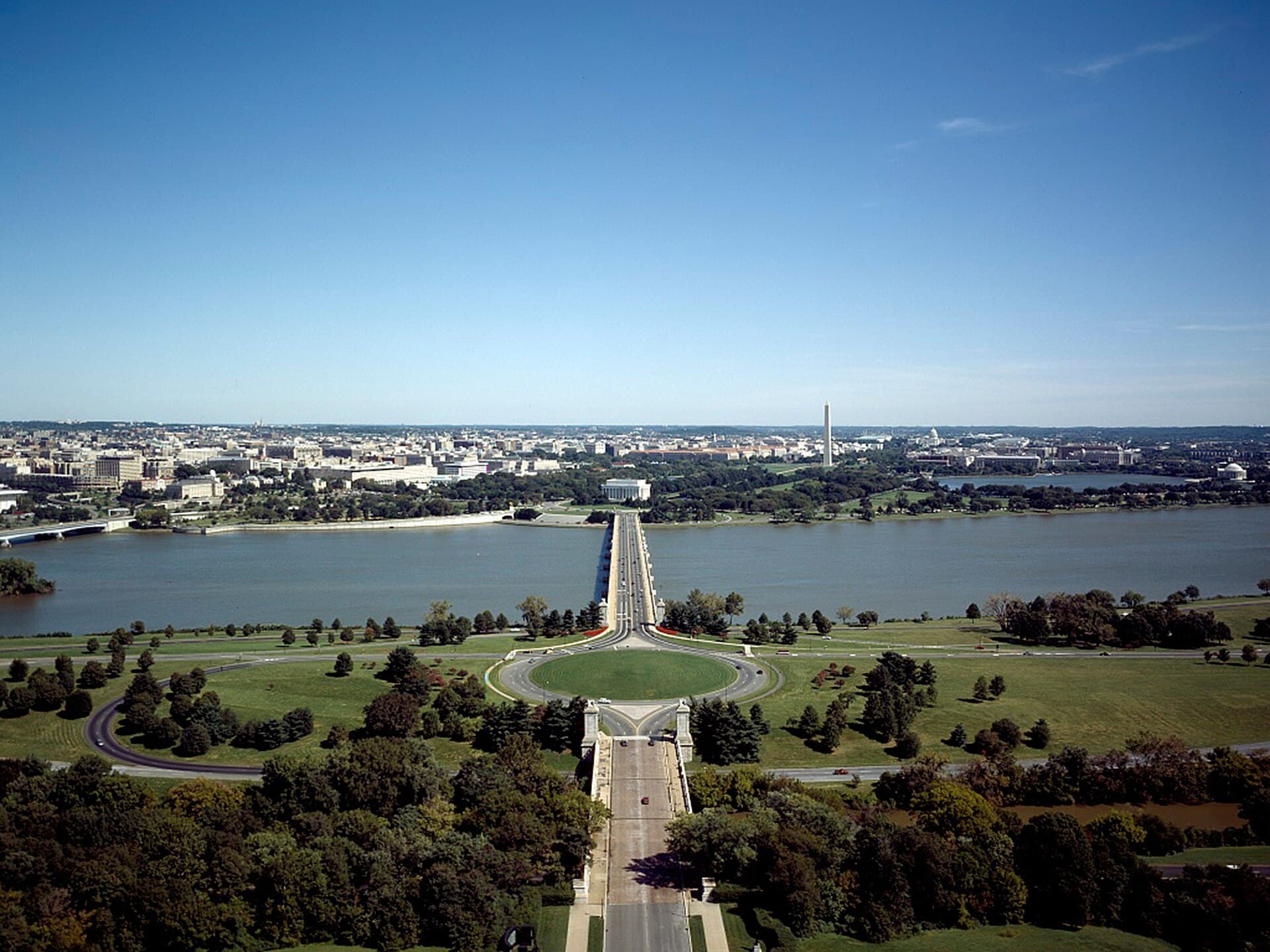
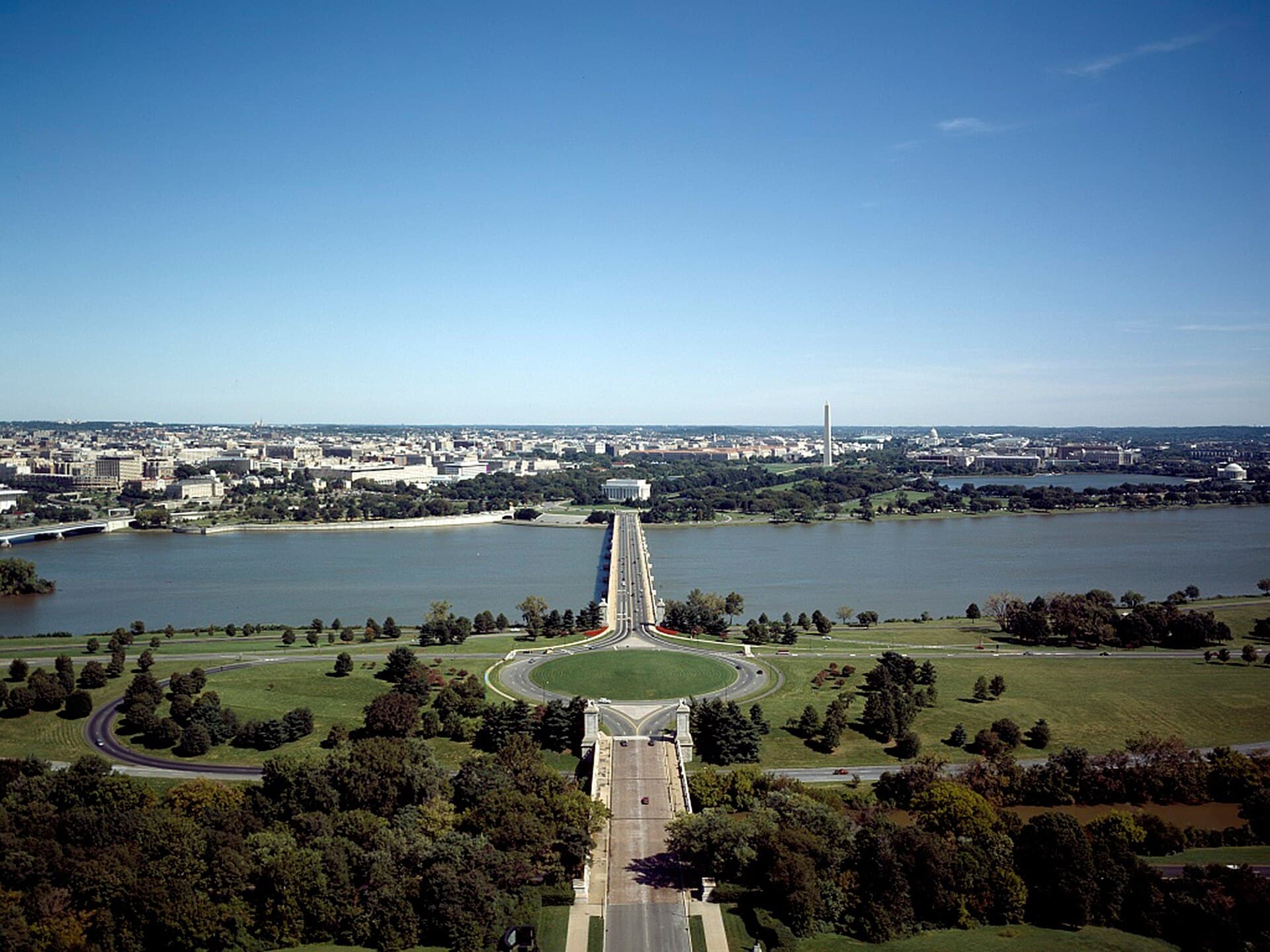
The site and the project. Memorial Circle is on Columbia Island in Washington, D.C., between the Lincoln Memorial and Arlington National Cemetery, not inside the cemetery. Interior's decision describes an approximately 166-foot architectural structure with statuary bringing the overall height to approximately 250 feet. It includes an observation deck, a plaza and changes to roads and pedestrian crossings. The decision estimates construction over roughly two to three years.
This is the follow-up to Radio Purple's pre-vote report. Thursday's anticipated planning decision has now happened, and the judge has imposed a new restraint on work.
What the Left Says
The progressive and Democratic case
D.C. and Virginia argue that the administration cannot use a century-old bridge law to bypass Congress's rules for new commemorative works. Their concerns also include traffic, emergency access, environmental effects and the historic landscape. Chutkan's 33-page opinion found a substantial likelihood that the jurisdictions have standing because construction would impose concrete economic and operational costs, not simply because they oppose the president's design.
Rep. Jared Huffman, the top Democrat on the House Natural Resources Committee, made the congressional-authorization argument in written testimony to the commission Thursday. He said the arch would “disrupt the solemn connection between the Lincoln Memorial and Arlington National Cemetery” and argued that Congress is the appropriate place to debate a monument and its location. Those are his objections, not a final judicial determination of every claim.
Virginia Attorney General Jay Jones had described the arch as illegal when announcing the lawsuit earlier in the week:
Post: Attorney General Jay Jones, Nov. 2, 2026. This is his earlier position on the lawsuit, not a reaction to Thursday's order.
The consolidated litigation also includes Vietnam veterans and architectural historian Calder Loth. But Thursday's TRO was granted on D.C. and Virginia's motion. Chutkan held the veterans' separate second motion for a preliminary injunction in abeyance rather than granting it.
Where Reality Likely Sits
Radio Purple's analysis
The judge has made a preliminary legal assessment, not ended the case. Chutkan found D.C. and Virginia likely to succeed on their claim that construction would violate the Commemorative Works Act. She concluded that the arch likely qualifies as a commemorative work and rejected, at this stage, the argument that the 1925 bridge authorization covers this substantially different project. General Park Service authority does not override the more specific commemorative-work requirements, she reasoned.
That finding supports temporary relief. It is not a permanent injunction or a final judgment on every environmental, preservation or other claim. The order defers the request to stay agency action under the Administrative Procedure Act and denies an administrative-stay request. The TRO restrains the covered work; it does not itself vacate Interior's decision or the commission's approval.
Three different decisions should not be collapsed into one. NCPC approved final plans. Interior separately authorized the selected project. Construction permits and compliance with the court order remain distinct. The documents reviewed for this report do not establish that a separate construction-mobilization permit has been granted; this report does not treat project approval as that permit.
Common ground is narrower than agreement on this arch. Interior's own decision acknowledges the importance of the ceremonial corridor and includes mitigation measures. Opponents likewise emphasize the cemetery's solemn setting and safe access. The dispute is whether this design and location protect those interests — and whether the government has the legal authority to proceed without new congressional authorization. Shared respect for veterans does not resolve those questions.
What comes next. The defendants must serve the order on relevant employees, contractors, subcontractors and other responsible people within 24 hours of entry, and tell them the covered activities are prohibited. By Monday, Nov. 9, they must update the court on service and certify compliance. D.C. and Virginia must post a $1 bond by Nov. 13. The order does not say that the restraint waits for the bond to be posted.
Further proceedings can change the position. The lead-case docket and the D.C.–Virginia member-case docket are the places to follow new filings. For now, the verified development is a planning approval, a separate Interior decision and a time-limited court order against arch-related construction activity — not a permanent cancellation, and not an unrestricted green light.
What the Right Says
The conservative and Republican case
The administration argues that Congress already authorized a monumental feature here through the 1925 Arlington Memorial Bridge legislation, and that the National Park Service has additional authority under its governing statutes. Its position is that the project completes an unfinished ceremonial gateway rather than requiring a new authorization under the Commemorative Works Act.
NCPC Chairman Mark Paoletta set out that historical argument in a Nov. 2 post on his personal account, describing the arch as completing a century-old project to honor the nation and veterans:
Post: Mark Paoletta, NCPC chairman, on his personal account, Nov. 2, 2026. An earlier argument for the project, not a response to the TRO.
Interior's new decision says the arch would celebrate 250 years of American independence and provide an inspiring ceremonial gateway. It contends that the structure is not primarily intended to perpetuate the memory of a particular person, group or historical event — a distinction central to its argument that the Commemorative Works Act does not govern it. The decision authorizes implementation and records measures intended to address traffic, noise and historic-resource effects.
The government has also argued that the arch could have national-security uses. Interior's decision says such plans have not been finalized, that its environmental analysis does not evaluate potential future national-security uses, and that a future decision on those uses may require additional review. Chutkan found the government's recent security assertions insufficient to justify denying a brief pause in a multiyear project.
Sources & Citations
- U.S. District Court, District of Columbia (CourtListener/RECAP), “Temporary restraining order (ECF 110), Lemmon v. Trump / District of Columbia v. National Park Service”, November 5, 2026.
- U.S. District Court, District of Columbia (CourtListener/RECAP), “Memorandum opinion explaining temporary restraining order (ECF 111)”, November 5, 2026.
- CourtListener (PACER/RECAP), “Live docket: Lemmon v. Trump, No. 1:26-cv-00544-TSC (consolidated lead case)”, November 6, 2026.
- CourtListener (PACER/RECAP), “Live docket: District of Columbia v. National Park Service, No. 1:26-cv-03838-TSC”, November 6, 2026.
- U.S. Department of Justice, filed in D.D.C. (CourtListener/RECAP), “Government notice reporting NCPC approval of final site and building plans (ECF 107)”, November 5, 2026.
- U.S. Department of Justice, filed in D.D.C. (CourtListener/RECAP), “Government notice of Interior decision package (ECF 109)”, November 5, 2026.
- Department of the Interior / National Park Service, “Executed Decision Record: Triumphal Arch at Memorial Circle”, November 5, 2026.
- National Park Service, “Decision Record project page and appendices”, November 5, 2026.
- National Capital Planning Commission, “NCPC project record, File 8778”, November 6, 2026.
- National Capital Planning Commission / Rep. Jared Huffman, “Statement of Rep. Jared Huffman on File 8778, November 5 meeting”, November 5, 2026.
- X (@MarkPaoletta), “Mark Paoletta on the 1925 authorization and proposed arch (personal account)”, November 2, 2026.
- X (@AGJayJones), “Attorney General Jay Jones on the lawsuit”, November 2, 2026.
- Associated Press, “Federal judge orders 14-day delay on any work beginning on Trump's monumental arch”, November 6, 2026.
- CBS News, “Judge blocks construction on Trump's 250-foot arch for now”, November 6, 2026.
- BBC News, “Judge blocks construction of Trump's massive arch after federal agency approval”, November 6, 2026.
Positions above are attributed to the public statements and published reporting cited here. Quotations are taken from these sources; Radio Purple does not publish unattributed or invented quotes. See an error? Request a correction.