DOJ's 'Operation Ghostbusters' Charges Five in Alleged Student-Aid Scheme That Sent Money to Kenya
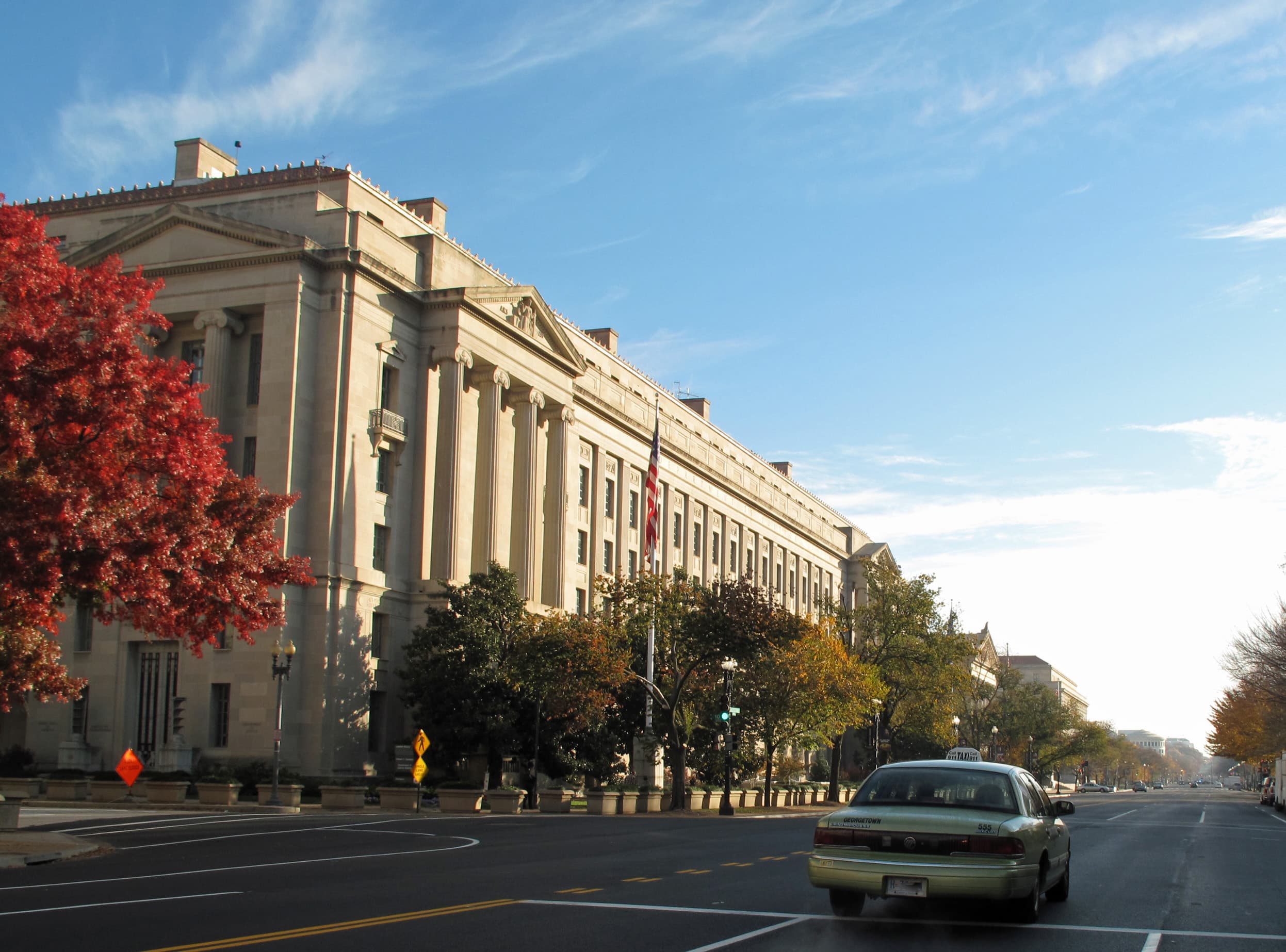
The Justice Department on Thursday announced charges against five people in what it calls a nationwide 'ghost student' scheme: stolen American identities used to file FAFSA applications and enroll fake students, with the aid refunds allegedly sent to Kenya. Two of the defendants are Kenyan nationals, not all five. The court papers in hand involve about $1.4 million in New Jersey and about $12,000 in specific Nebraska thefts. DOJ, the FBI and federal prosecutors give much larger estimates for the wider fraud, and those are their figures.
By Claire Hollister, Politics and Policy
Published · 7 min read
The Overview
The facts, straight
What DOJ announced. The Justice Department on Thursday, Oct. 29, announced the first charges from "Operation Ghostbusters." It calls the operation a nationwide investigation into a "large-scale student-loan fraud scheme." According to DOJ's release, criminals used stolen U.S. citizens' identities to file Free Application for Federal Student Aid (FAFSA) forms and enroll "ghost students" at colleges. When the aid refunds came out, they were "diverted to bank accounts controlled by foreign actors and facilitated by U.S.-based money mules, including Kenyan nationals."
The announcement came from DOJ's new National Fraud Enforcement Division, led by Assistant Attorney General Colin M. McDonald, with U.S. attorney's offices in the Eastern District of Virginia, Nebraska and New Jersey. DOJ says the work supports the White House Task Force to Eliminate Fraud, chaired by Vice President JD Vance. "The Department is charging five defendants and announcing the seizure of more than $750,000 in cryptocurrency tied to this scheme through a network associated with Kenyan nationals," McDonald said. DOJ calls the seizure "the first international seizure of its kind in Kenya."
Post: Rapid Response 47 (@RapidResponse47), the White House rapid-response account, on X, Oct. 29, 2026.
Who is charged. Five people in three cases. Some posts on Thursday described all five as Kenyan nationals. DOJ's release identifies two as Kenyan and does not give the nationality of the other three.
- New Jersey (criminal complaint, three defendants). Mabed Patricia Utate-Alberto, Patricia Arisleydi Perez and George Arturo Alfau Mendez are charged with conspiring to commit wire fraud (amended complaint; docket). The FBI agent's sworn complaint describes them as residents of Burlington and Camden counties. It alleges they acted as "witting money mules" from about March 2021 through at least January 2026, receiving aid refunds and wiring money to two co-conspirators in Kenya linked to a safari company. By the complaint's count, Utate-Alberto's accounts took in more than $1 million tied to more than 300 ghost students, Perez's more than $250,000 tied to at least 88, and Alfau Mendez's more than $119,187 tied to more than 40. DOJ lists a $1.5 million intended loss. All three have been arrested, DOJ says.
- Nebraska (indictment, one defendant). Francis Mogambi, a Kenyan citizen, faces five counts of theft of government money and five counts of aggravated identity theft (indictment; docket). The counts list five aid payments from February to May 2026, issued in other people's names and ranging from $1,954 to $3,004. They add up to $12,252 by Radio Purple's count, and DOJ lists $20,000 as the intended loss. DOJ alleges he kept 30% and sent the rest to associates in Kenya. A magistrate judge ordered him held until trial as a flight risk (order). DOJ says he arrived in May 2024 on a diversity-lottery visa and later got a green card.
- Eastern District of Virginia (sealed indictment, one defendant). DOJ says a grand jury on Oct. 21 indicted a Kenyan national, whom it did not name, on wire-fraud conspiracy and student-aid fraud charges. It alleges he received more than 700 fraudulent aid refunds totaling about $1,439,548 and moved at least $1.3 million to accounts in the U.S. and Kenya. The case is under seal, so there is no public docket to check.
How big is it? It depends who is counting. The charging papers in hand cover roughly $1.4 million in New Jersey and about $12,000 in specific Nebraska thefts. Each official estimate of the wider fraud comes from a different source, so we attribute each one:
- FBI: Assistant Director Heith Janke said the bureau "has identified more than $32 million in losses, with millions more suspected."
- DOJ release: "Estimates put the scale of the fraud well over $200 million." It also says investigators flagged 830,840 "potentially fraudulent" FSA IDs, the logins used to apply for aid, tied to "nearly $130 million." It recommended that the Education Department disable them.
- Eastern District of Virginia: First Assistant U.S. Attorney Theophani K. Stamos said investigators "uncovered hundreds of participants and hundreds of millions of dollars in stolen funds."
- New Jersey complaint: The FBI affidavit says the overall scheme "resulted in over $100 million in actual loss" to the Education Department.
DOJ says there are more than 40 open cases across 26 FBI field offices and more than 20 U.S. attorney's offices, and that the fraud has run "since at least 2021."
The AI claim. DOJ's release says fraudsters use "super intelligence" to put fake students in online classrooms and complete coursework. McDonald repeated it on camera:
Post: National Fraud Enforcement Division (@DOJFraudDiv) on X, Oct. 29, 2026.
"Some use super intelligence to fill out college applications and complete coursework so it looks like the ghost student is actually completing the class," he said. "These are not isolated errors. This is organized fraud at scale." The Treasury Department's financial-crimes unit warned in a July alert that ghost-student rings "may use AI-powered chatbots to complete coursework." Neither the Nebraska indictment nor the New Jersey complaint mentions AI, though. Both describe identity theft and money movement. The AI piece is DOJ's description of the wider scheme, not a charge against these five.
What the Left Says
The progressive and Democratic case
The people hurt first are the ones whose names were stolen. DOJ makes that point itself. McDonald described a victim who "never applied to college" but found "his name attached to a loan from a school hundreds or thousands of miles away," leaving his credit "at risk." The Treasury alert warns that victims "may be blindsided" by student-loan debt in their names or by losing their own eligibility for aid.
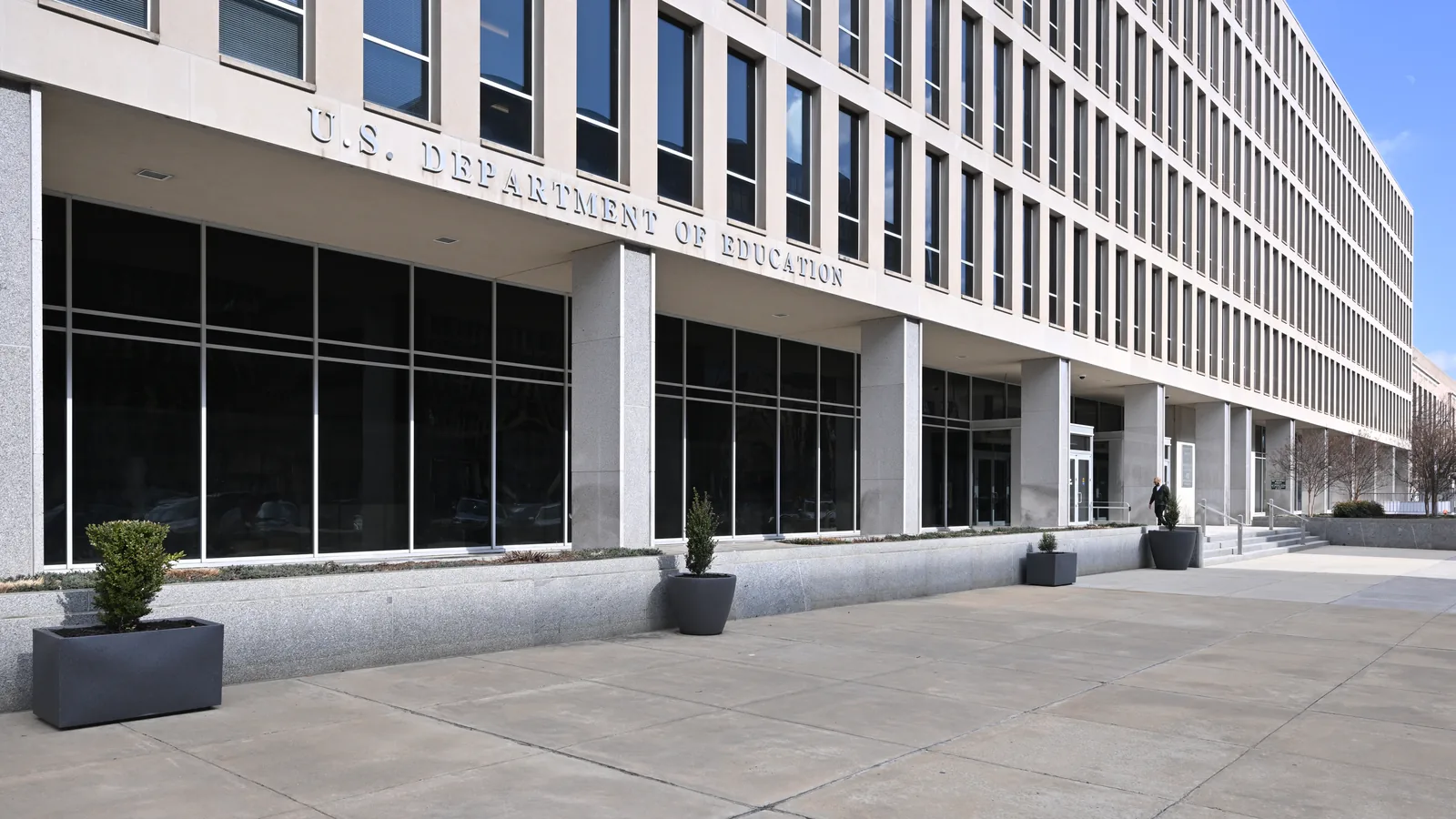
Democrats question whether the Education Department can still handle that cleanup. House Education and Workforce Committee Democrats, citing a Government Accountability Office report they requested, said in March that the administration's "layoffs of nearly half the workers at the Federal Student Aid (FSA) office" had "effectively ended its oversight of student loan servicers" (release). The concern is that the same office has to clear victims' records and catch the next wave of fraud.
There is also a cost to real students. Under the Education Department's April anti-fraud rules, FAFSA applicants who look risky to its screening system must show government ID before getting Pell Grants or loans. Colleges were already required to verify the identity of every newly enrolled student. Every added check is one more step for real applicants, including the first-generation and low-income students these programs are meant to serve.
Where Reality Likely Sits
Radio Purple's analysis
Common ground. Nobody defends ghost students. Both parties want aid going to real students, and both say identity-theft victims shouldn't be stuck with someone else's loan. The disagreement is about blame (pandemic-era rules or today's staffing cuts) and about how much ID checking real students should have to go through.
What's proven so far. Nothing yet. These are charges: a complaint in New Jersey, an indictment in Nebraska and a sealed indictment in Virginia. All five defendants are presumed innocent. The papers we could read describe money mules, people paid to move the money, not the people in Kenya alleged to run the scheme. DOJ says it plans to charge two Kenya-based co-conspirators in the New Jersey case.
On the numbers. The scheme is clearly real and large. Colleges first reported it in 2021, and several federal agencies are now involved. But the estimates run from $32 million (FBI, identified) to "well over $200 million" (DOJ's estimate), and the five cases charged Thursday cover a few million dollars at most. Treat the bigger numbers as official estimates, not totals proven in court.
If it happened to you. DOJ says possible victims should report it to the Education Department's Office of Inspector General hotline, and the FBI has sent letters to many identified victims.
Should colleges have to pay back aid they collected for students who never existed? Tell us.
What the Right Says
The conservative and Republican case
The administration says this is exactly the kind of fraud it promised to stop, and that its predecessor left the door open. "Under President Trump and Secretary McMahon's leadership, the Department of Education has saved taxpayers more than $2 billion in attempted student aid theft," Under Secretary Nicholas Kent said in the DOJ release. That figure is the department's own. Its April release blamed the Biden administration for requiring "less than one percent of students to verify their identity" after filing a FAFSA during the pandemic.
McDonald framed it as a warning to the rest of the network. "If you steal American identities, if you steal taxpayer dollars, if you exploit programs meant to help students build a future — we will find you," he said. "Whether you are in Nebraska, New Jersey, Virginia, or Nairobi, we will pursue you." DOJ says Fraud Division officials went to Kenya in September to push for extraditions and asset recovery. The case is part of the same fraud push as the administration's whistleblower reward program we covered Oct. 20.
Sources & Citations
- U.S. Department of Justice, Office of Public Affairs, “Justice Department Unveils Indictments in Nationwide 'Ghost Student' Fraud Scam Linked to Kenyan Network”, October 29, 2026.
- U.S. District Court, District of Nebraska (CourtListener/RECAP), “Indictment (Dkt. 1), United States v. Mogambi, No. 4:26-cr-03089 (D. Neb.)”, October 20, 2026.
- CourtListener (PACER/RECAP), “Docket, United States v. Mogambi, No. 4:26-cr-03089 (D. Neb.)”, October 29, 2026.
- U.S. District Court, District of Nebraska (CourtListener/RECAP), “Order of Detention Pending Trial (Dkt. 17), United States v. Mogambi”, October 26, 2026.
- U.S. District Court, District of New Jersey (CourtListener/RECAP), “Amended Criminal Complaint (Dkt. 6), United States v. Utate-Alberto et al., Mag. No. 2:26-mj-16210 (D.N.J.)”, October 20, 2026.
- CourtListener (PACER/RECAP), “Docket, United States v. Utate-Alberto, No. 2:26-mj-16210 (D.N.J.)”, October 29, 2026.
- Financial Crimes Enforcement Network, U.S. Treasury, “FinCEN Alert on Fraud Schemes Targeting Federal Student Aid (FIN-2026-Alert004)”, July 24, 2026.
- U.S. Department of Education, “U.S. Department of Education Launches Comprehensive, Nationwide Federal Student Aid Fraud Prevention Effort”, April 27, 2026.
- House Committee on Education and Workforce Democrats, “NEWS: GAO Report Finds Trump's Dismantling of the Education Department Leaves 43 Million Borrowers Without Support”, March 11, 2026.
- X, “Post by National Fraud Enforcement Division (@DOJFraudDiv)”, October 29, 2026.
- X, “Post by Rapid Response 47 (@RapidResponse47)”, October 29, 2026.
Positions above are attributed to the public statements and published reporting cited here. Quotations are taken from these sources; Radio Purple does not publish unattributed or invented quotes. See an error? Request a correction.