Utah Judge Dismisses DOJ Voter-Roll Suit, the 27th Such Dismissal; Three Cases Remain in District Court
Trump-appointed U.S. District Judge David Barlow ruled Oct. 23 that the Civil Rights Act of 1960 does not reach Utah's statewide voter list and dismissed the Justice Department's suit with prejudice. Of 31 DOJ voter-roll suits, 27 have now been dismissed, Oklahoma settled, and suits against Delaware, Hawaii and Idaho remain pending. Most dismissals are on appeal.
The Overview
The facts, straight
UPDATE: This story updates our Oct. 19 report on the Justice Department's voter-roll lawsuits. It adds the Oct. 23 Utah ruling and current case counts.
The Utah ruling. A federal judge in Utah on Oct. 23 dismissed the Justice Department's lawsuit seeking Utah's full statewide voter registration list. That list includes voters' dates of birth, driver's license numbers and the last four digits of Social Security numbers, which the state does not make public. The case is United States v. Henderson (docket).
U.S. District Judge David Barlow, who was nominated by President Trump in 2019, ruled for Lt. Gov. Deidre Henderson, Utah's chief election officer. He also granted motions to dismiss from two groups that had joined the case, the NAACP and the League of Women Voters of Utah. He denied DOJ's motion to compel production and dismissed the complaint with prejudice (memorandum decision; judgment).
Why he ruled that way. DOJ relied on Title III of the Civil Rights Act of 1960. As the decision quotes it, that law requires every election officer to preserve "all records and papers which come into [her] possession" relating to voter registration, and to make them available to the attorney general on demand. Barlow held that Utah's list falls outside the law because Henderson's office builds it rather than receiving it. He wrote that the list "is not a record or paper which 'comes into [the Utah Lieutenant Governor's] possession,' so she need not make it 'available for inspection, reproduction, or copying' by the Attorney General under Title III."
He quoted the Sixth Circuit's ruling in the Michigan case: "[a]n ordinary English speaker would not say that she has come into possession of something that she created, established, and maintained." Because he decided the case on that ground, Barlow did not reach the state's other arguments, including whether Utah's privacy laws allow redactions.
How the dispute started. According to the decision:
- DOJ first asked for the list in a July 15, 2025, letter citing the National Voter Registration Act (NVRA).
- Utah produced its publicly available version, with redactions.
- An Aug. 14, 2025, letter added a demand under the Civil Rights Act.
- DOJ sent a proposed data-sharing agreement in December 2025. Utah did not sign it, and DOJ sued on Feb. 26, 2026.
The count now. DOJ has filed 31 voter-roll lawsuits against 30 states and the District of Columbia. The higher number reflects a Georgia case refiled after a venue dismissal, according to the University of Wisconsin Law School tracker (last updated Oct. 22). With Utah, the status is:
- 27 dismissed. Barlow's decision lists the 26 earlier rulings, beginning with Michigan and most recently Georgia on Sept. 30.
- One settled. Oklahoma agreed to provide its list under a settlement that, Attorney General Gentner Drummond said, includes Privacy Act protections.
- Three pending in district court: Delaware, Hawaii and Idaho. The Hawaii and Idaho cases are stayed while the Ninth Circuit considers the California and Oregon appeals, according to the Wisconsin tracker.
Appeals. The only appeal decided so far went against DOJ. The Sixth Circuit affirmed the Michigan dismissal and denied rehearing by the full court, Barlow's decision notes. DOJ has appealed most other dismissals, with appeals docketed in the First, Second, Third, Fourth, Seventh, Eighth, Ninth, Tenth and D.C. Circuits, according to the decision's case list. The Supreme Court has not ruled. As of Oct. 24, the public Utah docket showed no notice of appeal.
Judges across party lines. ProPublica's analysis of the first 26 dismissals found that eight came from judges appointed by President Trump, four from President George W. Bush's appointees and 14 from Democratic appointees (ProPublica). Barlow makes nine Trump appointees by that count. DOJ has said, in a statement to ProPublica: "Disagreement with the government's position is not evidence of bad faith. We look forward to making our case on appeal."
The separate policy ruling. On Oct. 9, U.S. District Judge Sparkle L. Sooknanan of the District of Columbia ruled in a separate suit brought by Common Cause and individual voters (docket). Her order "sets aside and vacates the Defendants' Voter List Maintenance Policy." Her memorandum opinion says DOJ sent requests to 49 states and D.C., and that "at least 18 states fully cooperated."
Related Radio Purple coverage:
- the Justice Department's Oct. 15 suit over California mail ballots
- federal pressure on election officials, in our 60 Minutes report
What the Left Says
The progressive and Democratic case
State officials and voting-rights groups argue the demands invade voters' privacy and exceed federal power. "We appreciate Judge Barlow's ruling dismissing the Department of Justice's lawsuit that sought to force us to disclose the private data of every Utah voter," Henderson, a Republican, said in a statement to The Salt Lake Tribune. "Our office will continue to uphold the rule of law and safeguard the fundamental right to free, fair, and secure elections for the people of Utah."
California Secretary of State Shirley N. Weber, a Democrat, called the September 2025 suit against her office "a fishing expedition and pretext for partisan policy objectives." She said DOJ was seeking "the private and personal information of 23 million California voters" (statement).
In the Common Cause case, Sooknanan wrote that the challenged policy "represents the federal government's attempt to decide who gets to vote. But Congress has left that authority where our Constitution has always placed it: with the states." She added: "DOJ cannot run roughshod over longstanding laws that were carefully crafted to protect the rights of the American people."
Where Reality Likely Sits
Radio Purple's analysis
What the law says. Accurate voter rolls and privacy protections are not mutually exclusive. Federal law, including the National Voter Registration Act and the Help America Vote Act, requires states to keep computerized lists and make reasonable efforts to remove ineligible voters, the Justice Department explains.
What the courts have said. District courts have so far uniformly rejected DOJ's reading of the 1960 law. Barlow's Utah ruling is the 27th dismissal, and it came from a Trump appointee. The only appeals court to rule, the Sixth Circuit, agreed with the dismissals.
What is still open:
- whether other appeals courts, and eventually the Supreme Court, see it differently
- the three pending district cases
- whether Oklahoma-style agreements, under which a state produces data with privacy terms, become the path forward
Common ground:
- Both sides say they want clean rolls.
- Both say only eligible citizens should vote.
The dispute is over who holds the data, and on what legal authority.
What the Right Says
The conservative and Republican case
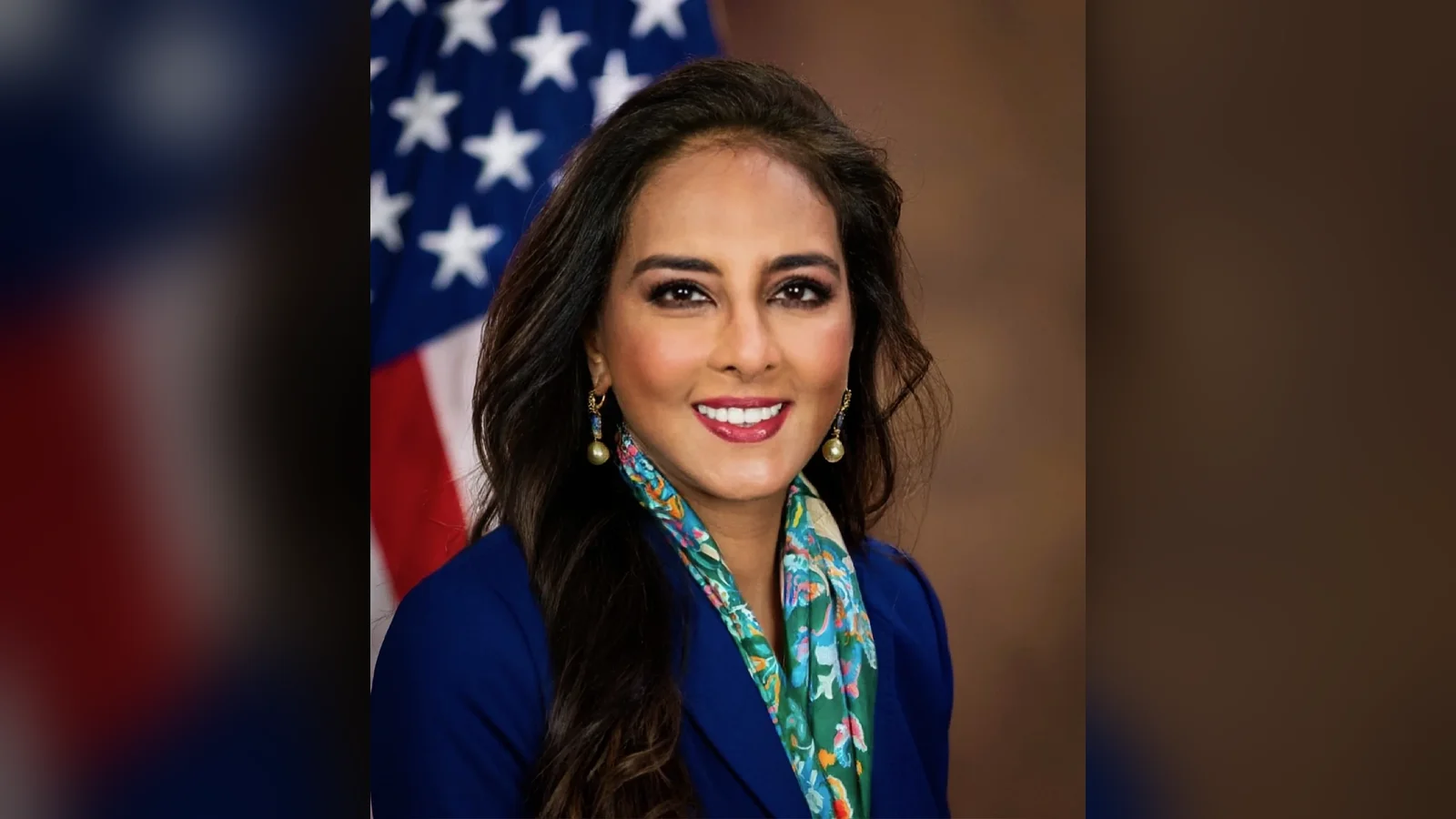
The administration says it is enforcing federal list-maintenance laws and checking that only citizens are registered. Assistant Attorney General Harmeet K. Dhillon, who heads the Civil Rights Division, posted on Oct. 20, with a short video:
Post: Harmeet Dhillon (@AAGDhillon) on X, Oct. 20, 2026, 8:05 p.m. ET.
"We @CivilRights have requested the voter rolls of ALL 50 states. 1/3 of the states cooperated, and 2/3 didn’t (including CA). @TheJusticeDept will continue to enforce federal laws, such as VRA, HAVA, and NVRA, to ensure free and fair elections for ALL Americans!"
Announcing additional suits in February, then-Attorney General Pamela Bondi said, "Accurate, well-maintained voter rolls are a requisite for the election integrity that the American people deserve" (DOJ release). Dhillon said in the same release that DOJ "will not be deterred, regardless of party affiliation, from carrying out critical election integrity legal duties." The release said the 1960 law gives the attorney general authority to demand statewide lists that "can be cross-checked effectively for improper registrations."
In Utah, DOJ argued that reading Title III to exclude lists that officials build themselves would undermine the law's purpose and produce "absurd results," according to Barlow's decision. The Oklahoma settlement is the administration's example of a state producing its list with privacy terms. Dhillon called the settlement "a positive step forward for election integrity" (Oklahoma AG).
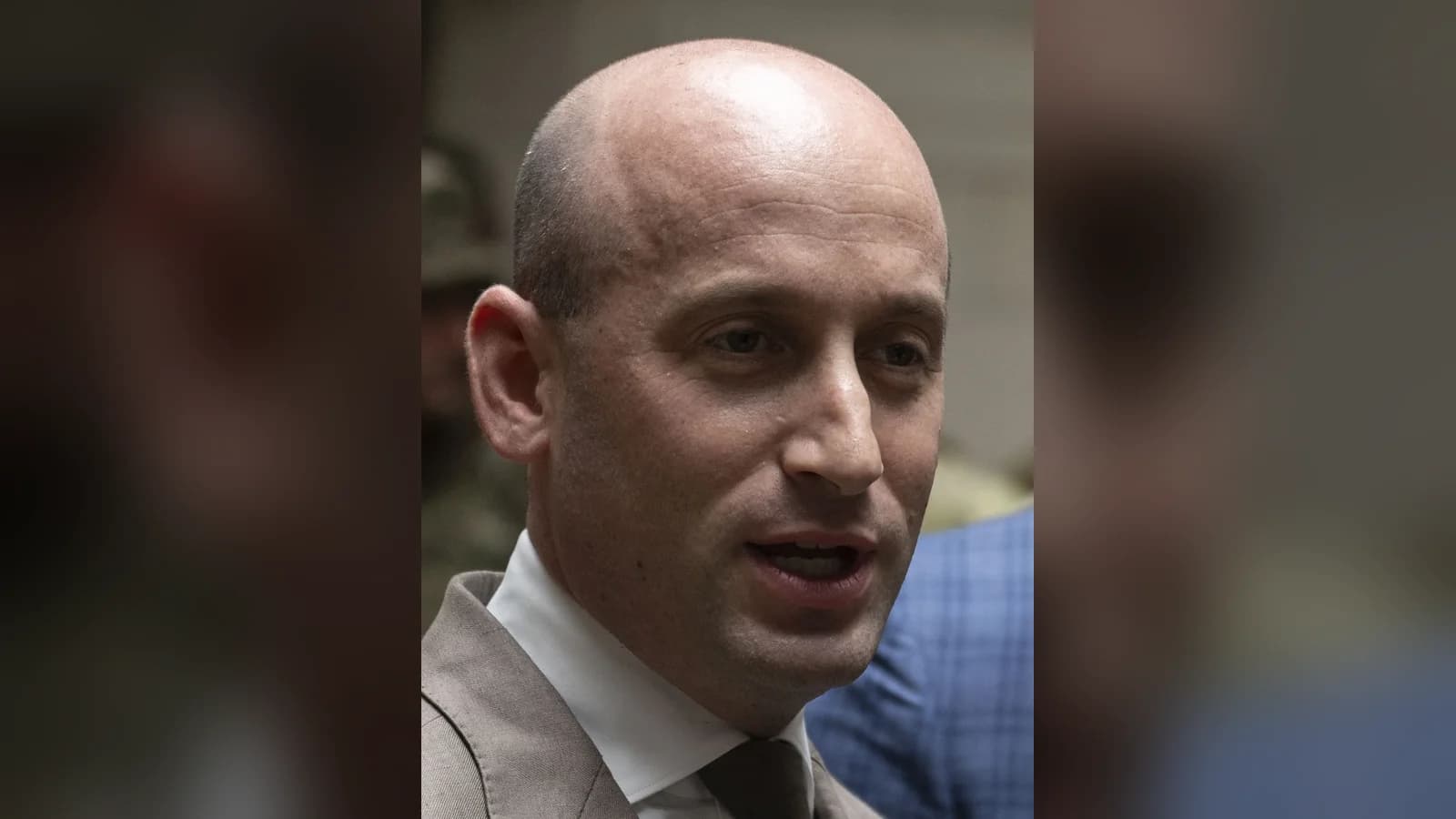
On Oct. 19, White House deputy chief of staff Stephen Miller posted that "Democrat states refused and Democrat judges blocked DOJ/DHS." The court record shows refusals and dismissals in Republican-led states too. Utah, West Virginia, Kentucky, Georgia, New Hampshire and Idaho were all sued, and the Utah, West Virginia, Kentucky, Georgia and New Hampshire suits have been dismissed.
Sources & Citations
- U.S. District Court for the District of Utah (CourtListener/RECAP), “Memorandum Decision and Order, United States v. Henderson, No. 2:26-cv-00166 (D. Utah Oct. 23, 2026)”, October 23, 2026.
- U.S. District Court for the District of Utah (CourtListener/RECAP), “Judgment, United States v. Henderson (D. Utah Oct. 23, 2026)”, October 23, 2026.
- CourtListener, “United States v. Henderson, No. 2:26-cv-00166 (D. Utah), docket”, October 23, 2026.
- CourtListener, “United States v. Albence, No. 1:25-cv-01453 (D. Del.), docket”, October 24, 2026.
- CourtListener, “United States v. Nago, No. 1:25-cv-00522 (D. Haw.), docket”, October 24, 2026.
- CourtListener, “United States v. McGrane, No. 1:26-cv-00197 (D. Idaho), docket”, October 24, 2026.
- Federal Judicial Center, “Barlow, David Bruce”, October 24, 2026.
- Common Cause (court PDF), “Memorandum Opinion, Common Cause v. U.S. Department of Justice, No. 26-cv-1352 (D.D.C. Oct. 9, 2026)”, October 9, 2026.
- CourtListener/RECAP, “Order, Common Cause v. U.S. Department of Justice (D.D.C. Oct. 9, 2026)”, October 9, 2026.
- CourtListener, “Common Cause v. U.S. Department of Justice, docket”, October 24, 2026.
- U.S. Department of Justice, “Justice Department Sues Five Additional States for Failure to Produce Voter Rolls”, February 26, 2026.
- Oklahoma Attorney General, “Drummond enters settlement with DOJ to safeguard voter registration data”, March 24, 2026.
- X (@AAGDhillon), “Harmeet Dhillon post on X”, October 20, 2026.
- X (@StephenM), “Stephen Miller post on X”, October 19, 2026.
- California Secretary of State, “California Secretary of State Shirley N. Weber statement on DOJ lawsuit”, September 25, 2025.
- U.S. Department of Justice, Civil Rights Division, “The National Voter Registration Act Of 1993 (NVRA)”, November 1, 2024.
- State Democracy Research Initiative, University of Wisconsin Law School, “Tracker: DOJ Lawsuits Seeking States' Sensitive Voter Data”, October 22, 2026.
- ProPublica, “"Devoid of Any Factual Basis": Again and Again, Judges Have Dismissed Trump's Voter Data Lawsuits”, October 16, 2026.
- The Salt Lake Tribune, “Judge tosses Trump's DOJ suit seeking Utah's full voter rolls”, October 23, 2026.
Positions above are attributed to the public statements and published reporting cited here. Quotations are taken from these sources; Radio Purple does not publish unattributed or invented quotes. See an error? Request a correction.