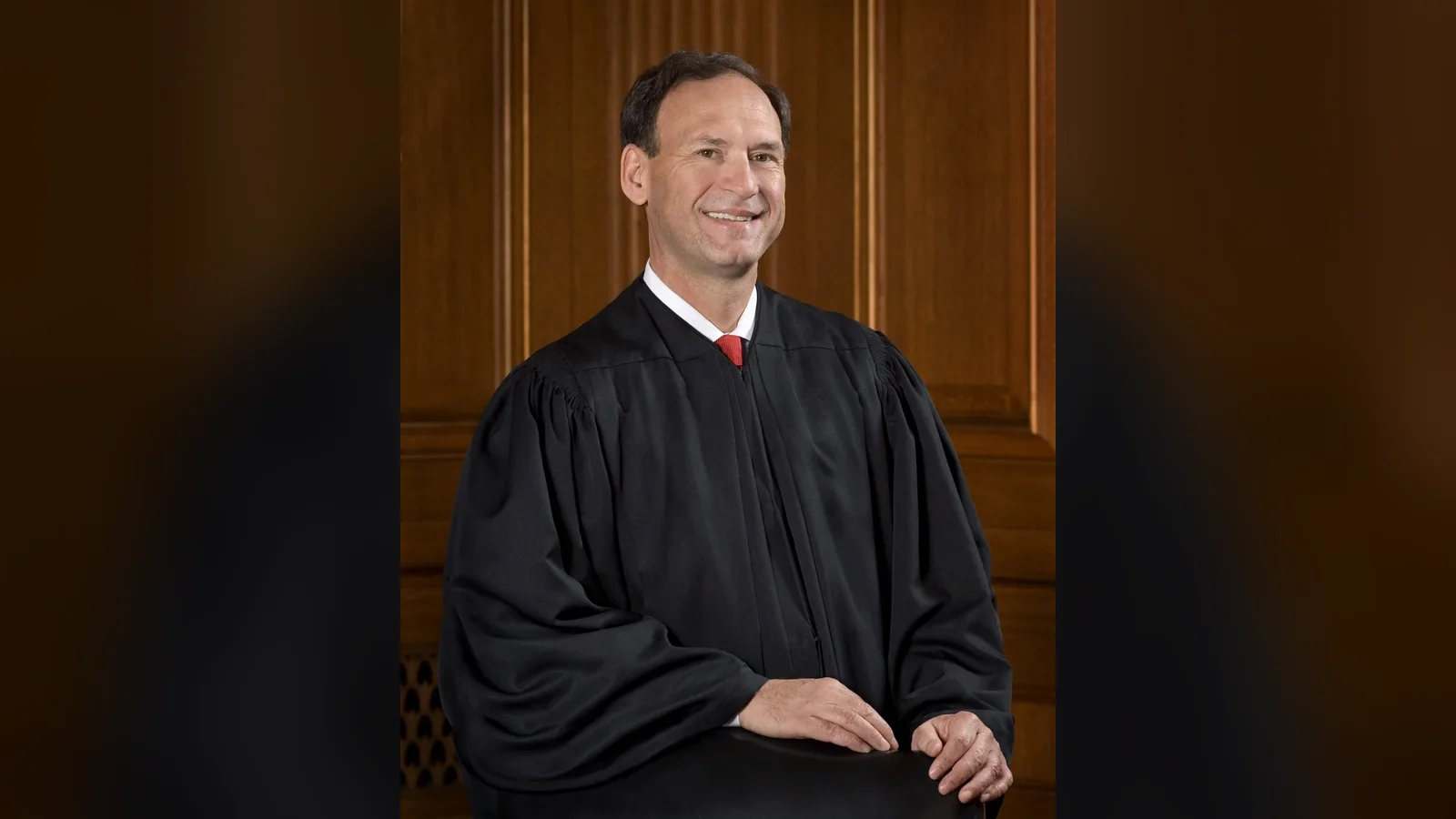
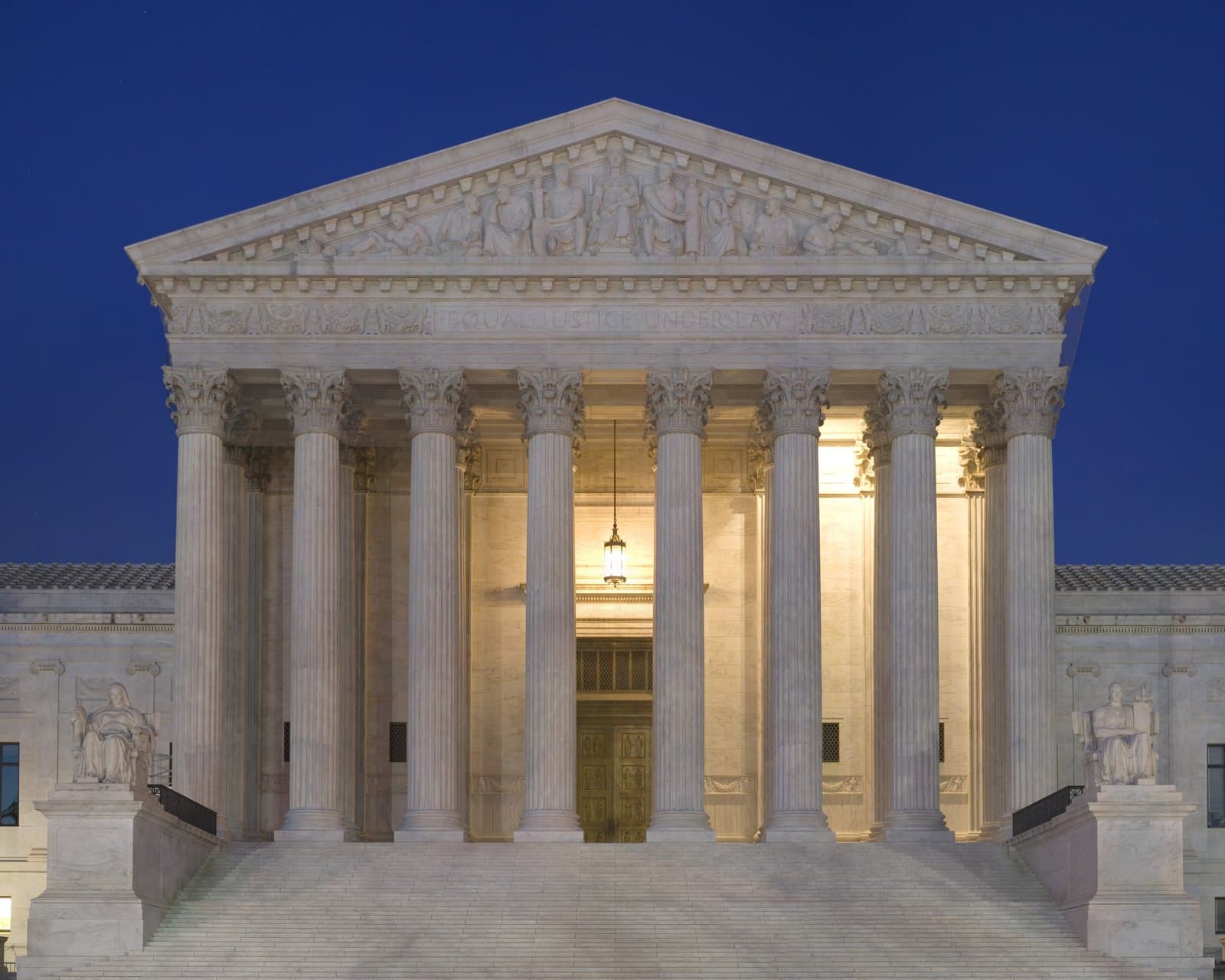
Justice Kagan Says Court's Election Rulings Have Hurt Democracy, but Defends Its Independence From the President
Speaking at Catholic University's law school, Justice Elena Kagan faulted the majority's rulings on partisan gerrymandering, the Voting Rights Act and campaign finance. She also pushed back on the charge that the court is a rubber stamp for President Trump.
The Overview
The facts, straight
Justice Elena Kagan said Tuesday that the Supreme Court's conservative majority has hurt American democracy with its rulings on partisan gerrymandering, the Voting Rights Act and campaign finance. In the same appearance, she defended the court against the charge that it simply does what President Trump wants.
Kagan spoke at the Catholic University of America's Columbus School of Law in Washington, in a question-and-answer session with law professor Joel Alicea. The school had not posted video or a transcript as of early Wednesday, so the quotes below are as reported by NBC News. Other outlets' versions of the same lines differ by a word or two.
"I do think in all these areas the court has blinded itself to the very deleterious effects of their rulings on how the political system works and has created a democracy that doesn't work as well as it should," Kagan said.
She dissented in each of the election cases she criticized:
- Rucho v. Common Cause (2019), which held that federal courts can't police partisan gerrymandering;
- Louisiana v. Callais (April 2026), which held that Louisiana's second majority-Black congressional district was an unconstitutional racial gerrymander because the Voting Rights Act did not require it;
- National Republican Senatorial Committee v. FEC (June 2026), which struck down federal limits on political parties' spending coordinated with their candidates.
The remarks came two weeks before the Nov. 3 midterms, after a year in which several states redrew their congressional maps mid-decade. Radio Purple's latest forecast roundup covers where the House and Senate races stand.
What the Left Says
The progressive and Democratic case
Kagan's critique centered on maps. She said the 2019 Rucho ruling was particularly harmful: as a result, "both parties have been engaged in a race to the bottom in terms of doing these partisan gerrymanders." The lopsided maps, she said, deny people "their rights to voting equality" and have the effect of "driving people away from the center, towards the wings, toward the extremes." She said the court's inaction is "making what I think is unfortunately a too polarized country even more so," and called the result "very destructive of our democracy."
That echoes her Rucho dissent, which opened: "For the first time ever, this Court refuses to remedy a constitutional violation because it thinks the task beyond judicial capabilities."
She also took aim at what she called the "evisceration" of the 1965 Voting Rights Act. She wrote the principal dissent in Callais, joined by Justices Sonia Sotomayor and Ketanji Brown Jackson.
On money, she said: "I think you know the people of America look around this political system and think that all this money, chasing all these political candidates, is a nightmare, and they're right." In her NRSC dissent, she wrote that the limits the court struck down had for more than half a century "guarded against actual and apparent quid pro quo corruption in our political system."
She also criticized Trump v. Slaughter, the June ruling that let the President remove a Federal Trade Commission member despite the law's for-cause protection, warning of the "danger of one president being able to ride roughshod over all the other institutions of government and over the people." Kagan joined Justice Sotomayor's dissent in that case.
Where Reality Likely Sits
Radio Purple's analysis
There's more common ground here than the headlines suggest. Kagan's own line was that "both parties" have raced to the bottom on gerrymandering, and this year's mid-decade redistricting did run through red and blue states alike, from Texas to California. The Rucho majority didn't defend the practice either. It acknowledged that such gerrymandering is "incompatible with democratic principles" while concluding that the fix belongs to states and Congress rather than federal courts. The real disagreement is over who should act, not whether there's a problem.
Discomfort with money in politics also crosses party lines, even where people disagree about whether limits violate free speech.
And Kagan, a dissenter in all of these cases, defended the court's independence. NBC reported that she pushed back on claims from the left that the court is a rubber stamp for President Trump, citing rulings he lost, including the tariff case, in which the court held that the emergency-powers law the administration relied on does not authorize tariffs. The court is "deeply conservative," she said, but in certain cases has "definitely pushed back on the president."
With Election Day two weeks out and questions about the court's future membership already in the air, Kagan's message cut both ways: she thinks the majority has gotten election law wrong, and she doesn't think it's anyone's rubber stamp. Radio Purple will update this story if a transcript or video is released.
What the Right Says
The conservative and Republican case
The majority opinions answer Kagan directly. In Rucho, Chief Justice John Roberts wrote: "We conclude that partisan gerrymandering claims present political questions beyond the reach of the federal courts. Federal judges have no license to reallocate political power between the two major political parties, with no plausible grant of authority in the Constitution, and no legal standards to limit and direct their decisions."
That's a judicial-restraint argument, not an endorsement of gerrymandering. "Our conclusion does not condone excessive partisan gerrymandering," Roberts wrote. "The States, for example, are actively addressing the issue on a number of fronts." He added that "the Framers gave Congress the power to do something about partisan gerrymandering" through the Constitution's Elections Clause. In other words, voters, state courts, state constitutions and Congress can fix maps; unelected federal judges shouldn't.
In Callais, Justice Samuel Alito wrote for the majority that Section 2 of the Voting Rights Act "was designed to enforce the Constitution—not collide with it," and that lower courts had "sometimes applied this Court's § 2 precedents in a way that forces States to engage in the very race-based discrimination that the Constitution forbids."
On campaign money, Justice Brett Kavanaugh's NRSC majority rested on the First Amendment. FECA's party spending limits "necessarily abridge political parties' freedom of speech," he wrote, because "virtually every means of communicating ideas in today's mass society requires the expenditure of money."
And in Slaughter, Roberts grounded the President's removal power in Article II: officers who exercise executive power must stay accountable to the President, and "to remain accountable to the President, those officers must be removable by the President."
Sources & Citations
- NBC News, “Justice Elena Kagan accuses Supreme Court's conservative majority of undermining democracy (source of Kagan's Oct. 20 quotes)”, October 20, 2026.
- Supreme Court of the United States, “Rucho v. Common Cause, No. 18-422 (2019)”, June 27, 2019.
- Supreme Court of the United States, “Louisiana v. Callais, No. 24-109 (2026)”, April 29, 2026.
- Supreme Court of the United States, “National Republican Senatorial Committee v. FEC, No. 24-621 (2026)”, June 30, 2026.
- Supreme Court of the United States, “Trump v. Slaughter, No. 25-332 (2026)”, June 29, 2026.
- Supreme Court of the United States, “Learning Resources, Inc. v. Trump, No. 24-1287 (2026)”, February 20, 2026.
Positions above are attributed to the public statements and published reporting cited here. Quotations are taken from these sources; Radio Purple does not publish unattributed or invented quotes. See an error? Request a correction.