Social Security's Clock: What Each Party Leaves Out
The 1983 rescue that both parties praise trimmed benefits and raised taxes. Each side tends to remember only half of it. Here are the current numbers, from the 2026 Trustees Report and the 2027 cost-of-living announcement, and what each party leaves out.
By Claire Hollister, Politics and Policy
Published · 5 min read
The Overview
The facts, straight
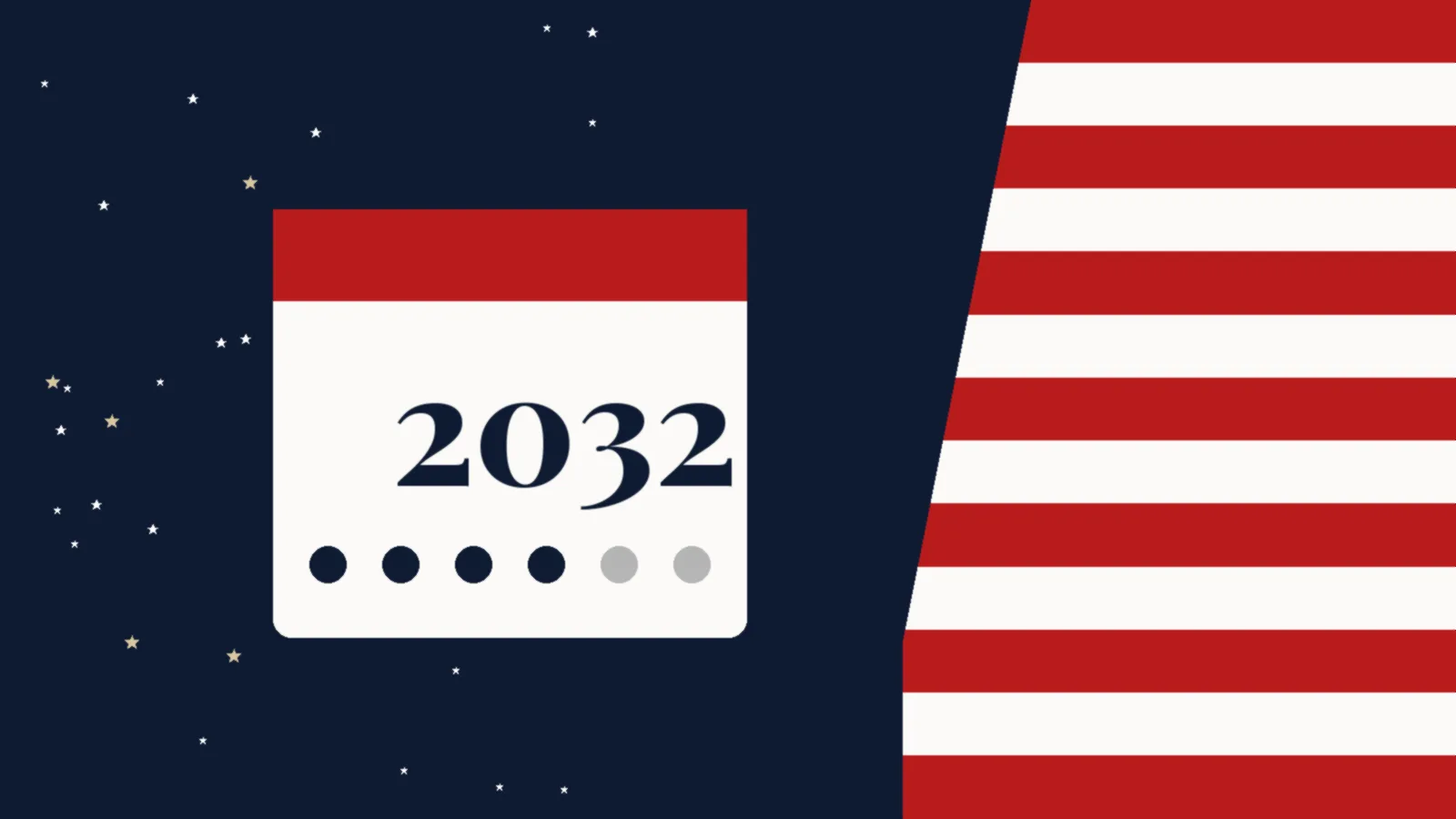
The clock. Social Security's retirement trust fund (Old-Age and Survivors Insurance) is projected to run out of reserves in the fourth quarter of 2032. Once it does, incoming taxes would cover only 78% of scheduled benefits, according to the 2026 Trustees Report, released June 9, 2026.
If the retirement and disability funds are counted together, reserves last until 2034, when 83% of benefits would be payable. The report puts the 75-year shortfall at 4.42% of taxable payroll, up from 3.82% a year earlier (SSA release).
The numbers now. All figures are from the Social Security Administration.
- 2027 cost-of-living adjustment (COLA): 3.6%, announced Oct. 14, 2026. It begins with benefits payable in January 2027, for nearly 72 million Social Security beneficiaries. Higher payments to about 7.3 million people receiving Supplemental Security Income (SSI) begin Dec. 31, 2026 (SSA).
- Average retired-worker benefit: estimated at $2,095 a month before the increase and $2,170 after (2027 fact sheet).
- Taxable maximum: Social Security payroll tax applies to wages up to $192,300 in 2027, up from $184,500 in 2026. The tax rate is set by law at 6.2% each for employees and employers (SSA actuaries).
- Maximum benefit at full retirement age: $4,188 a month in 2027 (fact sheet).
- Full retirement age: 67 for anyone born in 1960 or later (SSA).
The last deadline. The last time the program faced a deadline like this was 1983. Back then the retirement fund was expected to run out of money "possibly as early as August 1983," according to SSA's history of the commission that drafted the fix. A Republican president and a Democratic House closed the gap with the Social Security Amendments of 1983. Neither party's talking points fully describe that deal. Here is what each side tends to leave out.
What the Left Says
The progressive and Democratic case
The current Democratic message is about protecting and expanding benefits. "We need to enhance benefits for the first time in more than 50 years," Rep. John Larson of Connecticut, the top Democrat on the House Social Security subcommittee, said at a June 10, 2026, hearing (statement).
The fact Democrats don't lead with. The 1983 rescue reached into benefits. According to SSA's summary of the law, it:
- raised the age for unreduced retirement benefits "in two stages to 67 by the year 2027," starting with workers born in 1938, while benefits stayed available at 62 "but with greater reduction";
- delayed that year's cost-of-living increase from June to December.
That higher retirement age is now fully in place for people born in 1960 or later. Yet House Speaker Tip O'Neill, a Democrat who helped appoint the commission behind the deal, stood at the White House signing and called it "a happy day for America" (remarks). The rescue Democrats hold up as a model of bipartisan repair came with a higher retirement age attached.
Where Reality Likely Sits
Radio Purple's analysis
Common ground then. The 1983 deal started from a promise both parties still make. "We promised that we would protect beneficiaries against any loss in current benefits. We have," Reagan said at the signing. Others at the signing stressed the same bipartisanship (remarks):
- Senate Majority Leader Howard Baker, a Republican, described the bill as the work of "Republicans and Democrats together."
- O'Neill credited members "on both sides of the aisle."
Reagan, O'Neill and Baker appointed the commission jointly. The final bill cleared the House 243 to 102 and the Senate 58 to 14 (SSA historian). SSA's historian later summed it up bluntly: "One might fairly say that cutting benefits and raising revenues was the purpose of the 1983 Amendments."
Officials now. The Trustees "recommend that lawmakers address the projected trust fund shortfalls in a timely way to phase in necessary changes gradually and give workers and beneficiaries time to adjust" (2026 report). Social Security Commissioner Frank Bisignano said in June 2026 that "it is important for lawmakers and the Social Security Administration to work together to ensure the trust funds continue to provide financial stability now and for future generations" (SSA).
The cost of waiting. The Trustees' own math shows that delay makes the choices harder (2026 report):
| Fix for 75-year solvency | If it started in January 2026 | If it started in 2034 |
|---|---|---|
| Payroll tax rate (now 12.4%) | 16.65% | 17.30% |
| Benefit cut for everyone | 25.2% | 28.5% |
The 1983 answer was to give a little on both sides. Reagan put it this way: "the essence of bipartisanship is to give up a little in order to get a lot" (remarks).
Your turn: If a 2032 fix has to mix taxes and benefits the way the 1983 deal did, which piece would you accept first?
What the Right Says
The conservative and Republican case
The Republican Study Committee, a House caucus that listed 189 members in July 2025 (RSC), ruled out the tax route in the budget it released in March 2024. "Raising taxes on people will further punish them and burden the broader economy," the budget said (RSC budget, p. 107).
The fact Republicans don't lead with. The same 1983 law, signed by President Ronald Reagan, raised revenue. According to SSA's summary, it:
- moved up payroll tax increases that were already scheduled;
- starting in 1984, made up to half of benefits taxable for retirees above set income levels.
SSA's historian notes that this was the first time benefits had been subject to federal income tax (research note). Taxes on benefits brought $58 billion into the trust funds in 2025 (SSA).
Reagan made the case for the trade-off at the April 20, 1983, signing. "In this compromise we have struck the best possible balance between the taxes we pay and the benefits paid back," he said, and added, "I think we've gotten a very great deal" (remarks).
Sources & Citations
- Social Security Administration, “The 2026 Annual Report of the Board of Trustees of the Federal OASI and DI Trust Funds: Highlights”, June 9, 2026.
- Social Security Administration, Historian's Office, “Summary of P.L. 98-21, (H.R. 1900) Social Security Amendments of 1983”, April 20, 1983.
- Social Security Administration, Historian's Office, “Research Note #12: Taxation of Social Security Benefits”, February 1, 2001.
- Social Security Administration, Historian's Office, “Report of the National Commission on Social Security Reform (Greenspan Commission)”, January 1, 1983.
- The American Presidency Project, UC Santa Barbara, “Remarks on Signing the Social Security Amendments of 1983”, April 20, 1983.
- House Ways and Means Committee Democrats, “Larson Opening Statement at Joint Social Security and Worker & Family Support Subcommittee Hearing with Commissioner of Social Security, Frank J. Bisignano”, June 10, 2026.
- Republican Study Committee, “Fiscal Sanity to Save America: Republican Study Committee Fiscal Year 2025 Budget”, March 20, 2024.
- Republican Study Committee, “RSC's Report Card: Six Months of Straight A's in Conservative Victories”, July 23, 2025.
- Social Security Administration, “Social Security Board of Trustees: Projection for Combined Trust Funds Remains Consistent with Prior Year”, June 9, 2026.
- Social Security Administration, “Social Security Announces 3.6 Percent Benefit Increase for 2027”, October 14, 2026.
- Social Security Administration, “2027 Cost-of-Living Adjustment (COLA) Fact Sheet”, October 14, 2026.
- Social Security Administration, Office of the Chief Actuary, “Contribution and Benefit Base”, October 14, 2026.
- Social Security Administration, “Benefits Planner: Retirement Age and Benefit Reduction”, October 24, 2026.
Positions above are attributed to the public statements and published reporting cited here. Quotations are taken from these sources; Radio Purple does not publish unattributed or invented quotes. See an error? Request a correction.