Divided Ninth Circuit Rules Trump's 2025 Federalization of California Guard in Los Angeles Was Unlawful
A 2-1 panel upheld a district court order against the June 2025 deployment of 4,000 California Guard members, holding that neither the 'regular forces' nor the 'rebellion' provision of the federal statute applied. Judge Mark Bennett dissented, saying the court should not have decided the appeal at all. The Guard has been back under state control since the end of 2025.
The Overview
The facts, straight
A divided panel of the U.S. Court of Appeals for the Ninth Circuit ruled 2-1 on Friday that President Donald Trump lacked authority under 10 U.S.C. § 12406 to federalize members of the California National Guard for Los Angeles in June 2025. The panel upheld a district court order that barred the deployment and directed that control of the Guard go back to Gov. Gavin Newsom.
The case is Newsom v. Trump. According to the opinion, the President invoked § 12406 in June 2025 "to order 4,000 members of California's National Guard into federal service for 60 days to protect federal property and personnel." The order followed demonstrations against federal immigration enforcement in Los Angeles. California and Newsom sued the President, the Secretary of Defense and the Department of Defense. U.S. District Judge Charles Breyer issued a temporary restraining order, and the appeals court treated it as a preliminary injunction for purposes of appeal (district docket).
Who decided it.
- Majority. Judge Jennifer Sung wrote the opinion. Judge Eric Miller joined it "in full" and added a short concurrence.
- Dissent. Judge Mark Bennett dissented.
- Appointments. According to the Federal Judicial Center, Sung was nominated by President Joe Biden. Miller and Bennett were nominated by President Trump (Miller, Bennett).
What the majority held.
- Review is allowed, but deferential. The President's finding that a required emergency exists is subject to judicial review. The panel called that review "highly deferential." At a minimum, courts ask whether the determination "reflects a colorable assessment of the facts and law within a 'range of honest judgment.'" The court wrote that it is "mindful that the President's range of discretion in this context is necessarily broad."
- "Regular forces." The government relied on the clause allowing federalization when the President is "unable with the regular forces to execute the laws." In December 2025, in Trump v. Illinois, the Supreme Court read that clause to require two showings. First, the President must have authority to execute the laws with the regular military. Second, he must be unable to do so with those forces. The panel held the government had not made either showing for California.
- "Rebellion." The government also argued the order was "independently warranted" by the clause covering "a rebellion or danger of a rebellion." The panel held that a determination that conditions in Los Angeles on June 7, 2025, met that standard "does not reflect a colorable assessment within a range of honest judgment."
- Constitutional claims. The panel held the order therefore exceeded the President's statutory authority and intruded on Congress's power over calling forth the militia. It called the order "ultra vires and unconstitutional." Because the state's Tenth Amendment claim was, as the government argued below, "wholly derivative" of the statutory claim, the panel held that claim likely succeeds too.
What the record showed. The court relied on the district court's findings. Those findings describe protesters who threw rocks and other objects, including a Molotov cocktail; burned a vehicle; looted a gas station; and vandalized property. They also include clashes with officers. The district court also found "no evidence of any organized (as opposed to sporadic) violence" and said there could "be no debate that most protesters demonstrated peacefully."
The Guard's status now. The ruling does not change who controls the Guard today. In a separate published order issued the same day, the panel wrote that "the California National Guard is no longer federalized or deployed in Los Angeles." It said that is "because the district court's injunction barring the extension of the federalization took effect." That happened after the appeals court lifted its partial stay with the government's consent on Dec. 31, 2025.
The motion to dismiss. The government had moved to dismiss its own appeal after Trump v. Illinois. In the same order, the panel refused, by the same 2-1 split, for three reasons:
- the appeal is not moot;
- the court had already invested substantial time in the case;
- refusing would discourage a party from "manipulating the formation of precedent."
The majority cited the President's Dec. 31, 2025, Truth Social post. In it he said, "We are removing the National Guard from Chicago, Los Angeles, and Portland," but added that "[w]e will come back, perhaps in a much different and stronger form, when crime begins to soar again—Only a question of time!" The panel granted the government's motion to dismiss a second appeal, over the extension injunction. A third appeal, over a separate Posse Comitatus Act injunction, remains on hold.
The administration won an earlier round in the same appeal. In a June 19, 2025, stay order, the court said the President "likely acted within his authority" under the "regular forces" clause. Friday's opinion said the Supreme Court's later decision in Illinois, issued after the appeal was argued, required a different result on that clause.
What the Left Says
The progressive and Democratic case
Newsom said in a statement: "Today is a crucial day for the rule of law, upholding the Constitution, and defending democracy." He said the state "created essential legal precedent that not only protects Californians but all Americans."
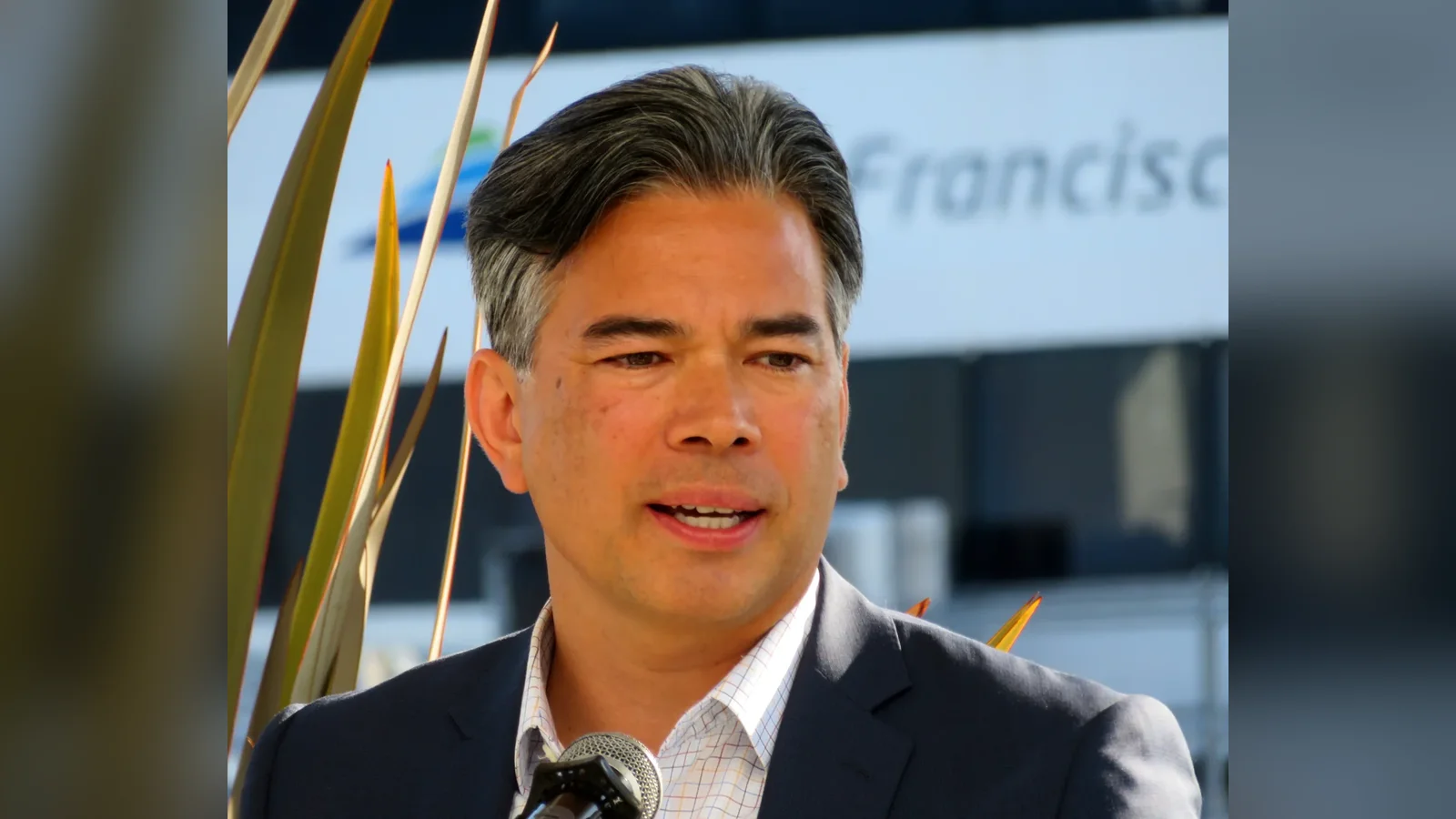
California Attorney General Rob Bonta, who filed the suit on the state's behalf, said in the same release, "Once again, the courts have rejected the Trump Administration's attempts to circumvent the law for his own political agenda." He also posted on X:
Post: Rob Bonta (@AGRobBonta) on X, Oct. 23, 2026, 3:05 p.m. ET.
"EXCELLENT NEWS: The Ninth Circuit has made clear that President Trump's deployment of California's National Guard last year was unlawful and unconstitutional. It also blocked the Trump Administration's transparent attempt to keep a pathway open to federalize the Guard over California's wishes again. When the President tramples on the Constitution and the rights of Californians, we'll fight to hold him accountable—and we'll win."
Radio Purple has previously reported on Bonta's lawsuits against the administration.
Where Reality Likely Sits
Radio Purple's analysis
The practical effect is about the future, not the present. The Guard has been back under state control since the end of 2025. What changes is that the Ninth Circuit now has a binding opinion on § 12406 in its region. Under that opinion, presidential emergency determinations are reviewable, the "regular forces" clause requires the Illinois showings, and the "rebellion" clause covers an "unusual and extreme exigency." The majority itself stressed that the President's discretion here is "necessarily broad," and its reasoning turns on the specific record from June 2025.
Common ground:
- The majority calls review of the President's determination "highly deferential." Bennett would not have reached the question in this case at all.
- The majority and the dissent both treat Trump v. Illinois as directly relevant authority that arrived after the June 2025 stay order.
- The record shows both peaceful protest and real violence against officers and property.
What to watch:
- whether the government seeks rehearing by the full Ninth Circuit or Supreme Court review
- what happens to the held Posse Comitatus Act appeal
- further proceedings in Breyer's court
- whether the administration invokes § 12406 again in California or elsewhere
What the Right Says
The conservative and Republican case
The White House and the Justice Department had not commented publicly on the ruling by publication. The administration's position comes through in its arguments, as the opinion describes them, and in Bennett's dissent.
The administration's arguments.
- Deference to the President. The government argued that the President's call is not for courts to second-guess. It relied on the Supreme Court's 1827 decision in Martin v. Mott, which described the President's emergency determination as "conclusive upon all other persons."
- Protecting federal property and personnel. The order's stated purpose was "to protect federal property and personnel." The government argued that the President has "an 'inherent' protective and emergency power derived from the Take Care Clause" to use the military for that mission. The panel, following Illinois, held that this power did not satisfy the statute.
- "Rebellion." The government argued that the district court read "rebellion" too narrowly. It said that reading would not cover past occasions when Presidents called out the militia "to address open defiance of federal authority in situations that fell short of organized efforts to overthrow the government."
- The record. The majority acknowledged the violence. It wrote that while many people protested peacefully, "there were bad actors who committed serious breaches of the peace and acts of violence."
Bennett's dissent. Bennett made three main points.
- Restraint. He said the court should not have decided the appeal at all. He said the "unique procedural posture," with scant briefing on Illinois, "counsels against reaching the difficult and important questions." He said the majority "disregards the cardinal principle of judicial restraint," citing Chief Justice John Roberts's concurrence in Dobbs: "If it is not necessary to decide more to dispose of a case, then it is necessary not to decide more."
- Ultra vires claims. He said the majority skipped the "onerous ultra vires review standard" for statutory claims of this kind. The Supreme Court has called such a claim "a Hail Mary pass" that rarely succeeds. "In today's majority opinion, that Hail Mary pass scores," Bennett wrote. He said the majority "invents out of whole cloth a so called 'constitutional ultra vires claim.'" Citing Trump v. CASA, he said that "Plaintiffs lack a right of action," so "the injunction against Defendants exceeds the limits on federal judicial authority."
- Tenth Amendment. On the Tenth Amendment, he wrote: "The answer is obviously not." Because the Constitution gives Congress the power to call forth the militia, he said, "control of the National Guard is not a power 'reserved to the States.'"
On the motion to dismiss, Bennett wrote that he saw "no signs of gamesmanship." He said, "There is nothing wrong or improper about changing one's litigation strategy based on intervening authority from the Supreme Court."
Miller joined the majority but wrote that the government "forfeited twice over" its argument that no ultra vires cause of action was available. He said the panel was bound by circuit precedent on the point. He added that "there is room to debate" whether that precedent "is consistent with Supreme Court precedent."
Sources & Citations
- U.S. Court of Appeals for the Ninth Circuit, “Newsom v. Trump, No. 25-3727, opinion (9th Cir. Oct. 23, 2026)”, October 23, 2026.
- U.S. Court of Appeals for the Ninth Circuit, “Newsom v. Trump, Nos. 25-3727 and 25-7781, order on motions to dismiss (9th Cir. Oct. 23, 2026)”, October 23, 2026.
- CourtListener, “Newsom v. Trump, No. 3:25-cv-04870 (N.D. Cal.), docket”, October 23, 2026.
- Legal Information Institute (U.S. Code text), “10 U.S.C. § 12406, National Guard in Federal service: call”, October 23, 2026.
- Supreme Court of the United States, “Trump v. Illinois, No. 25A443, docket”, December 23, 2025.
- Federal Judicial Center, “Bennett, Mark Jeremy”, October 23, 2026.
- Federal Judicial Center, “Miller, Eric David”, October 23, 2026.
- Federal Judicial Center, “Sung, Jennifer”, October 23, 2026.
- Office of the Governor of California, “Governor Newsom on court's final decision holding President Trump accountable for illegal federalization of the California National Guard”, October 23, 2026.
- X, “California Attorney General Rob Bonta post on X”, October 23, 2026.
Positions above are attributed to the public statements and published reporting cited here. Quotations are taken from these sources; Radio Purple does not publish unattributed or invented quotes. See an error? Request a correction.