Trump Says New Mexico Should 'Immediately' Rename Itself 'New America'
In a Monday afternoon Truth Social post, President Trump said the new name would add 'great value and prestige' to the state. Changing New Mexico's name would require a state constitutional amendment approved by the Legislature and by voters.
By Claire Hollister, Politics and Policy
Published · 6 min read
The Overview
The facts, straight
BREAKING: President Trump posted Monday afternoon that New Mexico should change its name. This story may be updated. Times ET.
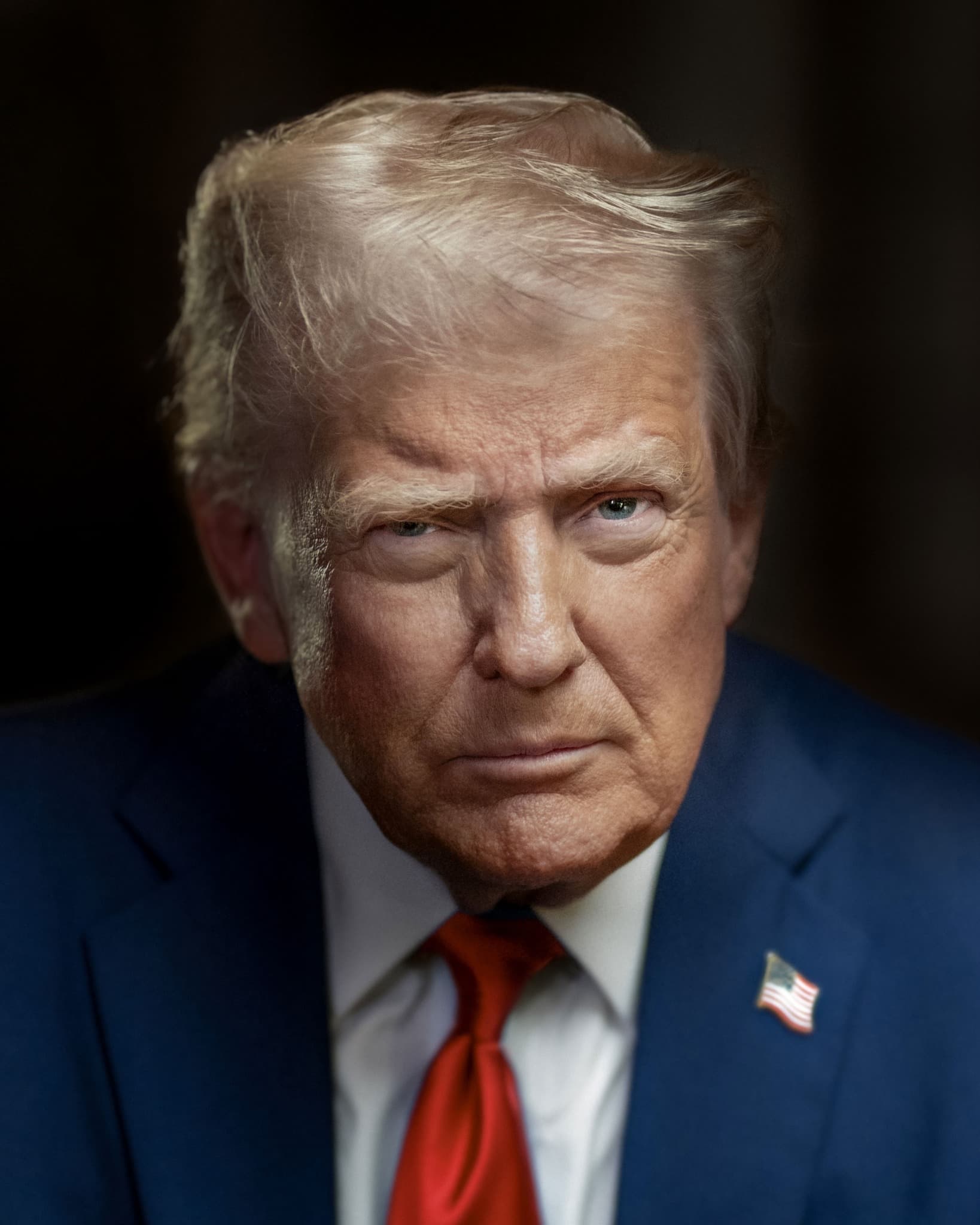
President Donald Trump said Monday that New Mexico should change its name to "New America." He posted at 3:06 p.m. ET on Truth Social:
Post: Donald J. Trump (@realDonaldTrump) on Truth Social, Oct. 19, 2026, 3:06 p.m. ET.
"New Mexico should immediately change its name to New America. We are not Mexico, we are the United States of America! The name would add great value and prestige to the State! Home Values and Incomes would rise, and you would be even prouder while saluting our beautiful American Flag! Maybe even the Crooked Elections, that New Mexico is known for, would become honest again! President DONALD J. TRUMP"
Not the first time. The President raised the idea in early September. On Sept. 6, the White House's official X account shared an image of his Truth Social post showing a map of New Mexico with a red X over the state's name and "America" written below:
Post: The White House (@WhiteHouse) on X, Sept. 6, 2026, 1:51 p.m. ET.
What a name change would take. The state's name is written into the first line of the New Mexico Constitution: "The name of this state is New Mexico," according to Article I of the constitution published by the Secretary of State. Under Article XIX, an amendment may be proposed in either house of the Legislature at a regular session and must win "a majority of all members elected to each of the two houses voting separately." It then goes to voters at the next regular election, or at a special election held at least six months after the Legislature adjourns, and becomes part of the constitution if "ratified by a majority of the electors voting on the amendment."
New Mexico lawmakers have considered a name change before. In 2001, state Rep. Miguel P. García introduced House Joint Resolution 8 to rename the state "Nuevo Mexico." The resolution died after it was postponed indefinitely in committee. The Legislature's fiscal impact report on that bill said a change would affect maps, textbooks and addresses nationwide. It also noted that the state was admitted to the Union in 1912 "under the name 'New Mexico,'" and said that history "raises the interesting question of whether New Mexico acquired its name under the state's constitution or by the act of Congress admitting it as a state." The report's analyst concluded the state "probably has the authority to change its own name." Radio Purple found no federal law that sets out a process for renaming a state, so whether Congress would play any role is untested.
Where the name comes from. The same legislative report says the name Nuevo México "was given by Spanish explorers who led expeditions into the area in the late 16th century," beginning with the Chamuscado-Rodríguez expedition of 1581. Santa Fe became the capital of the Spanish province of Nuevo México about 1610, according to the National Park Service, which dates the Spanish period to 1821 and the Mexican period that followed to 1846. The name was in use for more than two centuries before New Mexico came under Mexican rule.
The elections claim. The President's post says New Mexico is "known for" "Crooked Elections." The New Mexico Secretary of State's office says results are canvassed at the county level, canvassed again by a separate team at the state level and then audited by an independent contractor before the State Canvassing Board makes them official. The state also conducts a risk-limiting audit after every statewide election, hand-counting randomly selected races and precincts and comparing the hand count with the machine count. The office publishes the certified state canvass for the 2024 general election.
What the Left Says
The progressive and Democratic case
New Mexico Democrats have rejected the idea. When the President posted the map in September, Gov. Michelle Lujan Grisham, a Democrat, wrote on X: "New Mexico's name isn't up for debate — it's been ours since before the United States existed." She added that "While the White House wastes time coloring on maps, Nuevo México is busy doing the work."
Two days later, the governor posted that "New Mexicans decide what New Mexico is called." She wrote: "Our name represents more than 400 years of history. The Spanish colony of Nuevo México dates to the late 1500s, and Santa Fe was established as its capital in 1610." She also described the amendment process, saying a change would first need approval "in both chambers of the New Mexico Legislature" and then a majority of voters, and concluded: "Our name carries centuries of history, culture and identity. And if anyone wants to change it, New Mexicans get the final say."
Sen. Martin Heinrich, a New Mexico Democrat, posted on Sept. 6: "Three things I will always call by their actual names... The Gulf of Mexico / Lake Ontario / New Mexico."
As of Monday afternoon, Radio Purple had not found new on-the-record statements from New Mexico officials responding to the President's Oct. 19 post.
Where Reality Likely Sits
Radio Purple's analysis
Both sides start from pride: the President in the United States, and New Mexico's leaders in a name that, by the governor's account and the state's own records, dates to the late 1500s. Whatever one thinks of the idea, under the state constitution the decision runs through New Mexico's Legislature and voters. The constitution sets a clear path — a majority of the members elected to each legislative chamber, then a majority of voters — and the one modern proposal to change the name, in 2001, did not get out of committee. Whether Congress would have any say is an open, untested legal question. On elections, the President's characterization is his claim; the state's official records show a multi-step canvass, an independent audit and post-election hand-count audits behind its certified results.
What the Right Says
The conservative and Republican case
The President makes the case in his own words: that "We are not Mexico, we are the United States of America!" and that "New America" would "add great value and prestige to the State!" He says "Home Values and Incomes would rise" and that residents "would be even prouder while saluting our beautiful American Flag!"
The White House's official account amplified the President's map in September, and his post Monday frames the change as a matter of national identity: a state named for the United States rather than for another country.
Sources & Citations
- Truth Social (@realDonaldTrump), “Donald J. Trump post on Truth Social”, October 19, 2026.
- Trump's Truth (trumpstruth.org), “Archived copy of Truth Social post”, October 19, 2026.
- X (@WhiteHouse), “White House post on X (New Mexico map)”, September 6, 2026.
- X (@GovMLG), “Gov. Michelle Lujan Grisham post on X”, September 6, 2026.
- X (@GovMLG), “Gov. Michelle Lujan Grisham post on X”, September 8, 2026.
- New Mexico Secretary of State, “Constitution of the State of New Mexico (2025 edition)”, January 1, 2025.
- New Mexico Legislature, Legislative Finance Committee, “Fiscal Impact Report, HJR 8, Change State Name to "Nuevo Mexico" (2001)”, February 9, 2001.
- New Mexico Legislature, “2001 Regular Session, HJR 8”, January 1, 2001.
- U.S. National Park Service, “El Camino Real de Tierra Adentro National Historic Trail: History & Culture”, January 1, 2026.
- New Mexico Secretary of State, “How We Secure Your Vote”, January 1, 2026.
- New Mexico Secretary of State, “2024 General Election State Canvass”, January 1, 2024.
- X (@SenatorHeinrich), “Sen. Martin Heinrich post on X”, September 6, 2026.
Positions above are attributed to the public statements and published reporting cited here. Quotations are taken from these sources; Radio Purple does not publish unattributed or invented quotes. See an error? Request a correction.