Full Fifth Circuit Rules 9-8 That the House Broke the Constitution by Counting Proxies, Keeping Pregnant-Worker Law Blocked for Texas
The full federal appeals court in New Orleans held that the House couldn't count absent members as 'present' by proxy when it passed the 2022 spending package. It upheld an order barring enforcement of the Pregnant Workers Fairness Act against Texas as an employer, and only Texas. Eight judges dissented.
The Overview
The facts, straight
The full U.S. Court of Appeals for the Fifth Circuit ruled 9-8 Friday that the House of Representatives violated the Constitution when it counted absent members as "present" by proxy to pass the $1.7 trillion spending package in December 2022 (opinion; docket). The ruling keeps in place an order that bars the Justice Department and the Equal Employment Opportunity Commission from enforcing the Pregnant Workers Fairness Act against Texas as an employer.
What the court decided. The Constitution's Quorum Clause says a majority of each chamber "shall constitute a Quorum to do Business." Judge Cory T. Wilson, writing for the majority, said the clause's "text, context, original understanding, and unbroken historical application all indicate that Members of Congress must be present for quorum purposes." His bottom line: "'Proxy presence' does not count." Each chamber has "much discretion" over its rules, he wrote, but "the Quorum Clause's constraints on congressional power cannot be circumvented by congressional fiat" (p. 3). The court also rejected the government's argument that judges can't look behind a bill once Congress has certified it as passed (pp. 3, 41).
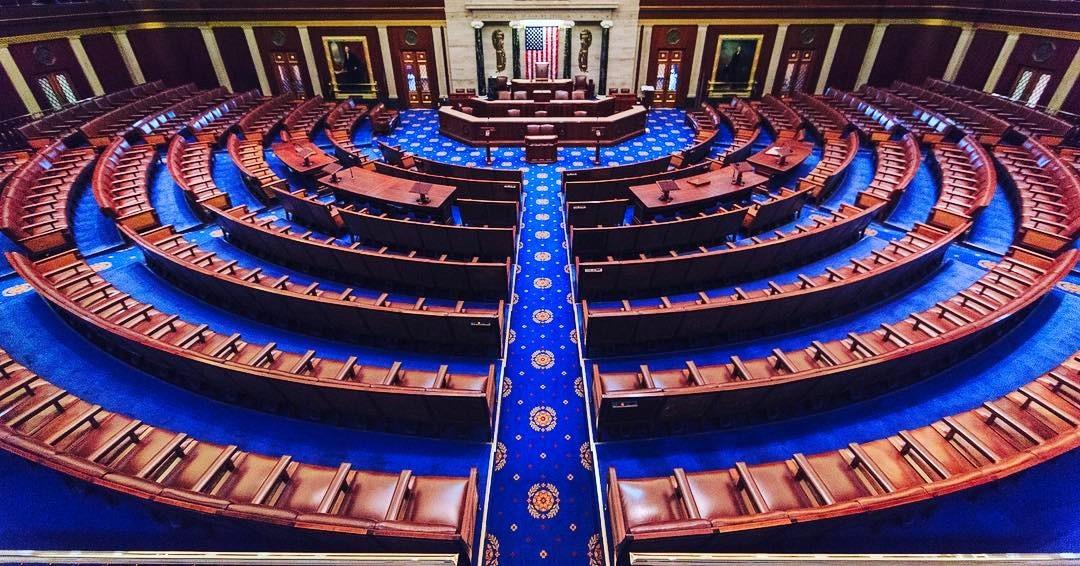
How the bill passed. The House approved the package, the Consolidated Appropriations Act, 2023, on Dec. 23, 2022, by 225 to 201, with one member voting present and four not voting. According to the opinion, 226 members recorded their presence and vote by proxy under a rule the House adopted early in the COVID-19 pandemic, so fewer than a majority were in the chamber. Rep. Chip Roy, R-Texas, objected on the floor that the bill was "moving off the floor without a physical quorum present," and the presiding officer ruled that a quorum was present because proxies counted (pp. 4-5).
What it doesn't do. The ruling doesn't repeal the pregnant-workers law or undo the rest of the spending package. Texas sued only over that one law, and the district court blocked it only as applied to Texas. "While we conclude today that the House's passage of the Act violated the Quorum Clause, our decision extends no further than affirming the relief awarded by the district court," Wilson wrote (p. 41). The majority also left open whether the long-standing practice of passing measures by unanimous consent with few members present is constitutional (p. 39, n. 25).
Who was on each side. Joining Wilson were Chief Judge Elrod and Judges Jones, Smith, Willett, Ho, Duncan, Engelhardt and Oldham. Judge James E. Graves Jr. wrote the dissent, joined by Judges Stewart, Richman, Southwick, Higginson, Douglas and Ramirez. Judge Catharina Haynes also dissented. In a footnote, the court says she "does not think it is appropriate to throw out the Federal House of Representatives in this arena" and "appreciates Judge Graves's dissent" (p. 2).
The dissent. Graves wrote that Texas was "attempting to veto Congress's protections for pregnant workers and new parents while retaining millions in federal funding" from the same law (p. 42). He pointed to the Senate's use of unanimous consent since 1789, often with few senators present (p. 50). The dissent also argued that the Constitution lets each chamber set its own procedures, and that Congress used that power "during a national pandemic," noting that the Supreme Court itself changed its procedures during COVID (p. 57). And he challenged the narrow remedy: "There is no explanation offered to explain why, if the entirety of the statute was unconstitutionally passed, this court's judgment should be limited only to one small sliver of the multi-trillion dollar bill." He called the majority's decision "illogical, inexplicable, and invalid" (pp. 57-58).
How it got here. Texas sued in 2023. U.S. District Judge James Wesley Hendrix of the Northern District of Texas ruled for Texas after a bench trial in February 2024 and issued a permanent injunction limited to the pregnant-workers law (district docket). A divided three-judge Fifth Circuit panel reversed in 2025, finding the Quorum Clause doesn't require physical presence. The full court then agreed to rehear the case and threw out the panel's decision (pp. 6-7). The federal government, which defended the law in court, didn't respond to requests for comment from Reuters, according to NBC News, which published the Reuters story. Neither did Texas Attorney General Ken Paxton's office.
What the Left Says
The progressive and Democratic case
Democrats say the ruling threatens protections for pregnant workers. Rep. Jerry Nadler of New York, who says he wrote the law, posted that the decision "raises serious concerns about the future of critical protections for millions of pregnant workers across Texas, Louisiana, and Mississippi," the states the Fifth Circuit covers. He called Paxton's lawsuit a "politically motivated attack." The court's order itself applies only to Texas as an employer.
The law requires employers to make reasonable accommodations for pregnant and postpartum workers. Nadler wrote that it means they "never have to choose between their health and a paycheck."
Where Reality Likely Sits
Radio Purple's analysis
- The practical reach is narrow, for now. The pregnant-workers law still applies nationwide except that the federal government can't enforce it against Texas as an employer. The legal reasoning is broader. It says the whole spending package was passed unconstitutionally, and the dissent warned that the majority didn't explain why its judgment stops at one law.
- The law had support from both parties. When the House voted on the Pregnant Workers Fairness Act as a stand-alone bill in May 2021, it passed 315 to 101, with 216 Democrats and 99 Republicans in favor (roll call). It later became law as part of the 2022 spending package. Nothing in the ruling stops Congress from passing it again with a physical quorum.
- The Supreme Court is the likely next stop. Bloomberg Law reported that the decision is "certain to be appealed to the US Supreme Court." The government hasn't filed anything yet. Under the docket, the court's mandate is set to issue Jan. 11, 2027.
- The open questions are big. The majority didn't decide whether unanimous-consent votes with few members present are valid. Bloomberg Law reported the ruling could lead to other challenges to the 2022 package.
What the Right Says
The conservative and Republican case
Republicans who fought proxy voting say the Constitution requires a majority of members to actually show up to do business. Roy, who raised the objection on the House floor in 2022, posted Friday night:
His office added that Roy had filed a friend-of-the-court brief raising the same issues. That brief, filed with nine other House Republicans in the district court, argued that "Article I [of the Constitution] unmistakably requires that House and Senate members be physically present when conducting certain legislative business," and that "the COVID-19 pandemic is no excuse to abandon these commitments," according to a release from Roy's office.
Texas's core argument, as the opinion summarizes it, is that the House's proxy-presence rule "is inconsistent with the Constitution's Quorum Clause" (p. 2). Proxy voting began in May 2020 as an emergency measure and was dropped when Republicans took control of the House after the November 2022 elections, Reuters reported. We found no statement on the ruling from Paxton or the EEOC as of early Monday.
Sources & Citations
- U.S. Court of Appeals for the Fifth Circuit, “State of Texas v. Blanche, No. 24-10386 (5th Cir. Nov. 20, 2026) (en banc opinion)”, November 20, 2026.
- CourtListener, “State of Texas v. Blanche, 24-10386 (docket)”, November 23, 2026.
- CourtListener, “State of Texas v. Department of Justice, 5:23-cv-00034 (N.D. Tex.) (docket)”, November 23, 2026.
- Office of the Clerk, U.S. House of Representatives, “H.R. 1065 (117th Congress), Pregnant Workers Fairness Act: House roll call 143”, May 14, 2021.
- Office of Rep. Chip Roy, “Rep. Roy files amicus brief over unconstitutional omnibus bill”, January 1, 2023.
- NBC News, “House unconstitutionally passed spending bill in 2022, court rules (Reuters)”, November 20, 2026.
- Bloomberg Law, “Congress Proxy-Voting Found Unconstitutional by Fifth Circuit”, November 21, 2026.
Positions above are attributed to the public statements and published reporting cited here. Quotations are taken from these sources; Radio Purple does not publish unattributed or invented quotes. See an error? Request a correction.