Trump Administration Asks Supreme Court to Make California Set Aside 20,000 Mail Ballots
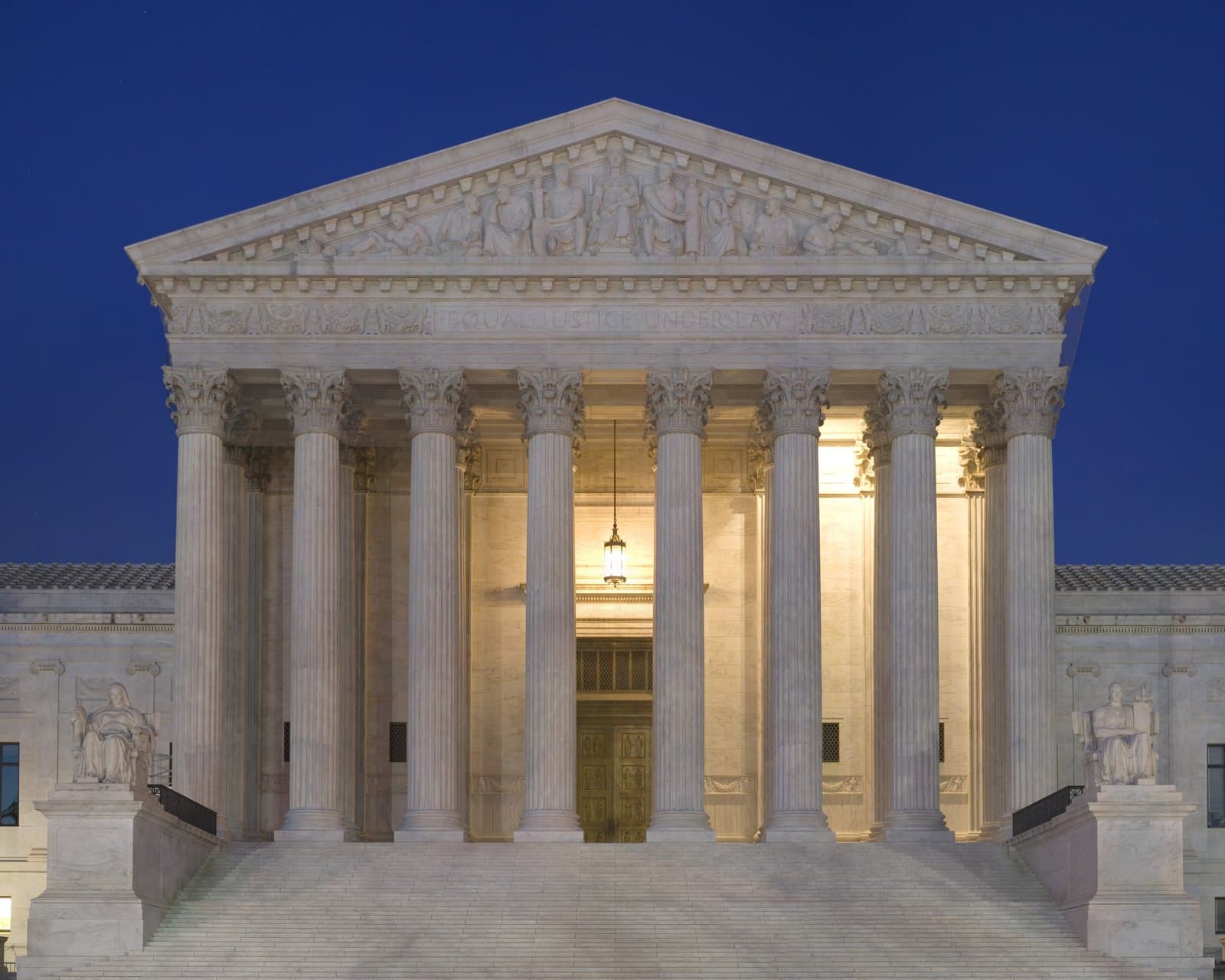
On the eve of Election Day, the Solicitor General filed an emergency application asking the Supreme Court to order California to segregate mail ballots cast by more than 20,000 people federal agencies flag as likely noncitizens. A district judge and a divided Ninth Circuit panel have already said no. The request goes first to Justice Elena Kagan.
The Overview
The facts, straight
BREAKING / DEVELOPING: As of our check of the Supreme Court's docket system late Monday morning PT, the application had not yet been given a docket number, and Justice Elena Kagan had not set a deadline for California to respond or issued any order. We will update when she does. This follows our reports on the Ninth Circuit's first ruling, Judge Carter's refusal to make California hold back the ballots, and the order barring DOJ threats against election workers.
The filing. On Monday, Nov. 2, the day before Election Day, Solicitor General D. John Sauer asked the Supreme Court to step into the Justice Department's fight with California over mail ballots. The case is United States v. State of California, et al., No. 26A__ (number not yet assigned) (application). The 22-page filing asks for two things:
- an injunction pending appeal that "requires California to segregate mail ballots from persons whom the United States has identified as likely noncitizens," lasting through DOJ's appeal in the Ninth Circuit and "any subsequent proceedings in this Court"; and
- an administrative injunction "to that effect while it considers this application," meaning an immediate, short-term order while the justices decide.
The respondents are the State of California, Secretary of State Shirley Weber and Los Angeles County Registrar Dean Logan, plus the voting-rights and civil-rights groups that joined the case, including LULAC and the NAACP.
What DOJ says the list is. The application says the government "has identified more than 20,000 individuals who appear to be registered to vote in California based on publicly available information at the time that information was received, but who, in the United States' view, are likely not U.S. citizens." It describes how: U.S. Citizenship and Immigration Services ran a publicly accessible version of California's voter roll through Accurint, a commercial data platform that can link a name and address to a Social Security number, birth date and phone number; USCIS investigators then reviewed the remaining names by hand; and Homeland Security Investigations did a further review. The government gave the list to the Secretary of State and Los Angeles County in mid-October and sued on Oct. 15 when they declined to set the ballots aside.
DOJ stresses it is asking that ballots be held, "not to cancel" them. It points to California's own rules, which say "challenged ballot[s] shall be set aside" and resolved "in a segregated area." It argues that once the ballots are mixed in, "there is no way to get the challenged ballots back," and that the harm "will continue to mount through Tuesday, November 10," California's deadline for receiving mail ballots postmarked by Election Day. The application does not ask the Court to rule by a specific date.
Who decides first. Emergency requests from the Ninth Circuit go to Justice Kagan. She can act alone, ask California to respond, or refer the request to the full Court. As of our check, she had not set a response deadline (The Hill; CNBC).
Two courts have said no. On Oct. 28, U.S. District Judge David O. Carter in Los Angeles denied DOJ's request (order, Dkt. 149; docket, No. 2:26-cv-12025). The application summarizes his reasons: DOJ lacks standing and a right to sue, is unlikely to win its argument that federal law overrides California's procedures, and is asking for relief that would likely violate other federal election laws, and the balance of harms weighs against it. Carter wrote, "Never before in American history has the federal government, on the eve of an election, sought to coerce a state and local government to abandon their own Constitutional elections procedures."
On Oct. 30, a Ninth Circuit panel voted 2-1 to deny DOJ's emergency motion (order, No. 26-7231). Judges Mark Bennett and Gabriel Sanchez assumed DOJ could sue but found it unlikely to win. They wrote that "there is no feasible way to identify and segregate the ballots of specific individuals without potentially catastrophic effects on the entire system," and they agreed with Carter's finding that DOJ's process for building the list "was not credible." Judge Patrick Bumatay dissented. Four days earlier, the same panel had dismissed DOJ's first appeal because Carter had not yet ruled (No. 26-7070).
DOJ's legal argument. The application makes four main points. Federal law, 18 U.S.C. 611, makes it "unlawful for any alien to vote" in federal elections, so a state may not count those ballots, and the Constitution's Supremacy Clause means California's attestation-based procedures can't override that. The United States has standing to enforce its own laws. Setting ballots aside isn't the same as removing voters, so the National Voter Registration Act's 90-day quiet period doesn't apply. And the Purcell principle, which warns federal courts against changing election rules close to an election, is about the rules for casting votes, not "what happens after votes are cast." It leans on Justice Samuel Alito's 2020 order in a Pennsylvania case that late-arriving mail ballots be kept separate.
Still ahead in the trial court. Carter's case continues. He has appointed a technical special master and set an expedited Nov. 13 hearing at which witnesses are to testify on "the reliability of the October List and the methodology Plaintiff used to produce it" (Dkt. 159). Separately, a federal judge in San Francisco has temporarily barred DOJ and Homeland Security from threatening election workers over flagged ballots through Nov. 16.
What the Left Says
The progressive and Democratic case
California officials and the voting-rights groups say the list is the problem. In their view, a last-minute federal list that hasn't been tested in court can't justify pulling ballots out of the count in the middle of an election.
The most detailed public check came in a filing on Oct. 31 by the Coalition for Humane Immigrant Rights (CHIRLA), based on an analysis by two UCLA Voting Rights Project analysts who were given the list under a federal court order. They found that 8,880 of the 20,930 names, or 42%, "do not correspond to anyone in California's current voter file," according to the Associated Press. They also found at least 22 U.S. citizens on it and estimated that nearly 7,500 naturalized citizens would be "highly likely" to be wrongly flagged under the government's method. Earlier, Los Angeles County told the court that in a 200-person sample, 38.9% of the records with a meaningful birthplace listed a U.S. birth, which is strong evidence of citizenship (NPR).
Attorney General Rob Bonta has said there is no widespread voter fraud and that the federal government has no right to step into California's elections:
Post: Attorney General Rob Bonta (@AGRobBonta) on X, Oct. 31, 2026.
After the Ninth Circuit ruling, his office said the administration's "baseless claims of widespread fraud are an attempt to sow doubt in our democratic process and risk disenfranchising eligible voters" and that noncitizen voting "is exceptionally rare" (release). We found no post from Bonta or Gov. Gavin Newsom on the Supreme Court filing itself as of late Monday morning PT.
The judges who ruled against DOJ also made a practical argument: California's counties would have to build new procedures to find and hold specific ballots while the election is underway. Carter, crediting a Los Angeles County declaration, found that doing so could put the state's Dec. 11 certification deadline at risk and "provoke catastrophic change, upending the administration of the election."
Where Reality Likely Sits
Radio Purple's analysis
Common ground. Everyone in this case agrees that noncitizens may not vote in federal elections. California law bans it too. Everyone also agrees eligible voters' ballots must count. The fight is over whether a federal list, delivered weeks before an election, is enough to hold ballots out of the count, or whether names must be checked one by one under the state's process first.
What the record shows so far. Two courts, including a Trump-appointed appellate judge in the majority, found DOJ hadn't shown the list was reliable enough to act on mid-election. The outside analysis found more than 4 in 10 names didn't match California's current voter file, which means many people on the list likely aren't registered there now and so would have no ballot to set aside. None of that proves no noncitizen is on the list. DOJ has charged individual people with illegal voting in California, and those cases can go forward whatever the justices do here.
Why the timing matters. DOJ's strongest point is that mixed-in ballots can't be pulled back out. California's strongest point is that changing procedures for one group of ballots during a live count risks errors for everyone. The Supreme Court usually holds DOJ to a higher bar for an injunction, which orders something new, than for a stay, which pauses a lower-court order, and the application concedes that. A short administrative order, if Kagan grants one, would not decide the case.
What to watch. Whether Kagan sets a response deadline or refers the request to the full Court; whether any order comes before California's Nov. 10 ballot-receipt deadline; Carter's Nov. 13 hearing on how the list was built; and the Supreme Court's Dec. 8 argument in RNC v. Mi Familia Vota, No. 25-1017, which the application says will address how the 90-day quiet period applies to removing noncitizens from voter rolls.
If the federal government says a voter on your county's rolls isn't a citizen, who should check, and how fast? Tell us.
What the Right Says
The conservative and Republican case
DOJ's position is that noncitizen votes are illegal under federal law and that holding suspect ballots aside is the only way to keep a court able to fix the problem later. Acting Deputy Attorney General Trent McCotter announced the filing:
Post: Acting Deputy Attorney General Trent McCotter (@PADAGMcCotter) on X, Nov. 2, 2026.
"California has refused to work with the Federal Government to protect against noncitizen voting, which dilutes lawful votes," he wrote, and "we will continue pursuing every available legal avenue." Bill Essayli, the top federal prosecutor in Los Angeles, whose office brought the case, added:
Post: Bill Essayli (@USAttyEssayli) on X, Nov. 2, 2026.
"California cannot continue counting noncitizen votes," Essayli wrote. "Today we seek a Supreme Court emergency injunction to preserve American elections for American voters only." He has called the CHIRLA analysis "a bogus report" and said it contradicts Los Angeles County's own sample, which he says re-confirmed all 200 people as foreign-born. That is DOJ's account; the county's filing, as NPR reported it, described the sample as showing the list was "unreliable."
Post: Bill Essayli (@USAttyEssayli) on X, Oct. 31, 2026.
The application relies heavily on Judge Bumatay's dissent. He called the request "a modest remedy—stopping California from mixing the ballots of citizens and suspected noncitizens," one that "would not cancel any vote but would allow time to verify the eligibility of suspected noncitizens." He noted a sworn statement from one county registrar that "locating and segregating challenged ballots is entirely possible and not catastrophic." On the Supreme Court's own precedent, DOJ quotes the Court's 2026 Bost decision: "Count first, and rule upon legality afterwards, is not a recipe for producing election results that have the public acceptance democratic stability requires."
DOJ also argues the lower courts never fully tested its evidence. It says its witnesses were ready to testify, but Carter decided the case on the papers, and no court has pointed to evidence that any specific person on the list is actually a citizen.
Sources & Citations
- Office of the Solicitor General (copy posted by Just Security), “Application for Injunction Pending Appeal and Request for Administrative Injunction, United States v. State of California, No. 26A__”, November 2, 2026.
- U.S. Court of Appeals for the Ninth Circuit, “Order, United States v. California, No. 26-7231 (9th Cir. Oct. 30, 2026)”, October 30, 2026.
- U.S. Court of Appeals for the Ninth Circuit, “Order, United States v. California, No. 26-7070 (9th Cir. Oct. 26, 2026)”, October 26, 2026.
- U.S. District Court, Central District of California, “Order Denying Temporary Restraining Order (Dkt. 149), United States v. State of California, No. 2:26-cv-12025-DOC-ADS”, October 28, 2026.
- CourtListener (PACER/RECAP), “Docket, United States v. State of California, No. 2:26-cv-12025-DOC-ADS (C.D. Cal.)”, November 2, 2026.
- U.S. District Court, Central District of California (CourtListener/RECAP), “Order Appointing Special Master, Setting Hearing, and Setting Briefing Schedule (Dkt. 159)”, October 29, 2026.
- Associated Press (via PBS News), “Analysis: More than 40% of names on DOJ list of alleged noncitizens not on California's voter rolls”, October 31, 2026.
- CNBC, “DOJ asks Supreme Court to block California counting disputed mail-in ballots”, November 2, 2026.
- The Hill, “Trump administration appeals to Supreme Court over 20,000 California ballots”, November 2, 2026.
- NPR, “Some 'likely' noncitizens in Calif. found by DOJ may be U.S.-born”, October 20, 2026.
- California Department of Justice, Office of the Attorney General, “Attorney General Bonta Secures Third Legal Victory in One Week Against Trump Administration's Attempt to Interfere in California Elections”, October 30, 2026.
- X, “Post by Bill Essayli (@USAttyEssayli)”, November 2, 2026.
- X, “Post by Acting Deputy Attorney General Trent McCotter (@PADAGMcCotter)”, November 2, 2026.
- X, “Post by Bill Essayli (@USAttyEssayli)”, October 31, 2026.
- X, “Post by Rob Bonta (@AGRobBonta)”, October 31, 2026.
Positions above are attributed to the public statements and published reporting cited here. Quotations are taken from these sources; Radio Purple does not publish unattributed or invented quotes. See an error? Request a correction.