Supreme Court Agrees to Decide Whether Trump Can Shut Off Asylum at the Border
The justices will review a D.C. Circuit ruling that struck down Trump's 2025 'invasion' proclamation. The asylum restrictions stay in place while the case goes forward. Some other protections that lower courts ordered do too.
The Overview
The facts, straight
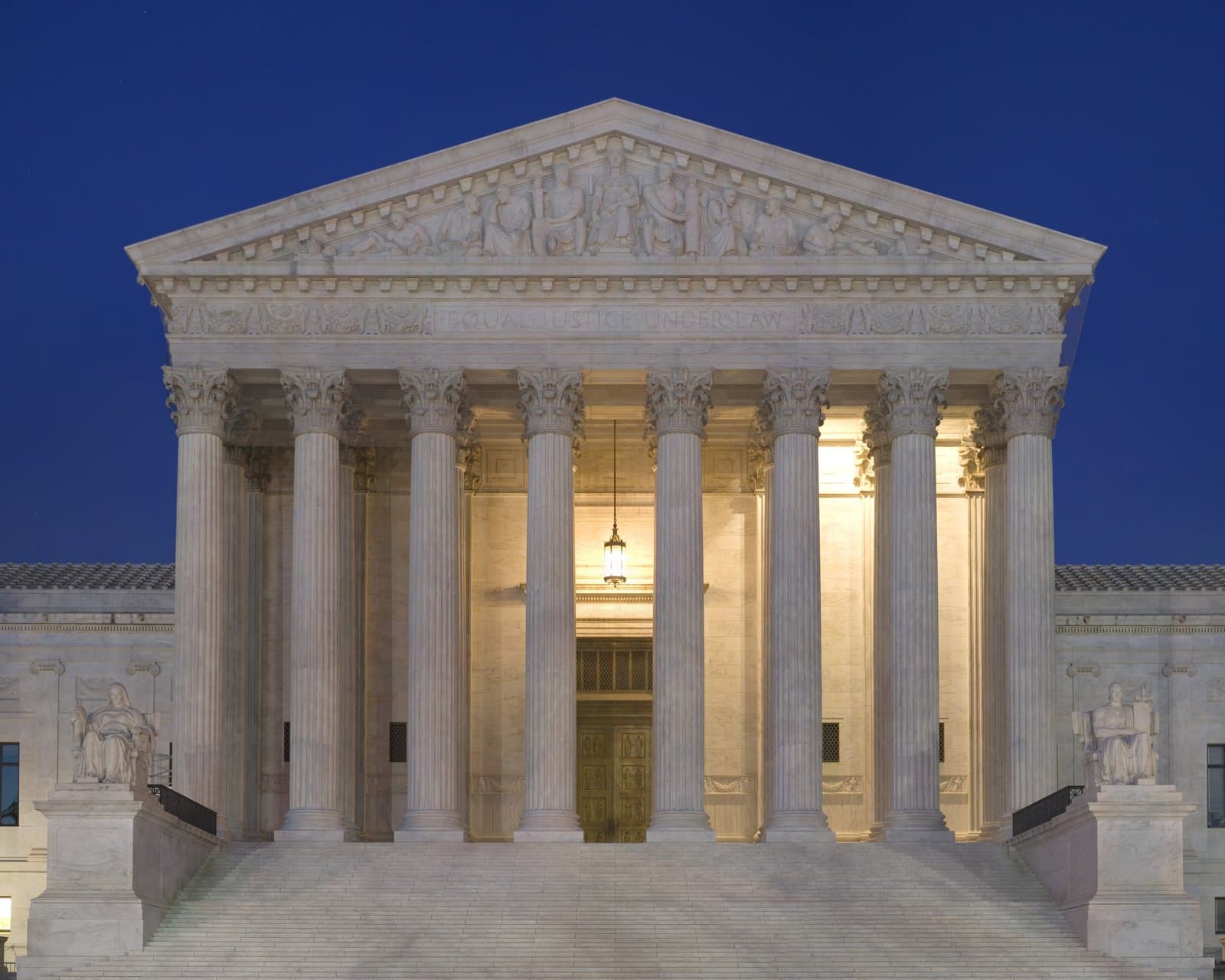
On Friday the Supreme Court agreed to decide whether President Trump can cut off asylum at the southern border by proclamation. The case is Mullin v. Refugee and Immigrant Center for Education and Legal Services, No. 26-239. In a brief order, the Court granted the government's petition "limited to Questions 1 and 2."
The two questions:
- whether Trump's proclamation and the Homeland Security guidance that carries it out are lawful;
- whether a provision of immigration law, 8 U.S.C. 1252(f)(1), barred the trial judge from granting relief to an entire class of migrants.
The Court declined a third question that challenged how the class was defined.
The policy. On his first day back in office, Trump signed Proclamation 10888, "Guaranteeing the States Protection Against Invasion." In it he declared "that an invasion is ongoing at the southern border." He suspended entry for migrants crossing between ports of entry, or without proper documents, "until I issue a finding that the invasion at the southern border has ceased." He relied mainly on Section 212(f) of the immigration law. It lets a president "suspend the entry of all aliens or any class of aliens" whose entry "would be detrimental to the interests of the United States." Homeland Security guidance then barred covered migrants from applying for asylum and sent them into fast removals that skipped steps the law requires.
The challengers point to the asylum statute. It says any noncitizen who is in the U.S. or arrives here, "whether or not at a designated port of arrival ... irrespective of such alien's status, may apply for asylum."
The lower courts. Thirteen asylum seekers and three legal-aid groups, represented by the ACLU and others, sued in Washington (docket). On July 2, 2025, U.S. District Judge Randolph Moss certified a class. He ruled the proclamation and guidance unlawful and blocked the government from removing class members without following the asylum law and other required procedures.
On April 24, 2026, a divided panel of the D.C. Circuit affirmed (docket, opinion). Judge J. Michelle Childs, joined by Judge Cornelia Pillard, wrote that the law's "text, structure, and history make clear that in supplying power to suspend entry by Presidential proclamation, Congress did not intend to grant the Executive the expansive removal authority it asserts."
What's in effect right now. This is narrower than "the policy stays in effect." In August 2025, an earlier D.C. Circuit panel partly paused Judge Moss's order. It paused the parts about asylum and left the rest in force: the protections for two other kinds of relief, withholding of removal and protection under the Convention Against Torture, and the ban on removals outside the procedures the law sets out. The appeals court has since held off putting its April ruling into effect while the Supreme Court acts.
Both sides describe the result the same way. The government's petition says "the partial stay remains in place." The challengers' brief says "the Proclamation's asylum restrictions remain in effect." It adds that the court of appeals "declined to stay the injunction as to statutory withholding of removal and CAT protection, and that relief has been in effect for more than a year."
So the asylum bar is being enforced. The other protections the lower courts ordered are too.
Timing. The docket doesn't list an argument date yet. The ACLU says argument "is expected in spring 2027." SCOTUSblog also expects spring. Cases argued then are usually decided by the end of the term in late June or early July. The Court hasn't set a deadline.
What the Left Says
The progressive and Democratic case
The challengers say a president can't erase a right Congress wrote into law.
"The president does not have the right to unilaterally override the protections Congress has afforded those fleeing danger," Lee Gelernt, the ACLU lawyer leading the case, said in a statement. "The courts are right to reject this unprecedented power grab that would put countless lives in danger."
Keren Zwick of the National Immigrant Justice Center said the plaintiffs "fled persecution and torture, including political imprisonment and threats from the Taliban." She said "some plaintiffs were removed to third countries and then pushed back to the very place they fled." Those are the plaintiffs' accounts. No court has made findings on each one.
In their brief, the challengers argue that "the Executive Branch cannot eliminate the asylum statute with the stroke of a pen." They also challenge the government's claims about results. They say crossings "had already fallen" about 90 percent from their late-2023 peak before the proclamation. They say unaccompanied children, whom the proclamation doesn't cover, saw arrests at the border fall "by virtually the same rate" afterward.
Where Reality Likely Sits
Radio Purple's analysis
What the Court is actually deciding. Two things. First, whether the asylum law lets a president refuse asylum claims as a category, or requires the government to take and consider each one. Second, whether a lower court can protect a whole class of migrants this way. The Court passed on the government's challenge to how the class was defined.
What's in force. The asylum bar is in effect. Courts are still requiring the government to honor the other protections and the removal procedures the law sets out. Reports that simply say "the policy stays in effect" leave out that split.
On the numbers. Crossings are at historic lows by CBP's count. Neither the government's 93 percent figure nor the challengers' rebuttal settles how much the proclamation itself caused, and the Court isn't being asked to decide that.
Where the sides overlap. It's narrow, and we didn't find either side endorsing broader common ground such as new port-of-entry processing or a fix from Congress. But all three appeals judges, including the dissenter, agreed on one limit. In Walker's words: "The Executive cannot remove aliens to countries where they will be persecuted, and the Proclamation and Guidance cannot strip them of mandatory procedures that protect against that removal." And both sides say the answer turns on what Congress wrote, in Section 212(f) and in the asylum statute.
What the Right Says
The conservative and Republican case
The administration says the proclamation is lawful and has worked.
In the government's petition, Solicitor General D. John Sauer argues that asylum is "a purely discretionary benefit." He argues the president "acted well within his authority in preemptively indicating that asylum applications filed by aliens who violate the proclamation's entry suspension would be denied." He calls the D.C. Circuit's ruling a threat "to revive the chaos along the southwest border."
The government credits the policy with a steep drop in crossings. "Since the proclamation took effect, border encounters have fallen by 93 percent, dropping to the lowest levels since the 1960s," the petition says, citing the government's own declarations. Customs and Border Protection reported 98,708 Border Patrol arrests at the southwest border in fiscal 2026, a figure it calls preliminary. Its monthly table adds up to about the same. The numbers are low. How much of the drop is due to this proclamation, rather than other policies or trends, is the point in dispute.
Judge Justin Walker's partial dissent at the D.C. Circuit supports the government's main argument. He wrote that because the president "has already exercised his lawful discretion to deny all asylum applications," he "may foreclose the application process as futile." Walker also said 8 U.S.C. 1252(f)(1) stripped the trial court of power to issue its injunction, though he agreed that provision doesn't block the order setting the policy aside. Iowa and other states, plus several conservative legal groups, filed briefs backing the government.
We didn't find posts about the grant from the White House, Homeland Security, the Justice Department or senior aides by deadline.
Sources & Citations
- Supreme Court of the United States, “Miscellaneous Order (Nov. 13, 2026), granting certiorari in No. 26-239”, November 13, 2026.
- Supreme Court of the United States, “Docket No. 26-239, Mullin v. Refugee and Immigrant Center for Education and Legal Services”, November 13, 2026.
- Supreme Court of the United States, “Questions presented, No. 26-239”, November 13, 2026.
- Supreme Court of the United States, “Petition for a writ of certiorari (Solicitor General)”, August 24, 2026.
- Supreme Court of the United States, “Brief in opposition (respondents)”, September 23, 2026.
- Federal Register, “Proclamation 10888, Guaranteeing the States Protection Against Invasion”, January 29, 2025.
- CourtListener (RECAP), “RAICES v. Noem, No. 1:25-cv-00306 (D.D.C.) docket”, July 2, 2025.
- CourtListener (RECAP), “RAICES v. Mullin, No. 25-5243 (D.C. Cir.) docket”, April 24, 2026.
- U.S. Court of Appeals for the D.C. Circuit, “RAICES v. Mullin, No. 25-5243, opinion”, April 24, 2026.
- GovInfo (U.S. Code), “8 U.S.C. 1158, Asylum”, January 1, 2023.
- GovInfo (U.S. Code), “8 U.S.C. 1182, including 1182(f)”, January 1, 2023.
- U.S. Customs and Border Protection, “DHS announces lowest fiscal year border crossings in American history”, October 16, 2026.
- U.S. Customs and Border Protection, “Nationwide Encounters, Fiscal Year 2026”, October 16, 2026.
- American Civil Liberties Union, “Supreme Court to Hear Challenge to Trump Proclamation Eliminating Asylum”, November 13, 2026.
- SCOTUSblog, “Supreme Court agrees to hear case on Trump administration's suspension of asylum”, November 13, 2026.
Positions above are attributed to the public statements and published reporting cited here. Quotations are taken from these sources; Radio Purple does not publish unattributed or invented quotes. See an error? Request a correction.