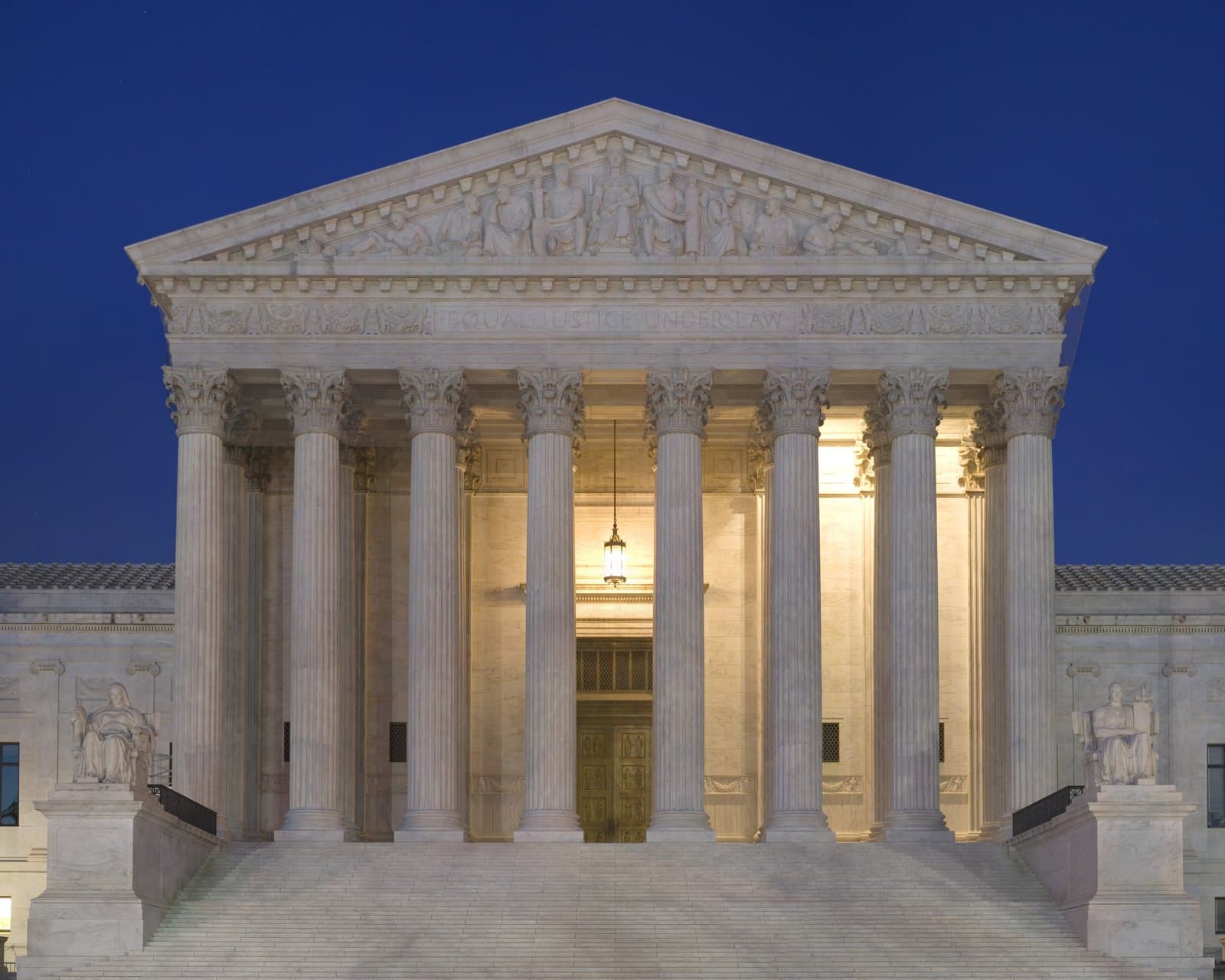
Appeals Court Refuses to Pause Ruling Shielding Transgender Troops From Discharge
A divided D.C. Circuit panel on Tuesday denied the Trump administration's request to hold its June ruling while the Supreme Court weighs the case, and ordered its mandate issued immediately. The injunction covers only the currently serving plaintiffs. The government's petition goes to the justices' Dec. 4 conference.
The Overview
The facts, straight
A federal appeals court on Tuesday refused to put its June ruling on hold while the Trump administration asks the Supreme Court to take up the case. The ruling bars the military from discharging a group of transgender service members who sued.
The order from the U.S. Court of Appeals for the D.C. Circuit was brief. "ORDERED that the motion be denied," it says. "The Clerk is directed to issue the mandate forthwith." In plain terms, the court's decision takes effect now instead of waiting on the justices. Judge Robert Wilkins and Senior Judge Judith Rogers formed the majority. Judge Justin Walker "would grant this motion," the order notes. (D.C. Circuit docket · district court docket · the order)
What's in force now. The case is Talbott v. United States. It challenges the Pentagon policy, issued under Defense Secretary Pete Hegseth and known in court papers as the "Hegseth Policy," that disqualifies people with gender dysphoria, a history of it, or a history of related treatment from serving. In March 2025, U.S. District Judge Ana Reyes blocked the policy. The appeals court put her order on hold while it heard the government's appeal.
On June 1, the same three-judge panel split the difference (opinions · judgment):
- Currently serving plaintiffs: Wilkins and Rogers voted to keep Reyes' injunction against expelling them.
- Plaintiffs trying to enlist: Wilkins and Walker voted to throw out the injunction as to them.
Tuesday's order means the first half of that ruling now takes effect. The plaintiffs' lawyers at the National Center for LGBTQ Rights (NCLR) and GLAD Law say the order covers 27 service members. Neither the order nor the June opinion gives a number. In its release, NCLR also says several of them had been put on administrative leave and some were scheduled for separation boards. That's the plaintiffs' account.
Why Wilkins said no. In a separate statement attached to the order, Wilkins wrote that the government "has not alleged any irreparable harm that will result from retention of the currently serving Plaintiffs—decorated servicemembers who have 'served honorably' while meeting 'all military standards during their service.'" The government argued that the court was forcing the military to "implement a policy" it believes poses "substantial risks" to national defense. Wilkins answered that the Defense Department "has never specified—before the District Court, on appeal, or now in its motion to stay—what national security 'risks' will follow from retaining the serving Plaintiffs."
He also addressed two Supreme Court rulings the government relied on:
- Shilling (2025): the justices paused a different, nationwide injunction against the policy. Wilkins said this injunction has been "narrowed to cover only a limited group of currently serving Plaintiffs."
- B.P.J. (2026): the justices held that schools may restrict girls' sports by biological sex. The government argued that ruling "casts doubt" on the panel's analysis. Wilkins disagreed. Under the panel's analysis, he wrote, the policy "flunked rational-basis review."
"So it cannot be that a mere assertion of executive prerogative suffices to show irreparable harm," he wrote.
What's next at the Supreme Court. The government has already asked the Supreme Court to step in. The Solicitor General filed a petition asking the justices to hear the case on Aug. 27. The plaintiffs filed their opposition on Nov. 2, and the government replied on Nov. 16. On Tuesday, the Supreme Court docket showed the petition distributed for the justices' Dec. 4 conference. When we checked the Supreme Court's docket early Wednesday, we found no emergency application from the government asking the justices to pause Tuesday's order. Meanwhile, NCLR says the case is set for trial in district court in January 2027.
What the Left Says
The progressive and Democratic case
Supporters of the plaintiffs say this is an equal-protection case about people who already meet every standard the military sets.
- In June, the panel majority accepted that point at this early stage. Wilkins wrote that the government "did not contest" that the serving plaintiffs, "who have served for a combined 130 years and collectively earned more than 80 commendations, have 'served honorably.'"
- Rogers, in her separate June opinion, found that features of the policy "are inexplicable by anything other than animus," as Wilkins noted Tuesday.
- "These are decorated troops who have met every standard the military sets," NCLR legal director Shannon Minter said in the release. "The government has never been able to identify any evidence to justify the ban, because there isn't any."
- GLAD Law's Jennifer Levi, quoted in the same release, called the policy "a ban demeaning an entire group of people, dressed up in medical language."
Where Reality Likely Sits
Radio Purple's analysis
The panel itself drew the line that matters most here: staying versus joining.
- Accession: Wilkins sided with Walker. A court shouldn't order the military to admit new recruits based on an early ruling that could be "revisited and reversed after a full trial," he wrote in June.
- Retention: Wilkins sided with Rogers. He called ending a military career "a much greater hardship" than delaying the start of one. He also said serving members "have demonstrated that their presence in the military is not harming national security."
Tuesday's order follows that same line. It protects a defined group of named, serving plaintiffs. It doesn't reopen enlistment, and it doesn't block the policy for transgender troops who aren't part of this lawsuit.
The bigger question is still open: does the policy pass constitutional review at all? The government is asking the Supreme Court to answer that, and the justices could act on the petition after their Dec. 4 conference. The Supreme Court has already sided with the administration once, in Shilling, by pausing a broader injunction. Until the justices act or the January trial produces a ruling, the plaintiffs keep their jobs and the policy stays in place for everyone else.
What the Right Says
The conservative and Republican case
The administration's case rests on military readiness and on courts deferring to the Pentagon on who serves.
- Deference: The Solicitor General's petition argues that the Constitution leaves "the composition, training, equipping, and control of a military force" to the political branches. It says courts "must give great deference to the professional judgment of military authorities."
- Rational basis is met: The petition says the government has "undisputedly legitimate interests in maintaining military readiness, cohesion, and good order and discipline, as well as in managing the military's costs." It argues the policy is rationally related to those interests.
- Walker's dissent: In June, Walker wrote that judges "have neither the expertise nor the authority to decide whether the military can exclude the plaintiffs from its ranks. The Constitution assigns that authority to Congress and the Commander in Chief."
- The stay request: In its stay motion, as Wilkins quoted it, the government argued that the mandate forces it to carry out a policy that poses "substantial risks" to national defense.
We found no public statement from the Pentagon, Hegseth or the Justice Department on Tuesday's order on their official X accounts.
Sources & Citations
- CourtListener (Free Law Project), “Talbott v. United States, No. 25-5087: Docket”, November 17, 2026.
- CourtListener (Free Law Project), “Talbott v. Trump, No. 1:25-cv-00240 (D.D.C.): Docket”, November 17, 2026.
- U.S. Court of Appeals for the D.C. Circuit (via CourtListener), “Order denying motion to stay mandate, with statement of Judge Wilkins”, November 17, 2026.
- U.S. Court of Appeals for the D.C. Circuit, “Talbott v. United States, opinions of the court”, June 1, 2026.
- U.S. Court of Appeals for the D.C. Circuit (via CourtListener), “Talbott v. United States, judgment”, June 1, 2026.
- Supreme Court of the United States, “United States v. Talbott, No. 26-272: Docket”, November 17, 2026.
- Office of the Solicitor General, “Petition for a writ of certiorari, United States v. Talbott”, August 27, 2026.
- National Center for LGBTQ Rights, “Appeals Court Rejects Trump Administration's Bid to Keep Transgender Service Members in Limbo”, November 17, 2026.
Positions above are attributed to the public statements and published reporting cited here. Quotations are taken from these sources; Radio Purple does not publish unattributed or invented quotes. See an error? Request a correction.