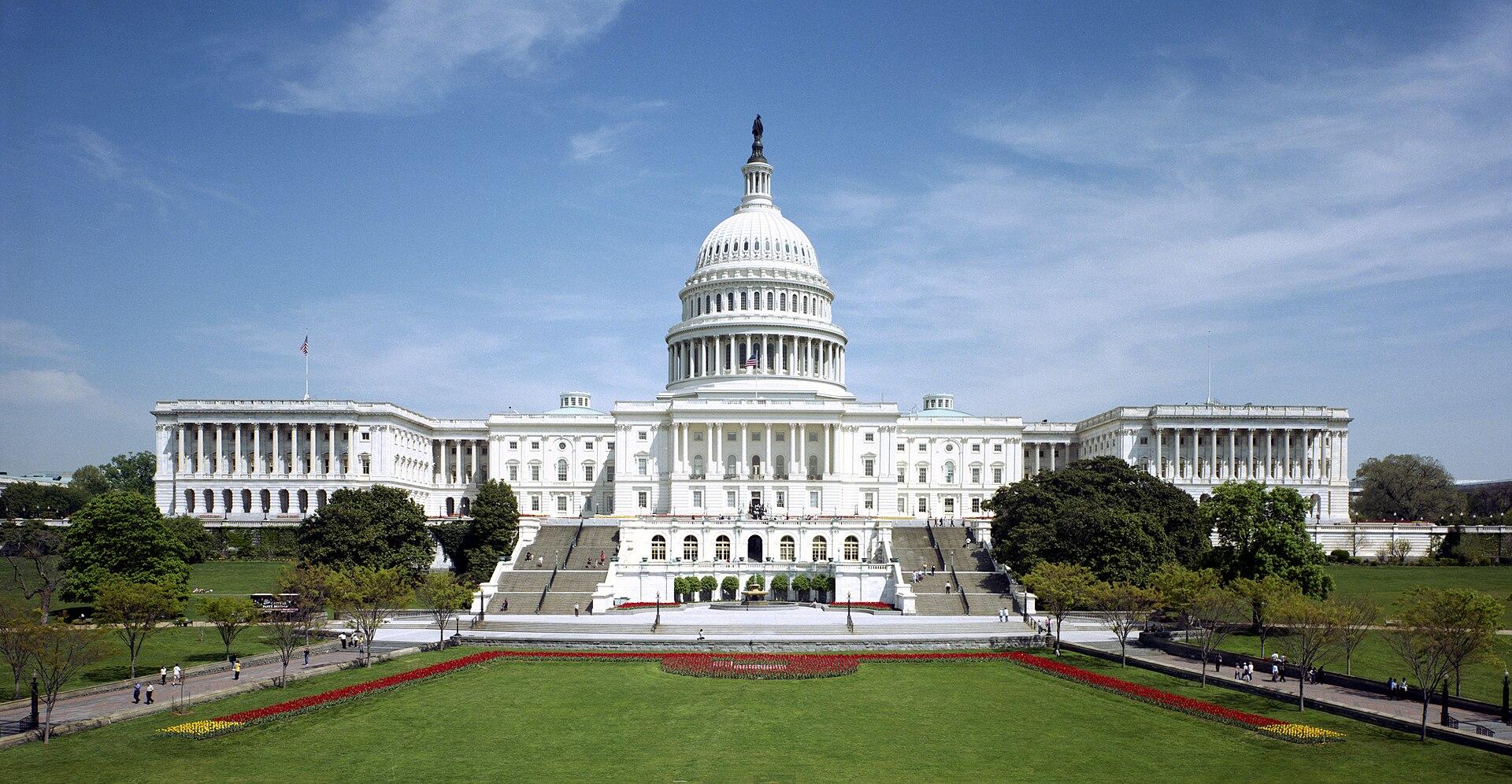
FAA's Nationwide Ground Stop Revives the Fight Over Air Traffic Control Money
A telecom failure halted U.S. departures for more than four hours on Friday. Secretary Duffy blames old equipment and now wants $50 billion. Democrats want answers. No official cause has been published.
By Evelyn Shaw, Constitution Explained
Published · 7 min read
The Overview
The facts, straight
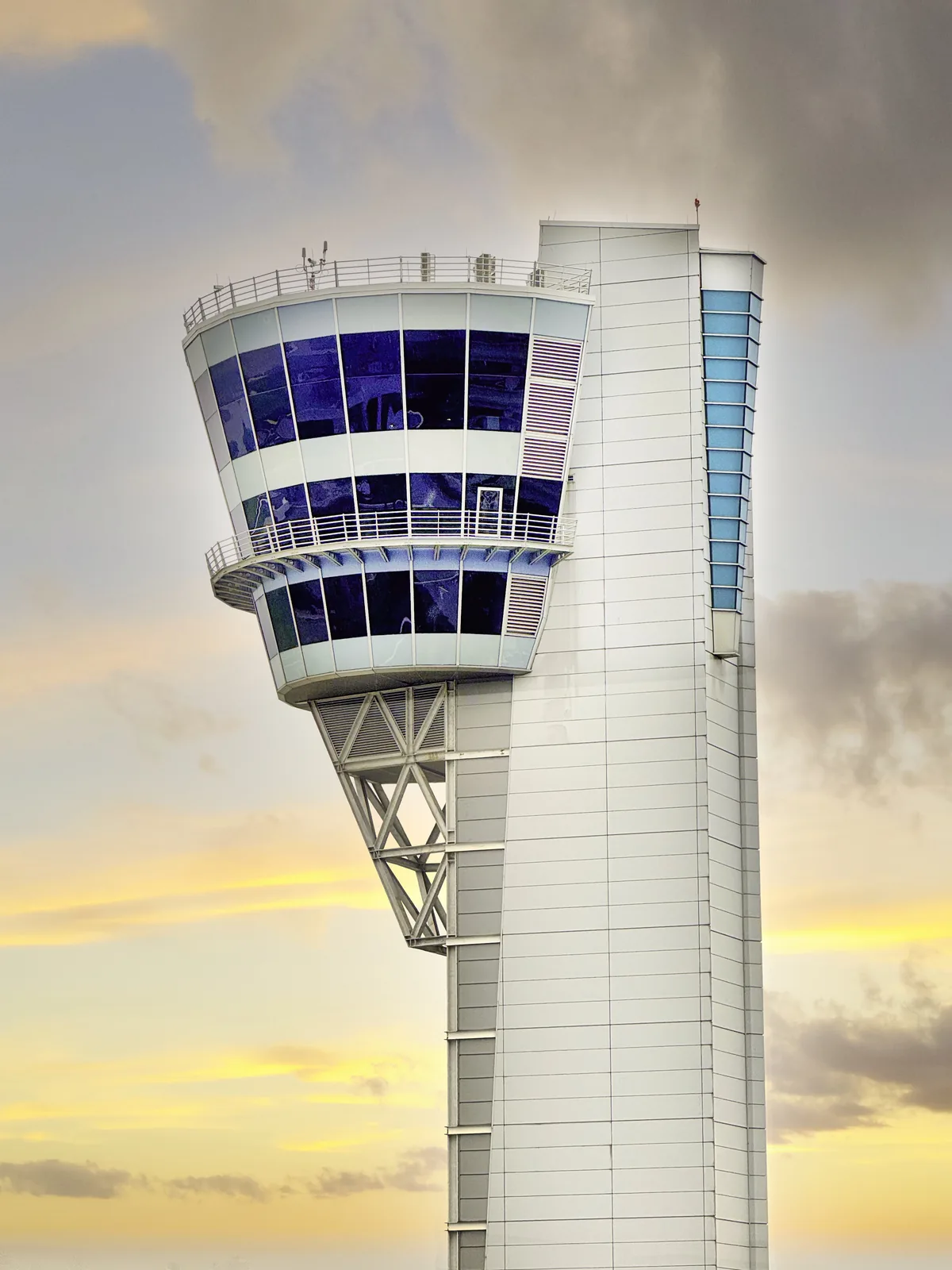
The Federal Aviation Administration stopped departures at every U.S. airport on Friday afternoon. The halt lasted more than four hours. Ground stops covering the whole country are rare. Our 2023 report looked at the January 2023 failure of the FAA's NOTAM system, which also halted departures nationwide.
Transportation Secretary Sean Duffy laid out the timeline on X. At 3:36 p.m. Eastern, he wrote, the FAA "experienced telecommunications issues at facilities & TRACONs across the country." (TRACONs are the radar centers that handle planes near airports.) More than 3,500 planes were in the air. Pilots and controllers brought that number "down to under 400 as of 8pm ET," and the stop was lifted at 8:15 p.m. He added that the FAA "did not lose all radar or telecom" and that medevac, critical cargo and law-enforcement flights kept flying.
Accounts of the scope differed at first. Duffy's first post said the problem hit "all Air Route Traffic Control Centers," the 22 centers that guide planes between airports. The FAA's own statement, marked "preliminary and subject to change," said "multiple" centers.
The FAA later said it "thoroughly tested our systems" before letting flights resume.
What caused it. The FAA hasn't published a cause. At a White House briefing Friday night, Duffy gave his explanation, according to a transcript. He said the system runs on analog telecom lines and that "our switches, our routers actually got overloaded with data" and began giving "inconsistency in the data." He said "our new IP switches did not go down; it's the old hardware that went down." Homeland Security Secretary Markwayne Mullin said that as new equipment was patched in, it "was overwhelming the older system."
Was it a cyberattack? Officials say they have no evidence of one. They haven't ruled it out. "We've seen zero evidence that this was ... a cyberattack," Mullin said. He also said, "We're still looking at it; we're not ruling out anything." Duffy said he didn't "want to rule out" nefarious activity and left that question to Mullin's team.
The disruption. Counts depend on the tracker and the hour. At 7:30 p.m. Eastern, FlightAware showed 10,079 U.S.-related delays and 4,238 cancellations, according to NBC News. Late that night, Reuters reported that nearly 10,000 flights had been canceled, citing Flightradar24.
The money. Congress put $12.5 billion toward air traffic control in the July 2025 reconciliation law. The money is in Section 40003 of Public Law 119-21 (enrolled text). It includes $4.75 billion "for telecommunications infrastructure modernization and systems upgrades," $3 billion for radar replacement and $1.9 billion to build a new en route center. Duffy calls it a "down payment." The administration's follow-up is the Modern Skies Act, introduced in September by Sen. Eric Schmitt, a Missouri Republican. It would add about $30 billion for air traffic control, towers and airports. It hasn't left committee. On Friday night, Duffy raised the number: "The president has asked for $30 billion. I want $50 billion." Mullin called $50 billion the administration's estimate for "a complete overhaul." Neither official released a breakdown.
What the Left Says
The progressive and Democratic case
Democrats say Republicans have run the government and Congress for two years and can't blame anyone else. They also want to know whether anything new the FAA added played a part.
"You've literally controlled Congress for the past two years," Sen. Tammy Duckworth of Illinois, the top Democrat on the Senate aviation subcommittee, wrote, responding to a clip of Duffy blaming Congress. She said there has been money "for vanity projects" but "none to fix our air traffic control system." Earlier she wrote:
Sen. Maria Cantwell of Washington, the top Democrat on the Senate Commerce Committee, said the panel will review "technology issues related to how planes communicate through primary frequencies, backup frequencies, and other issues." She is set to chair the committee when Democrats take the Senate majority in January, according to Roll Call. Rep. André Carson of Indiana said he had asked the FAA for updates. Rep. Ted Lieu of California told the Los Angeles Times that the FAA needs systems without a single point of failure.
The AI tool. Some critics questioned the timing of SMART, a new AI-assisted routing tool. The FAA chose Air Space Intelligence to build it. The FAA expanded SMART to all 22 en route centers on Tuesday, according to the Los Angeles Times, which cited the agency. In October, 24 House Democrats and Sen. Chris Van Hollen, led by Rep. April McClain Delaney of Maryland, asked the FAA to pause the tool, citing an "egregious lack of transparency." No one has produced evidence tying SMART to Friday's failure. The company and Duffy both deny any role:
Duffy said at the briefing that "SMART system isn't plugged in to STARS and ERAM," the FAA's main radar and en route automation systems, and that "there was no possible way SMART would have impacted what happened today." Those are the company's and the secretary's statements. No outside investigation has confirmed them yet.
The 2019 vote. Some social media users brought back a vote Duffy cast as a Wisconsin congressman. On Jan. 10, 2019, during the government shutdown, he voted against H.R. 267, the House Democrats' bill to fund the Transportation Department and HUD for 2019. That bill included FAA money. House Clerk records show Duffy voted no. The bill passed 244-180, with 12 Republicans voting yes and 180 voting no. The Senate never took it up, according to PolitiFact. PolitiFact also found that Duffy voted for the 2012 and 2018 FAA authorization laws. In 2025 it rated a similar attack "Mostly False." We found no member of Congress raising the vote this week.
Where Reality Likely Sits
Radio Purple's analysis
What's established. A telecom failure forced a nationwide stop. Duffy says more than 3,500 airborne flights were brought down safely, and no one has reported otherwise. The stop lasted more than four hours, and disruption carried into the night. The $12.5 billion is law, and Duffy says the work it pays for is moving fast. The Modern Skies Act is a real bill, sitting in committee. The $50 billion figure is a spoken request with no published breakdown.
What's not established. The cause. Duffy's account, that overloaded analog switches and routers failed while newer equipment held, is the most detailed one so far. It comes from the official asking Congress for money, and the FAA hasn't published its own finding. The same goes for SMART: the denials are on record, and no evidence of a link has surfaced. The cyber question is officially open, though officials say they've seen no sign of an attack.
The 2019 vote. The record is real. On its own it's a weak guide to Duffy's views on air traffic control. It was a shutdown-era spending bill the Senate never took up, and he voted for other FAA laws.
Where the parties overlap, and where they don't. The leaders of the House Transportation Committee, Republican Sam Graves of Missouri and Democrat Rick Larsen of Washington, issued a joint statement. They called the failures "concerning" and said the committee "will thoroughly review the issues that led to this nationwide ground stop." Senate Commerce Republicans and Cantwell have both said they'll look into it. Both parties say the system needs work. Neither side has endorsed the other's diagnosis, and Democrats haven't agreed to a dollar figure. We didn't find a new joint statement on controller staffing. The fight now is over who pays, how much, and whether to vote before the new Congress arrives in January.
What the Right Says
The conservative and Republican case
The administration and its allies say the failure proves the old system has to be replaced, not patched.
"Today's nationwide ground stop happened because our air traffic control system is operating on DECADES-OLD, analog equipment," Duffy wrote. At the briefing he said, "We use 1980s little copper lines." He said work funded by the $12.5 billion will be done "by the time President Trump leaves office," but that it covers only part of the job. He framed the rest as a vote: "It's not red, it's not blue ... give us the money to fix it."
Mullin put the blame on Congress. "Our air traffic control system is outdated, and it hasn't been a priority from Congress," he said. "This is what happens when Congress kicks the can down the road."
Duffy also set a deadline. "We now have an opportunity in an emergency funding bill before the end of the year to give the money," he said. That timing matters: Republicans control both chambers until January. A day before the outage, Duffy and budget director Russ Vought asked appropriators for $30.1 billion, Roll Call and Reuters reported. We haven't seen that letter.
Republicans in Congress are also pointing to what has already been funded. Senate Commerce Committee Republicans said the outage "highlights the need to prioritize modernizing ARTCCs over other projects." They noted that "no new ARTCC has been built since LBJ was in office" and credited Chairman Ted Cruz of Texas for the $1.9 billion in the 2025 law.
Sources & Citations
- Federal Aviation Administration, “FAA Statement on Nationwide Ground Stop”, November 13, 2026.
- Sean Duffy (@SecDuffy) on X, “Sean Duffy on the ground stop announcement”, November 13, 2026.
- Sean Duffy (@SecDuffy) on X, “Sean Duffy on the ground stop timeline”, November 13, 2026.
- Sean Duffy (@SecDuffy) on X, “Sean Duffy on decades-old equipment and the $12.5 billion”, November 13, 2026.
- FAA (@FAANews) on X, “FAA on lifting the ground stop”, November 13, 2026.
- Roll Call Factba.se, “Press Briefing: Markwayne Mullin and Sean Duffy on the FAA Ground Stop (transcript)”, November 13, 2026.
- Congress.gov, “Public Law 119-21, Section 40003, Air Traffic Control Improvements”, July 4, 2025.
- GovInfo, “Public Law 119-21 (enrolled text)”, July 4, 2025.
- GovInfo, “S. 5572, Modern Skies Act (introduced)”, September 28, 2026.
- Federal Aviation Administration, “Duffy, Modern Skies Coalition Applaud Senator Schmitt's $30 Billion Modern Skies Act”, September 29, 2026.
- Federal Aviation Administration, “Duffy Selects Air Space Intelligence to Deploy Air Traffic Control Software”, June 22, 2026.
- Rep. April McClain Delaney and colleagues, “Letter to Secretary Duffy and Administrator Bedford on the SMART tool”, October 9, 2026.
- Office of the Clerk, U.S. House of Representatives, “H.R. 267 (116th Congress), roll call 23”, January 10, 2019.
- PolitiFact, “In Congress, did Sean Duffy vote against upgrading air traffic control systems?”, May 21, 2025.
- House Transportation and Infrastructure Committee, “Graves and Larsen Joint Statement on Today's FAA Ground Stop”, November 13, 2026.
- Roll Call, “Trump administration ups ante on aviation funds after ground stop”, November 13, 2026.
- NBC News, “Live updates: FAA communications outage”, November 13, 2026.
- Reuters, “US to resume flights after air traffic network failure sparks chaos”, November 13, 2026.
- Los Angeles Times, “Democrats press Trump administration for answers as nationwide ground stop grips U.S. air travel”, November 13, 2026.
Positions above are attributed to the public statements and published reporting cited here. Quotations are taken from these sources; Radio Purple does not publish unattributed or invented quotes. See an error? Request a correction.