Two Federal Courts in Four Days Block State Mask and ID Rules for Federal Agents in Connecticut and California
A federal judge in Hartford on Friday blocked Connecticut from enforcing four sections of its new law on federal officers, including its ban on masks. Three days earlier, California agreed to a permanent court order barring it from enforcing its mask and ID laws against federal officers. Both rest on the Constitution's Supremacy Clause.
By Claire Hollister, Politics and Policy
Published · 5 min read
The Overview
The facts, straight
Within four days this week, federal courts barred two Democratic-led states from enforcing their laws requiring federal officers, including immigration agents, to show their faces and identify themselves.
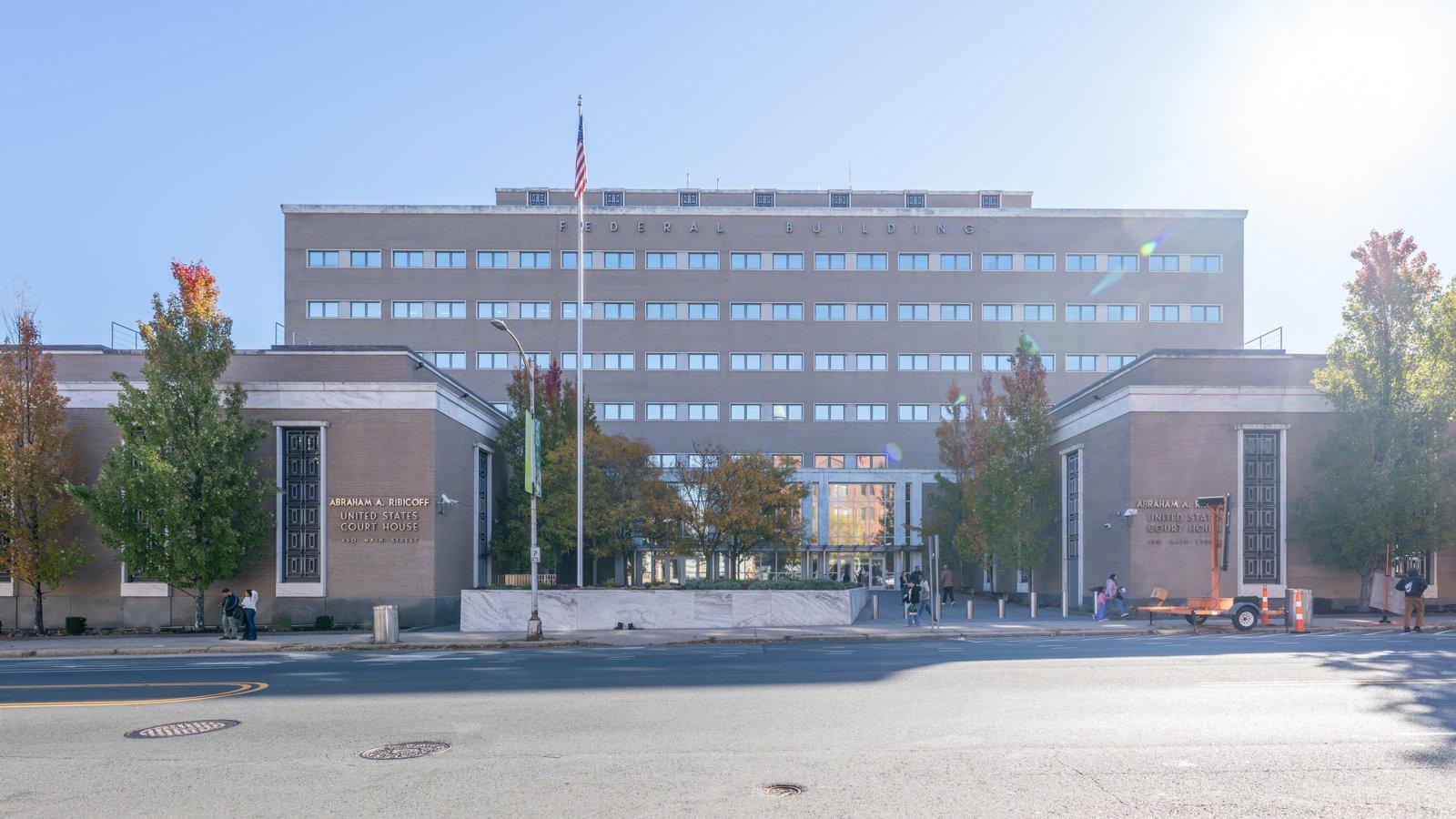
Connecticut. On Friday, U.S. District Judge Vernon D. Oliver in Hartford blocked Connecticut from enforcing four sections of a law passed this spring, Supplemental Senate Bill 397, against federal officers while the Justice Department's lawsuit goes forward (docket on CourtListener; order).
Only one of those four sections is about masks. According to the order:
- Sections 3, 4 and 5 would have held federal officers to Connecticut's use-of-force standards, required state investigations when their use of force kills someone, and directed the state's inspector general to prosecute when the force wasn't justified under state law.
- Section 6 bars officers from wearing "any facial covering or personal disguise while interacting with the public," with exceptions for health, safety and authorized undercover work, and requires a badge and name tag during planned arrests and public interactions. Violations are a misdemeanor punishable by up to 30 days in jail.
Oliver found all four sections "likely violate the Supremacy Clause," which bars states from controlling the federal government's operations. Section 6, he wrote, "plainly imposes conditions on how federal officers must conduct and present themselves during the course of their federal duties."
The block isn't complete. Oliver dismissed Attorney General William Tong from the case, finding he isn't the official who enforces the law, so the order doesn't bind him. He also found the inspector general has no power to enforce the mask section, so the order bars him only from enforcing the use-of-force sections. Gov. Ned Lamont, the state itself and the chief state's attorney are barred from enforcing all four sections against federal officers. This is a preliminary injunction; the case isn't over.
California. On Nov. 17, U.S. District Judge Christina A. Snyder of the Central District of California entered a permanent injunction barring California, Gov. Gavin Newsom and Attorney General Rob Bonta from enforcing four state code sections "against the United States, federal law enforcement officers, and federal law enforcement agencies" (order; docket on CourtListener). Those sections come from two 2025 laws: a ban on officers' face coverings, a requirement that non-uniformed officers visibly display identification, and two rules requiring agencies to post written policies on both.
This wasn't a ruling on the merits. The order says it was entered "upon consideration of the joint stipulation" of the United States and the state defendants, and it dismissed the case. The court filings available to the public don't say why California agreed. We didn't find a statement from Bonta or Newsom about it.
The courts had already ruled against California on both main provisions. In February, Snyder found the mask ban likely discriminated against the federal government and blocked it as applied to federal officers, according to the docket. On Oct. 14, a three-judge panel of the Ninth Circuit ruled the ID requirement likely unconstitutional too, holding that it "directly regulates inherently sovereign functions" (Ninth Circuit opinion). That ruling binds federal courts in Western states. It doesn't bind Connecticut's courts, which sit in a different circuit, though Oliver cited an earlier Ninth Circuit ruling in the same case.
The Justice Department announced the California order on Thursday (DOJ release).
What's next. Connecticut's docket showed no appeal as of early Saturday. A spokesperson for Tong's office told the CT Mirror the office is "reviewing the decision and evaluating next steps."
What the Left Says
The progressive and Democratic case
Connecticut Democrats who passed the law say it's about accountability.
Lamont's office said in a statement, according to the CT Mirror: "We are disappointed by today's ruling and condemn ICE's treatment of Connecticut residents." The statement, from communications director Cathryn Vaulman, said "masked, armed agents without visible badges have surrounded cars in traffic and stormed homes and workplaces," and that the law "was meant to hold federal law enforcement officers to the same standards of accountability as local and state police." Those are the governor's office's accusations; we didn't independently verify each incident.
State Rep. Steven Stafstrom, a Bridgeport Democrat and a key backer of the law, said the ruling is preliminary. "The court did not find that any act of Congress overrides our law, and whether an officer acted within federal authority is a question that belongs in a real case with real facts, not one that should be decided before any case exists," he said, adding that "accountability is how we keep our communities safe."
That echoes Connecticut's main argument in court, as the order describes it: that the Justice Department lacked standing and that a challenge to "a hypothetical prosecution" isn't ripe. Oliver rejected both arguments.
Where Reality Likely Sits
Radio Purple's analysis
- The legal trend is clear for now. Judges in Connecticut and California and a Ninth Circuit panel have each found these state rules likely unconstitutional as applied to federal officers. Oliver and the Ninth Circuit relied on the rule that states can't directly regulate the federal government; Snyder's earlier ruling on California's mask ban found it discriminated against federal officers.
- These are not final rulings on the merits. Connecticut's is a preliminary injunction. California's is a permanent order the state agreed to, so no judge issued a final decision on whether its laws were constitutional.
- "Mask ban" undersells the Connecticut law. Three of the four blocked sections were about investigating and prosecuting federal officers' use of force, not masks.
- Neither order addresses state and local police. Both bar enforcement only against federal officers and agencies.
- The policy fight isn't settled by these cases. The Ninth Circuit said California's ID rule is barred because "Congress has not authorized such legislation," which leaves the officer-safety and accountability arguments to Congress and federal agencies. Whether Connecticut appeals is the next thing to watch.
What the Right Says
The conservative and Republican case
The Justice Department argues states have no power to set rules for federal officers. "Today's permanent injunction confirms a basic constitutional principle: states do not have the authority to regulate the Federal Government or dictate how federal law enforcement officers perform their official duties," Associate Attorney General Stanley E. Woodward Jr. said in the department's release.
The department says its main concern is officer safety. Its release says federal officers "have faced an unprecedented wave of harassment, doxxing, and even violence," and that limits on protecting their identities "chill the enforcement of federal law." That's the department's allegation from its lawsuit. Acting Assistant Attorney General Jonathan D. Guynn said "the Federal Government, not the states, gets to decide what equipment federal officers may use," and that the department "will continue to challenge state and local laws that unlawfully regulate federal operations."
Oliver's order accepted part of that safety argument for now, finding that Connecticut's mask and name-tag rule "places federal officers and their families at a heightened risk of retributive attacks."
Connecticut Senate Republicans, who opposed the law, said they had warned that it "violates the Constitution's Supremacy Clause by attempting to regulate federal officers while they carry out their official duties," according to the CT Mirror.
Sources & Citations
- CourtListener, “United States v. State of Connecticut, No. 3:26-cv-00758 (D. Conn.) (docket)”, November 20, 2026.
- U.S. District Court for the District of Connecticut (via CourtListener RECAP), “Memorandum & Order on motion for preliminary injunction and motion to dismiss (ECF No. 83)”, November 20, 2026.
- CourtListener, “United States v. State of California, No. 2:25-cv-10999 (C.D. Cal.) (docket)”, November 17, 2026.
- U.S. District Court for the Central District of California (via U.S. Department of Justice), “Order Entering Permanent Injunction and Dismissing Action (ECF No. 90)”, November 17, 2026.
- U.S. Court of Appeals for the Ninth Circuit (via CourtListener RECAP), “United States v. State of California, No. 26-926 (9th Cir.) (opinion, filed in district court as ECF No. 88)”, October 14, 2026.
- U.S. Department of Justice, “Justice Department Secures Permanent Injunction Against California Laws Restricting Federal Law Enforcement Operations”, November 19, 2026.
- CT Mirror, “Federal judge blocks CT law that sought to regulate ICE agents”, November 20, 2026.
Positions above are attributed to the public statements and published reporting cited here. Quotations are taken from these sources; Radio Purple does not publish unattributed or invented quotes. See an error? Request a correction.