White House Counsel Warns Incoming Oversight Chair Some Probes 'May Cross the Line Into Blatant Criminality'
A Nov. 9 letter from White House counsel Will Scharf tells Rep. Robert Garcia that some planned Democratic investigations may be criminal. Garcia says Congress's oversight power comes from the Constitution, not the White House. The Supreme Court's precedents give both sides something to cite.
By Claire Hollister, Politics and Policy
Published · 4 min read
The Overview
The facts, straight
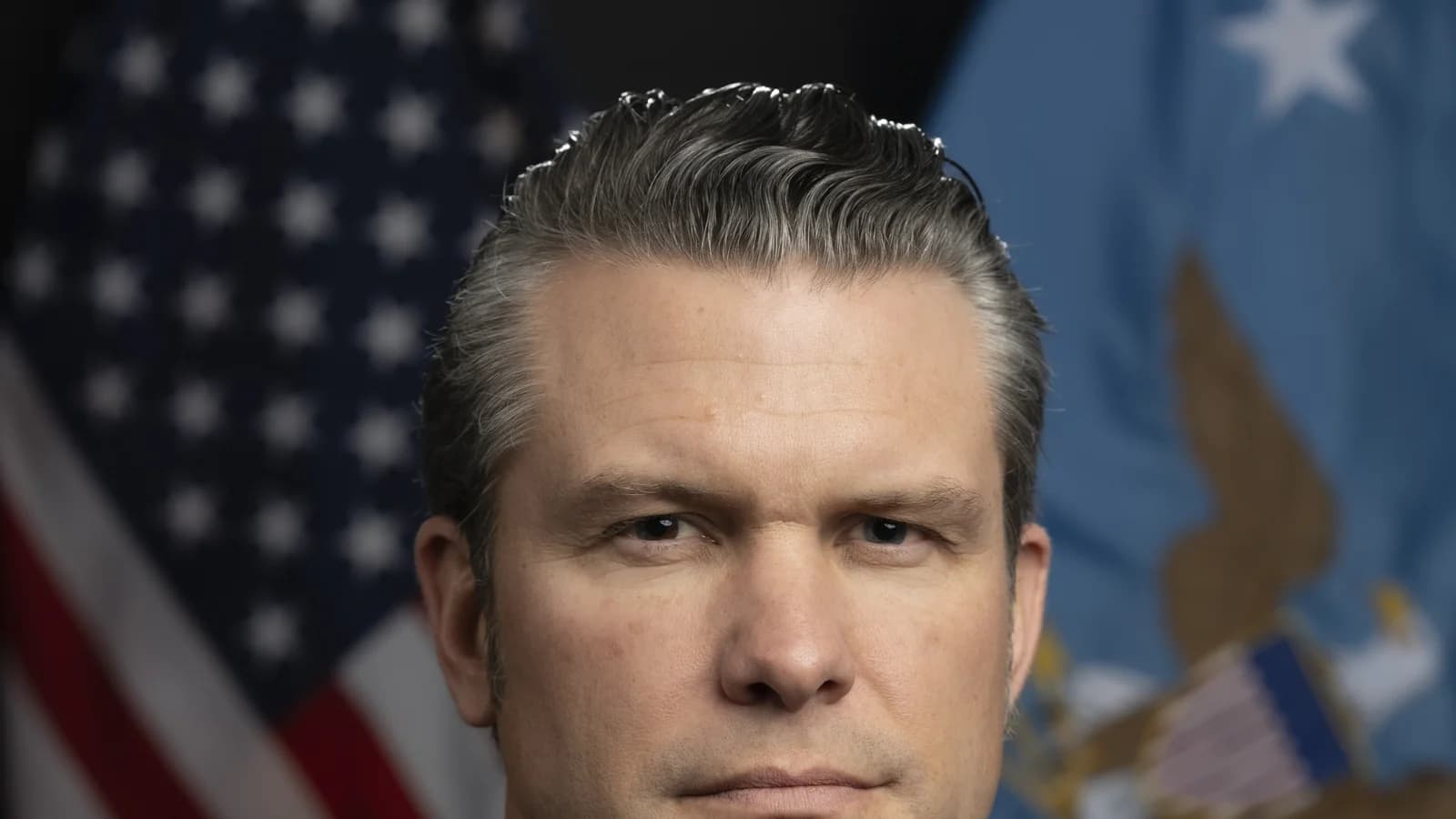
White House counsel Will Scharf has warned Rep. Robert Garcia, the top Democrat on the House Oversight Committee, that some of the investigations Democrats plan to open next year could themselves be criminal. Garcia is in line to chair the committee when Democrats take control of the House in January.
In a three-page letter dated Nov. 9, published by CBS News, Scharf wrote:
"Beyond being inconsistent with the clear, well-recognized constitutional limitations on your investigative functions, threats to executive branch officials designed to deter them from public service, or process designed merely to abuse or instill fear in the recipient may cross the line into blatant criminality. And issuing unlawful subpoenas with the intention of depriving citizens of their constitutional rights and privileges may warrant further investigation."
The letter does not name a criminal statute, say who would investigate, or identify any subpoena. Democrats have not issued subpoenas in the new Congress, which has not yet convened. Instead, the letter cites public statements by Garcia and other Democrats, including his election-night post "LAWYER UP.", as evidence that future subpoenas would be used "to harass and aggrandize, rather than to advance any legitimate legislative end."
Garcia answered Wednesday in a statement calling the warning a "baseless" threat.
The letter comes days after President Trump publicly directed the Justice Department to look into what he called Democratic threats against officials and donors (our Story 108). The Washington Post reported Wednesday that the White House counsel's office has made "15 additional hires so far" as it prepares for oversight fights.
What the Left Says
The progressive and Democratic case
Garcia said the authority to investigate belongs to Congress, not the president's lawyers.
"It appears Donald Trump has something to hide. Let's be clear: Congress' authority comes from Article I of the Constitution, not from the permission of the White House. Congress has wide latitude to conduct investigations and oversight, an authority inherent in the power to legislate," Garcia said. "We are a co-equal branch of government and will not be deterred by baseless threats from a weaponized DOJ or from the President's lawyers."
Post: Oversight Dems (@OversightDems) on X, Nov. 11, 2026.
The committee's Democrats reposted that message Wednesday. Garcia's statement says voters want Congress "to pass laws to root out corruption and abuse" and accuses the administration of trying to "weaponize the government." Those are his allegations, not findings.
Post: Oversight Dems (@OversightDems) on X, Nov. 11, 2026.
Democrats can point to the Supreme Court's own description of the investigative power in Watkins v. United States: it "comprehends probes into departments of the Federal Government to expose corruption, inefficiency or waste."
Where Reality Likely Sits
Radio Purple's analysis
The core legal principle in the letter is real, and so is the oversight power. Both sides are citing the same line of Supreme Court cases.
- In McGrain v. Daugherty (1927), the Court upheld the Senate's power to compel a witness in its investigation of the Justice Department, holding that the power of inquiry, "with process to enforce it," is "an essential and appropriate auxiliary to the legislative function." It presumed a legislative purpose where the subject was one "on which legislation could be had."
- In Watkins v. United States (1957), the Court called the power "broad" but "not unlimited," said investigations "conducted solely for the personal aggrandizement of the investigators or to 'punish' those investigated are indefensible," and overturned a witness's contempt conviction. Scharf quotes this case.
- In Trump v. Mazars (2020), involving House subpoenas for the president's personal financial records, the Court said a subpoena must serve a "valid legislative purpose," that Congress "may not issue a subpoena for the purpose of 'law enforcement,'" and that recipients keep their constitutional rights. It sent the cases back to lower courts with factors to weigh for subpoenas seeking a president's information. Scharf cites this case too.
What the cases don't say. None of them treats issuing a congressional subpoena as a crime. They set limits that courts enforce in disputes over subpoenas and contempt. The Constitution's Speech or Debate Clause says members "shall not be questioned in any other Place" for "any Speech or Debate in either House." The letter does not address that clause, and how it would apply to any particular act is a question for courts.
The letter's wording is conditional. Scharf writes that some conduct "may cross the line" and "may warrant further investigation." He does not say any investigation has been opened, and we have not found any announcement that one has.
What to watch: Garcia's first document requests and subpoenas after January; whether the White House answers them by challenging their legislative purpose; whether any dispute reaches court; and whether the Justice Department takes any formal action, which would be a separate step from this letter.
What the Right Says
The conservative and Republican case
Scharf's letter argues Democrats have already shown their hand. It says Congress "cannot employ" investigations "to exercise powers of criminal prosecution assigned to the Executive and the Judiciary," and that lawmakers must "identify a legitimate legislative purpose underlying its investigative acts."
"We are monitoring the abusive and capricious threats that are now proliferating from Democrat legislators who seek to abuse the legislative process to intimidate and to interfere with the lawful functioning of government," Scharf wrote.
The letter singles out Garcia's own posts. It cites his "LAWYER UP" message, which he posted the night of the Nov. 3 election:
Post: Rep. Robert Garcia (@RepRobertGarcia) on X, Nov. 3, 2026.
It closes: "The Administration will not be extorted and will not be cowed by unlawful process motivated by animus, pettiness, hatred, or any other unlawful motive to intimidate, penalize, or interfere with the lawful functioning of government."
Attorney General Todd Blanche made a similar argument over the weekend, in remarks posted by the White House's rapid-response account: "They're talking about impeachments, they're talking about going after private companies who happen to have made investments in this country over the past couple years? That is NOT oversight."
Post: Rapid Response 47 (@RapidResponse47) on X, Nov. 8, 2026.
Sources & Citations
- Office of White House Counsel, as published by CBS News, “Letter from White House Counsel William O. Scharf to Rep. Robert Garcia, Nov. 9, 2026 (PDF)”, November 9, 2026.
- CBS News, “Top White House lawyer warns of "blatant criminality" in Democrats' investigations push”, November 11, 2026.
- House Oversight Committee Democrats, “Ranking Member Robert Garcia Statement on New White House Counsel Threats”, November 11, 2026.
- Oversight Dems (@OversightDems) on X, “Oversight Dems post of Garcia statement”, November 11, 2026.
- Oversight Dems (@OversightDems) on X, “Oversight Dems response post”, November 11, 2026.
- Rep. Robert Garcia (@RepRobertGarcia) on X, “LAWYER UP.”, November 3, 2026.
- Rapid Response 47 (@RapidResponse47) on X, “Attorney General Todd Blanche on Democratic oversight”, November 8, 2026.
- The Washington Post, “White House readies aggressive fight against planned investigations by Congress”, November 11, 2026.
- Legal Information Institute, Cornell Law School, “McGrain v. Daugherty, 273 U.S. 135 (1927)”, January 17, 1927.
- Legal Information Institute, Cornell Law School, “Watkins v. United States, 354 U.S. 178 (1957)”, June 17, 1957.
- Supreme Court of the United States, “Trump v. Mazars USA, LLP (2020), slip opinion”, July 9, 2020.
- National Archives, “Constitution of the United States, Article I”, November 11, 2026.
- Radio Purple News, “Trump Orders DOJ to Investigate Democrats Over Alleged Threats (Story 108)”, November 8, 2026.
Positions above are attributed to the public statements and published reporting cited here. Quotations are taken from these sources; Radio Purple does not publish unattributed or invented quotes. See an error? Request a correction.