Cassidy Says Trump Backs His $1.5 Trillion Social Security Investment Fund; Democrats Push Back
On Face the Nation, the Louisiana Republican said the president personally committed to supporting his plan to borrow $1.5 trillion and invest it outside the Social Security trust funds. The White House hasn't said so publicly. Rep. John Larson called it a Wall Street gamble, and the Senate's top Finance Democrat, Ron Wyden, is in no hurry to hold a hearing, Cassidy says.
By Claire Hollister, Politics and Policy
Published · 4 min read
The Overview
The facts, straight
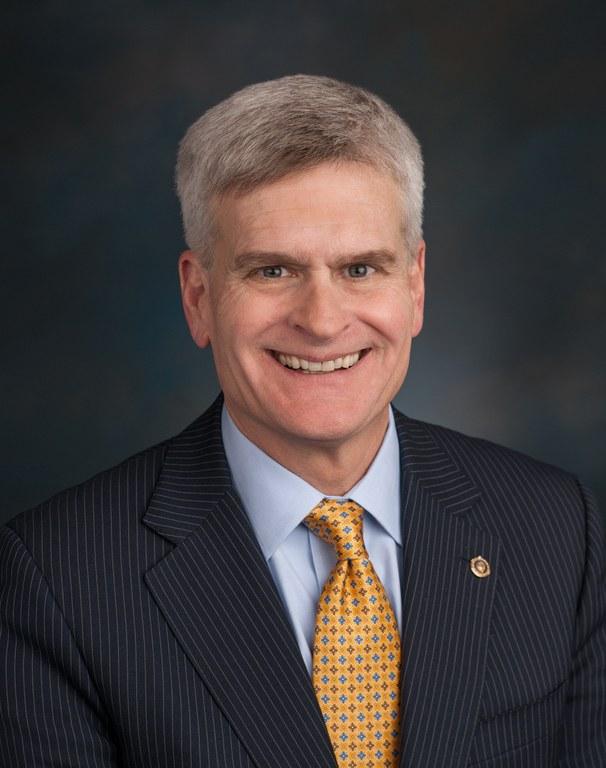
Sen. Bill Cassidy, R-La., says President Trump has personally promised to back his plan to shore up Social Security by borrowing $1.5 trillion and investing it outside the program's trust funds. Democrats say the idea gambles with retirees' money, and the Senate committee that would have to act on it hasn't scheduled a hearing.
Cassidy laid out the plan in a Nov. 15 interview on CBS's Face the Nation. "We borrow 1.5 trillion dollars, we put it in an investment fund separate from Social Security trust fund, put it into the broader economy, and allow it to grow over six decades," he said, according to the CBS transcript. At that point, he said, "it pays for up to 70 percent of what we need to cover the debt for Social Security."
He said the president "has given me personal commitment that he would support it, and his administration has been very helpful." That is Cassidy's account. We found no statement from the White House or the president confirming it as of midday Monday.
Cassidy also said he had "a commitment from both Thune and from Mike Crapo to have a hearing and a markup on a Social Security bill. It could be mine, could be someone else's." John Thune is the Senate majority leader, and Crapo chairs the Finance Committee. But Cassidy said the top Democrat on that committee, Sen. Ron Wyden of Oregon, "does not want to be constructive," and "we won't probably have that hearing unless he changes his mind." We found no public statement from Thune, Crapo or Wyden about the plan or a hearing.
Cassidy has not filed the investment fund as a bill that we could find on Congress.gov. In August he introduced a Senate resolution, with Democratic Sen. Dick Durbin as a cosponsor, that would set up a process for a Social Security solvency bill. It was referred to the Finance Committee. The Center for Retirement Research at Boston College describes the fund idea as a proposal by Cassidy and Sen. Tim Kaine, D-Va.
The deadline everyone is working against comes from the program's own trustees. The 2026 Trustees Report projects that the retirement trust fund will run out in the fourth quarter of 2032. After that, incoming payroll taxes would cover 78 percent of scheduled benefits. If the retirement and disability funds were combined, the reserves would last until 2034, with 83 percent of benefits payable after that. On the Senate floor Nov. 13, Cassidy warned of "a 28.5% cut to benefits in less than six years," a figure larger than the trustees' estimate. The release doesn't say how it was calculated.
What the Left Says
The progressive and Democratic case
Rep. John Larson of Connecticut, the top Democrat on the House Social Security subcommittee, answered Cassidy on Nov. 19. His statement said Democrats' plan is "paid for by making the wealthy finally pay their fair share, not risking Americans' hard-earned benefits by handing them over to Wall Street."
Larson's alternative, the Social Security 2100 Act, would raise benefits and extend solvency by ending the cap on wages subject to the payroll tax and adding a tax on net investment income over $400,000, his office said. "We ask President Trump and our Republican colleagues to abandon their cuts and privatization schemes," he said. Larson's office described Cassidy's plan as investing money from the Social Security trust funds in the stock market. Cassidy says his fund would be kept separate from them.
Cassidy said Wyden objects because "he doesn't want to put tax dollars in, in the stock market." Wyden hasn't said so publicly in anything we found.
Some critics who aren't in Congress focus on the debt. Alicia Munnell of the Center for Retirement Research wrote in April that the government would borrow the $1.5 trillion and, under the plan, also "borrow an additional $25 trillion to cover Social Security's annual shortfalls" while the fund grows. "In short, the Cassidy-Kaine proposal is a flight of fancy," she wrote.
Where Reality Likely Sits
Radio Purple's analysis
- Trump's support is Cassidy's word, for now. It may be true, but the White House hasn't said it publicly. Cassidy also didn't name the Treasury Department; he said the administration "has been very helpful."
- The hearing isn't scheduled. Cassidy says Thune and Crapo committed to one, but by his own account it probably won't happen unless Wyden changes his mind. Neither Thune nor Crapo has said anything about it in public that we found. On the program, Margaret Brennan noted the Senate has about 20 working days left this year, with defense and government funding still to pass.
- Both sides agree on the deadline. Republicans and Democrats are trying to avoid the automatic cut that comes when the retirement fund runs dry in late 2032. Where they split is how to pay for a fix. Cassidy wants a borrowed investment fund. Larson wants higher taxes on high earners.
- The math is disputed. Cassidy says the fund could cover up to 70 percent of the gap over six decades. Munnell's analysis says its gains would offset only "a tiny portion" of the extra borrowing needed in the meantime. The trustees' report doesn't score the plan, and we found no official cost estimate for it.
What the Right Says
The conservative and Republican case
Cassidy says the plan works because it's been done before. He pointed to the investment fund for federal railroad retirement, created under President George W. Bush. He said Wyden "voted for that exact same policy almost" and "that's done fantastic." He called Wyden's objection "a fig leaf," and said he had also offered to take up Sen. Bernie Sanders' plan.
He says Congress can act now. "We have the ability to have 60 votes in the Senate, to have the House, and have a president who will sign it," he told CBS. He added, "I have Democrats who are also supportive. It's a bipartisan bill."
In that Nov. 20 video post, Cassidy wrote that "Social Security WILL face benefit cuts by 2032 if we do nothing," and that "we have legislation ready to go, but no hearings have been scheduled."
Sources & Citations
- CBS News, “Transcript: Sen. Bill Cassidy on Face the Nation with Margaret Brennan, Nov. 15, 2026”, November 15, 2026.
- Office of Sen. Bill Cassidy, “Cassidy on Senate Floor: Protecting Social Security Means Protecting America's Fiscal Future”, November 13, 2026.
- Office of Rep. John Larson, “Ranking Member Larson Responds to Cassidy Comments on Path Forward for Social Security”, November 19, 2026.
- Social Security Administration, “The 2026 Annual Report of the Board of Trustees of the Federal OASI and DI Trust Funds”, January 1, 2026.
- Congress.gov, “S.Res. 832 (119th Congress)”, August 6, 2026.
- Center for Retirement Research at Boston College, “The Cassidy-Kaine Proposal Does Virtually Nothing to Solve Social Security's Financing Problems”, April 9, 2026.
Positions above are attributed to the public statements and published reporting cited here. Quotations are taken from these sources; Radio Purple does not publish unattributed or invented quotes. See an error? Request a correction.