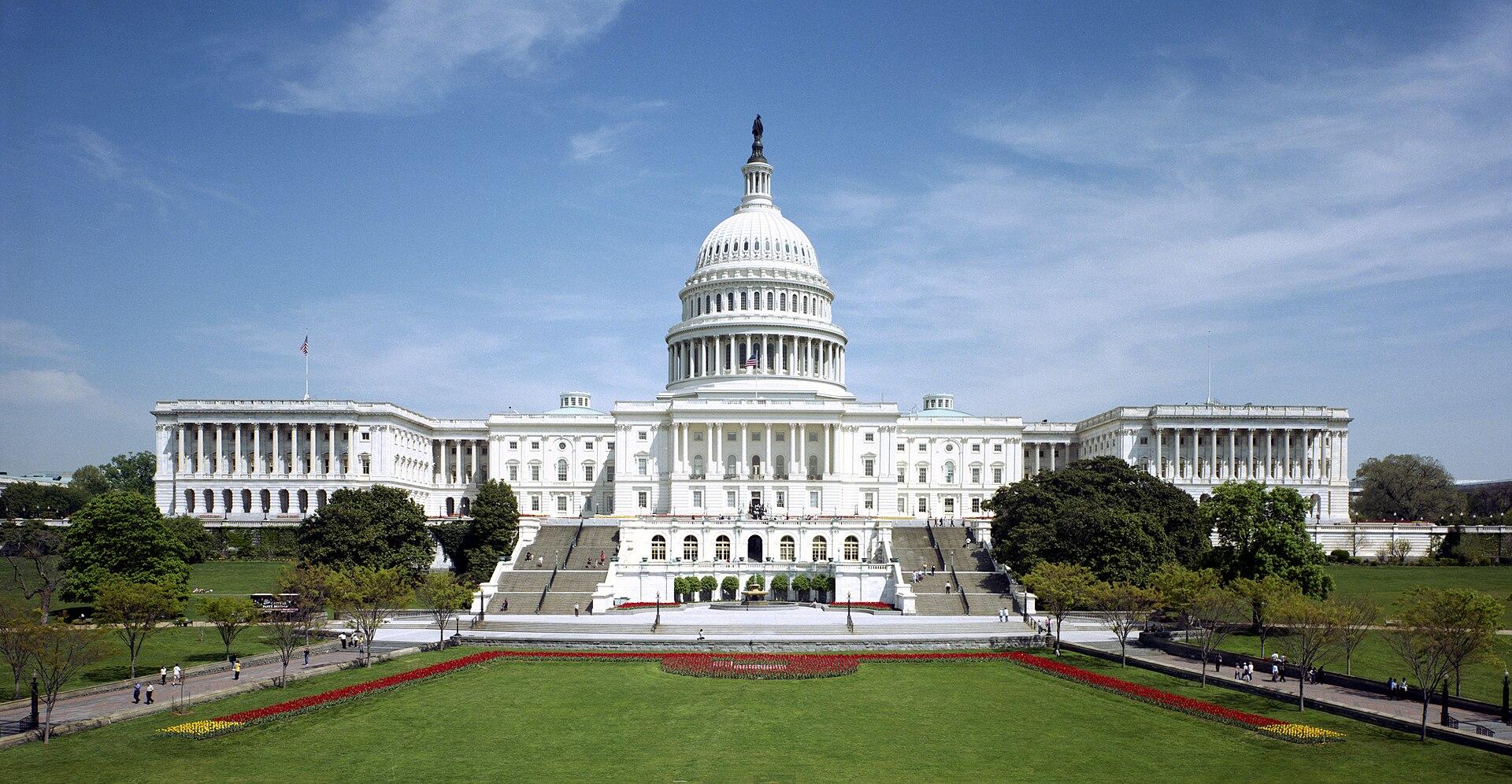
Senate Passes Permitting Overhaul 62-33, Sending It to the House. What It Says About Data Centers and Your Power Bill
Fifteen Democrats and independents joined 47 Republicans Thursday night to pass the Bipartisan American Affordability and Jobs Act. It sets new deadlines for federal environmental reviews and says data centers should pay the full cost of the power and grid upgrades they need. Sponsors promise lower bills; opponents call it a giveaway.
By Rachel Dunmore, Washington Correspondent
Published · 5 min read
The Overview
The facts, straight
The Senate voted 62-33 late Thursday to pass a broad rewrite of federal permitting rules for energy and infrastructure projects (Senate Roll Call Vote 270). The roll call began at 9:30 p.m. ET and the result was logged at 10:02 p.m., according to the Senate Daily Press.
Forty-seven Republicans voted yes, joined by 14 Democrats and independent Angus King of Maine. The Democrats were Chris Coons, John Fetterman, Ruben Gallego, Martin Heinrich, John Hickenlooper, Amy Klobuchar, Gary Peters, Jack Reed, Jacky Rosen, Brian Schatz, Minority Leader Chuck Schumer, Elissa Slotkin, Mark Warner and Sheldon Whitehouse. Two Republicans, Josh Hawley of Missouri and Mike Rounds of South Dakota, voted no, along with 30 Democrats and independent Bernie Sanders of Vermont. Five senators didn't vote.
What passed. The vehicle is H.R. 2347, a House bill (bill text on Congress.gov). On Wednesday, the Senate voted 69-27 to replace its text with a substitute from Republican Shelley Moore Capito of West Virginia, written with Republican Mike Lee of Utah and Democrats Heinrich and Whitehouse (Daily Press, Nov. 18). That substitute, the Bipartisan American Affordability and Jobs Act of 2026, was printed in the Congressional Record on Nov. 10. Among other things, that text:
- Puts federal environmental reviews on a clock. Under the National Environmental Policy Act, a lead agency would generally have one year to finish an environmental assessment and two years to publish a full environmental impact statement, followed by deadlines of 45 days for a record of decision and 90 days for other agencies' permit decisions. These are general review deadlines, not ones written only for power plants, power lines or data centers.
- Says data centers should pay their own way. A "ratepayer protection" section declares it U.S. policy that data-center owners and operators "bear the full cost of any electric service that they require and the full cost of any infrastructure built to serve them ... so that such costs are not borne by other customers, including residential customers." It orders federal energy regulators to revise their transmission pricing policy within 90 days and finish a rule within a year after proposing it. For retail service, it says no portion of the added cost of serving a data center "may be allocated to, or recovered in the rates of, any customer other than" the data center.
The text also changes the Clean Water Act and Endangered Species Act, limits court challenges and speeds transmission permitting. We read the version printed Nov. 10. The Senate's final engrossed text hadn't been posted, and Congress.gov blocked our requests, so we couldn't check whether anything changed on the floor.
What didn't get a vote. The Daily Press log shows no votes on other amendments Thursday before passage. At 9:07 p.m., Capito asked consent to hold votes on 19 amendments from both parties. Democrat Jeff Merkley of Oregon asked to change the request; Capito objected to his change, and Merkley objected to hers, according to the Daily Press log. Merkley also objected when Capito called up a bipartisan managers' amendment. After passage, Schatz asked consent to add the Lee-Heinrich-Capito amendment as an "enrollment correction." Merkley asked to include his own amendments too, and then objected.
What's next. Because the Senate replaced the text of a House bill, the House has to pass the Senate version or negotiate a different one before anything goes to President Donald Trump. Capito urged House leaders to pass it "expeditiously" (Capito statement).
For how the bill got here, see our earlier story: Senate Clears First Procedural Hurdle on Permitting Bill, 73-25.
What the Left Says
The progressive and Democratic case
Democrats split almost two to one against the bill, and both sides make household-cost arguments.
Heinrich, the top Democrat on the Energy Committee, said the bill will "make data centers pay their fair share of electricity and grid costs" and "get more affordable energy onto the grid faster" (Heinrich statement). His office cites outside estimates: a Rhodium Group projection that household electricity bills would fall about $50 to $78 a year by 2040, and a Grid Strategies estimate that data centers would contribute about $55 billion toward transmission costs over a decade, $35 billion more than under current policy. Those are projections cited by a sponsor, not guaranteed savings.
Sen. Ben Ray Luján, Heinrich's fellow New Mexico Democrat, voted no. He wrote that he supports a faster process for clean energy but "could not support legislation that fails to address the concerns of our Pueblo and environmental leaders."
Sen. Ron Wyden of Oregon said Republicans blocked a vote on his amendment to ban data centers on public lands, and wrote that the bill gives "your public lands to tech giants." That's his characterization of the bill.
Where Reality Likely Sits
Radio Purple's analysis
- The vote was bipartisan, and so was the opposition. Fifteen senators who caucus with Democrats voted yes and two Republicans voted no. Both sides used affordability arguments.
- Review deadlines are real, but they don't cover everything. The text sets one- and two-year targets for federal environmental reviews. Many projects also need state and local approvals the bill doesn't control.
- The data-center cost language is strong, but it isn't automatic. It's a stated policy plus orders to federal regulators, with rules that come later, and retail limits that states and utilities would apply. How much any household saves depends on those rules. The estimates range from Rhodium's $50 to $78 a year by 2040, cited by Heinrich, to Thune's "hundreds of dollars."
- It isn't law yet. The House has to act. The fight over amendments that never got votes could come back in the House.
What the Right Says
The conservative and Republican case
Most Republicans backed the bill as a way to build faster and cut costs.
Majority Leader John Thune said the bill "cuts through decades of red tape" and that "it's estimated that this bill will save the average household hundreds of dollars each year." His post doesn't say whose estimate that is. It's larger than the Rhodium figure Heinrich's office cites.
Hawley, one of two Republicans to vote no, said "legislation that threatens to take farmers' land is legislation I won't support," and that the bill is "stuffed with giveaways to data centers and industry at the expense of farmers" (Hawley statement). He said he offered amendments to protect farmers but was denied a vote. His office says they dealt with eminent domain for transmission lines. Capito's 9:07 p.m. request included votes on two Hawley amendments before it was blocked, according to the Daily Press log.
Sources & Citations
- U.S. Senate, “Roll Call Vote 119th Congress, 2nd Session, Vote 270: On Passage of the Bill H.R. 2347, as Amended”, November 19, 2026.
- U.S. Senate Daily Press, “Thursday, November 19, 2026 (floor log)”, November 19, 2026.
- U.S. Senate Daily Press, “Wednesday, November 18, 2026 (floor log)”, November 18, 2026.
- Congress.gov, “H.R. 2347 text”, November 19, 2026.
- Congressional Record (GovInfo), “Text of Amendments: SA 6883 (Bipartisan American Affordability and Jobs Act of 2026)”, November 10, 2026.
- Senate Environment and Public Works Committee (Republican), “Senate Passes Capito's Bipartisan American Affordability and Jobs Act”, November 19, 2026.
- Senate Energy and Natural Resources Committee (Democratic), “Heinrich: Senate Passage of Landmark Bipartisan Permitting Deal...”, November 19, 2026.
- Office of Sen. Josh Hawley, “Hawley Releases Statement on Anti-Farmer Transmission Bill”, November 20, 2026.
Positions above are attributed to the public statements and published reporting cited here. Quotations are taken from these sources; Radio Purple does not publish unattributed or invented quotes. See an error? Request a correction.