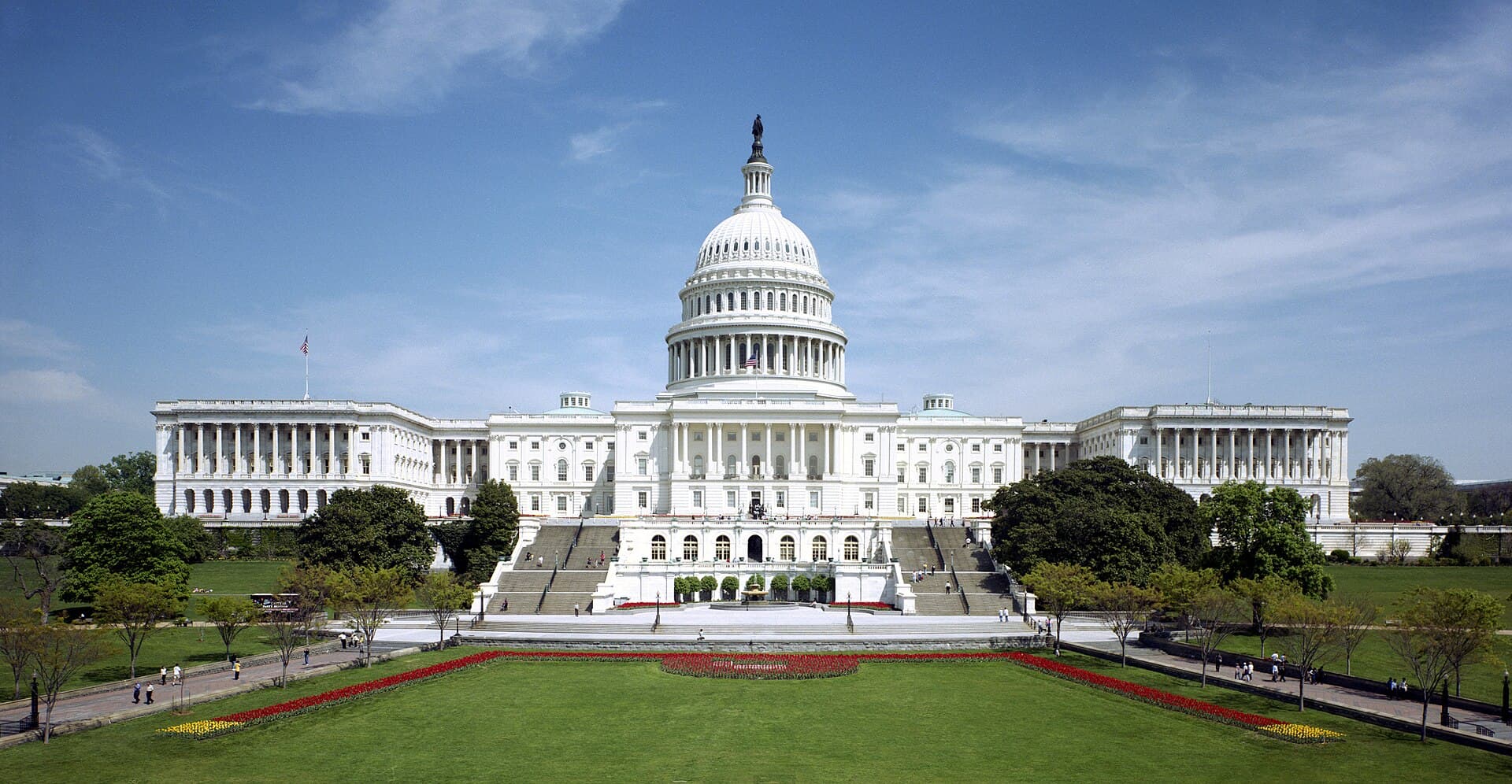
Why Brief Senate Sessions Matter for Trump's Nominees
Mike Lee presided over a no-business Senate session Monday, then said Friday he would support ending those brief meetings when the White House is ready to pursue recess appointments. Ron DeSantis wants all-night judicial confirmations before Democrats take control in January. Those are different strategies—and a 2014 Supreme Court ruling explains why a few minutes with the gavel can matter.
The Overview
The facts, straight
The Senate held two brief meetings this week, conducted no business at either and kept an important check on President Trump's appointment power in place. Now conservatives are pressing Republicans over how to use their remaining time in control of the chamber: stay and confirm nominees, or allow a recess long enough for Trump to make temporary appointments without Senate approval.
Sen. Mike Lee (R-Utah) presided Monday, Nov. 2, and Sen. Tim Scott (R-S.C.) presided Thursday, Nov. 5, according to the Senate Daily Press Gallery. Neither session conducted business. These were pro forma sessions—short meetings that can keep the Senate from taking a legally significant recess even when most senators are away.
Lee defended his participation Friday. He said majority-party senators take turns presiding and that he would support recess appointments and oppose pro forma sessions when the White House was ready to pursue that approach. "That moment has not yet arrived," he wrote. That is Lee's account of his coordination with the administration, not a new announcement from Trump.
Post: Sen. Mike Lee (@BasedMikeLee) on X, Nov. 6, 2026.
The schedule was not Lee's individual decision. In a Sept. 30 unanimous-consent order, Majority Leader John Thune arranged pro forma sessions through Nov. 5 and a return to business Monday, Nov. 9. The presiding officer recorded no objection. Monday's opening business was a permitting-reform legislative vehicle, not an all-night nomination session; the Senate voted 73-25 to advance it (Roll Call Vote 257), and as of midday Nov. 10 had held no confirmation votes since returning.
Update, Nov. 10, evening: The Senate agreed Tuesday to proceed to the permitting vehicle, 62-21 (Roll Call Vote 258). Before adjourning Tuesday night, it confirmed a list of military promotions without a recorded vote, according to the Senate Daily Press; no judicial nominees were among them.
The urgency comes from the election: Democrats won the Senate and take control with the new Congress in January, as we reported on divided government. Until then, the outgoing Republican majority retains its authority to act on nominations.
What the Left Says
The progressive and Democratic case
Democratic leader Chuck Schumer has signaled tougher scrutiny of Trump's nominees, but his actual words are narrower than a promise to reject every nominee.
In a Thursday interview published Friday by the Associated Press, Schumer said: "The bottom line is we're not going to allow a right-winger on the court." He was discussing a possible Supreme Court vacancy, not announcing that one exists. He also said Democrats were "not going to allow any crappy nominees" to the Supreme Court, lower courts or Cabinet.
Schumer would not say whether he would leave a Supreme Court seat open until after the next presidential election. His interview preceded Lee's Friday-evening explanation; it should not be read as a reply to that post.
The legal constraint also cuts across parties. The precedent now limiting Trump's recess appointments arose from President Barack Obama's appointments to the National Labor Relations Board in January 2012. The Supreme Court invalidated those appointments in 2014. It did not create a rule that changes with the president's party.
Where Reality Likely Sits
Radio Purple's analysis
The constitutional routes are different. Article II, Section 2 provides the usual advice-and-consent appointment process and a separate power to fill vacancies during a qualifying Senate recess. A recess commission expires at the end of the Senate's next session. It is not a permanent substitute for confirmation. CRS explains that presidents have made judicial recess appointments, but those appointments are temporary—not lifetime tenure obtained by bypassing the Senate.
A short meeting can be legally real. In NLRB v. Noel Canning, decided June 26, 2014, the Court held that "the Senate is in session when it says it is, provided that, under its own rules, it retains the capacity to transact Senate business." The case's official docket records the judgment and opinions.
The capacity qualification matters. In that case, even an earlier agreement to conduct no business did not make business impossible: the Senate could act by unanimous consent. The Court rejected treating the entire period between regular working sessions as one uninterrupted recess.
The majority's rules, also summarized in CRS's legal overview, are:
- A break of three days or fewer is too short to trigger the recess-appointment power.
- A break of more than three but fewer than ten days is presumptively too short. The Court left room for very unusual circumstances, such as a national catastrophe that makes the Senate unavailable but demands an urgent response. Political opposition in the Senate does not qualify.
- The power covers recesses both within and between sessions, and vacancies that arose before a recess as well as during it. A ten-day break does not automatically validate every possible appointment.
The House matters, too. Article I, Section 5 says neither chamber may adjourn for more than three days without the other's consent. As CRS explains, either chamber can therefore help prevent the long Senate break needed for recess appointments. Congressional adjournment-counting conventions and the recess-appointment analysis are not interchangeable calendar shortcuts.
Article II, Section 3 separately allows presidential adjournment in a disagreement between the two houses "with Respect to the Time of Adjournment." The provision specifies a disagreement between the houses over adjournment, not simply a dispute over nominees. Lee's post does not propose invoking that authority.
The practical test is what the Senate actually does. It can hold confirmation votes while Republicans remain in control. It can change its schedule through its procedures. But a demand from an ally, or one senator's turn with the gavel, does not establish that either has happened. Watch the nomination calendar, actual confirmation votes and any new scheduling order—not simply the label attached to the break.
What the Right Says
The conservative and Republican case
Florida Gov. Ron DeSantis is urging Senate Republicans to use the remaining confirmation window rather than leave vacancies for the new majority.
"Every single federal judicial vacancy needs to be filled in the lame duck session," he wrote Friday. "The Senate should pull all-nighters for as long as it takes." He predicted Democrats would not confirm a single Trump judge after taking over. That is his forecast, not an established future fact.
Post: Gov. Ron DeSantis (@RonDeSantis) on X, Nov. 6, 2026.
Lee's statement addresses a different route. "In the absence of an agreement between the Senate and White House about recess appointments, regular pro forma sessions are the norm in the modern Senate," he wrote. He said he had been in close contact with the White House and would support a change when it was ready.
Working through the night to confirm nominees and adjourning to allow recess appointments are not the same proposal. One uses the Senate's advice-and-consent power; the other creates an opportunity for the president to make temporary appointments without confirmation. Lee's statement does not itself change the Senate's order or establish a recess.
How many nominations are at stake? The available reporting uses different dates and categories:
- Nov. 4: Bloomberg Law reported more than 20 judicial picks pending before the Senate, including four appeals-court nominees.
- Nov. 7: The Hill reported 28 district-court vacancies, with nominees pending for 11, citing the federal judiciary's administrative office.
These are dated reporting snapshots, not a single current official tally. A vacant seat is not necessarily a seat with a nominee. A pending nomination is not a confirmation, and the counts above are not numbers to add together.
Sources & Citations
- U.S. Senate Daily Press Gallery, “Monday, November 2, 2026: Senate pro forma session”, November 2, 2026.
- U.S. Senate Daily Press Gallery, “Thursday, November 5, 2026: Senate pro forma session”, November 5, 2026.
- U.S. Government Publishing Office, “Orders for October 1 through November 9, Congressional Record S5299”, September 30, 2026.
- Sen. Mike Lee (@BasedMikeLee) on X, “Explanation of pro forma sessions and conditional support for recess appointments”, November 6, 2026.
- Gov. Ron DeSantis (@RonDeSantis) on X, “Call for all-night judicial confirmations in the lame duck”, November 6, 2026.
- Supreme Court of the United States, U.S. Reports via Library of Congress, “NLRB v. Noel Canning, 573 U.S. 513 (2014), published opinion”, June 26, 2014.
- Supreme Court of the United States, “NLRB v. Noel Canning, No. 12-1281, docket”, June 26, 2014.
- Congressional Research Service, “Recess Appointments: A Legal Overview (IF12946)”, March 19, 2025.
- Congressional Research Service, “Recess Appointments: Frequently Asked Questions (RS21308)”, March 11, 2015.
- Congressional Research Service, “Sessions, Adjournments, and Recesses of Congress (R42977)”, July 19, 2016.
- National Archives, “Constitution of the United States, Articles I and II”, November 7, 2026.
- National Archives, “Amendments 11–27, including the Twentieth Amendment”, November 7, 2026.
- Associated Press, Mary Clare Jalonick, via PBS News, “Schumer says Democrats will stop Trump from placing a right-winger on the Supreme Court”, November 6, 2026.
- The Hill, Zach Schonfeld, “Donald Trump's window to further reshape the courts is closing after Democrats' Senate win”, November 7, 2026.
- Bloomberg Law, “GOP Eyes Lame Duck Trump Judge Dash Before Democrats Take Over”, November 4, 2026.
Positions above are attributed to the public statements and published reporting cited here. Quotations are taken from these sources; Radio Purple does not publish unattributed or invented quotes. See an error? Request a correction.