With Democrats Taking Congress, the $7.25 Minimum Wage Is Back in Play. The Fight Is Over the Number.
The federal minimum wage hasn't moved since July 2009. Sanders wants $20, Jeffries hasn't named a figure, and a Republican-Democratic Senate bill sits at $15. Thirty states and D.C. already pay more than $7.25.
The Overview
The facts, straight
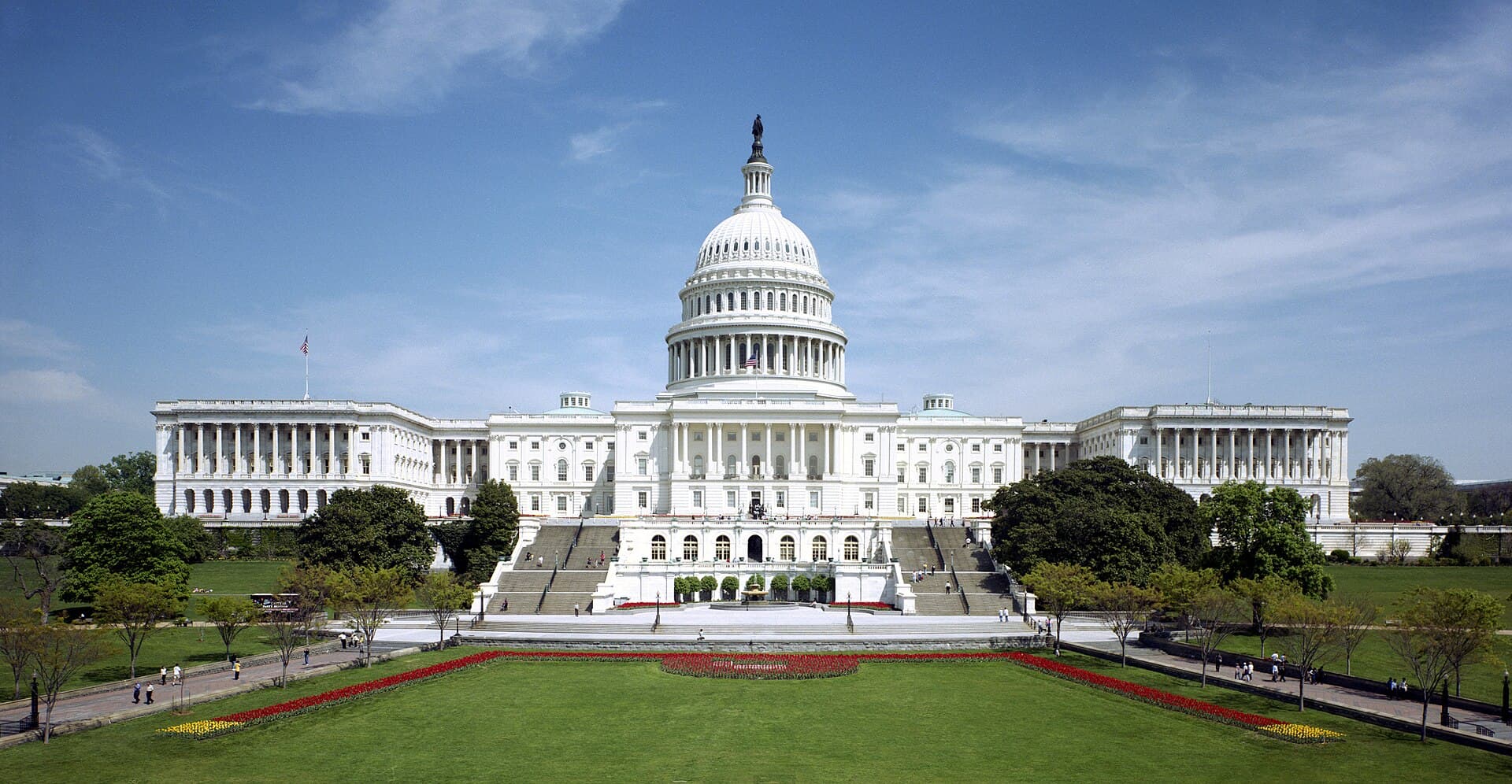
Democrats won control of both the House and the Senate in the Nov. 3 midterms, according to the Associated Press's race calls, and raising the federal minimum wage is back on their agenda. A few races were still uncalled as of this week, so final seat counts aren't set, but the majorities are. The new Congress begins in January. President Donald Trump has two years left in his term, so any increase would still need his signature or a veto override.
The federal floor is $7.25 an hour. Under the Labor Department's history of the Fair Labor Standards Act, it took effect July 24, 2009, and there has been no increase since. That's more than 17 years.
Most states have already moved on. The department's state table, updated Nov. 5, lists 30 states plus the District of Columbia with basic minimums above $7.25. The other 20 effectively sit at the federal rate: 13 set it at $7.25, five have no minimum wage law, and Georgia and Wyoming set lower rates that federal law overrides for most workers.
More raises are already scheduled. The Economic Policy Institute's tracker, a database kept by a worker-advocacy think tank, lists set increases on Jan. 1, 2027 in Michigan (to $15), Rhode Island (to $17) and Virginia (to $13.75). New York begins inflation indexing that day, and more than a dozen other states adjust their rates for inflation each January.
The competing federal numbers on the table now:
- $20 an hour, pushed by Sen. Bernie Sanders (I-Vt.), along with the PRO Act, a union-organizing bill.
- $17 by 2030, the Raise the Wage Act Sanders and Rep. Bobby Scott (D-Va.) introduced in April 2025.
- $15, then indexed to inflation, the Higher Wages for American Workers Act from Sen. Josh Hawley (R-Mo.), cosponsored by Democratic Sens. Peter Welch of Vermont and Ruben Gallego of Arizona. It was referred to the Senate labor committee in June 2025 and hasn't moved since.
What the Left Says
The progressive and Democratic case
Democrats agree the wage should rise. They haven't agreed on how far.
Post: Sen. Bernie Sanders (@SenSanders) on X, Nov. 12, 2026.
House Democratic Leader Hakeem Jeffries took up the minimum wage at a news conference Monday. According to a published transcript, he said it needs to go up and that it's a disgrace it "hasn't been raised in 20 years." He said he wanted to talk with House and Senate Democrats "to see what's possible," and he didn't name a figure. The actual gap is about 17 years, not 20. A clip of the answer spread widely online, but we couldn't find it on Jeffries' own or an official Democratic account, so we're relying on the transcript.
Post: Rep. Delia Ramirez (@repdeliaramirez) on X, Nov. 10, 2026.
Where Reality Likely Sits
Radio Purple's analysis
The research doesn't give one clean answer. The same Seattle study found "an effect of zero when analyzing employment in the restaurant industry at all wage levels." A separate UC Berkeley study of Seattle food service found wages rose and employment "was not affected." Economists still disagree on how large an increase can go before job losses outweigh the raises. Effects also likely depend on how high the wage goes relative to local pay, which differs widely from state to state.
Older budget estimates exist, but they're dated. The Congressional Budget Office analyzed earlier $15 proposals in 2019 and 2021. Those estimates covered different bills and a different economy, so we're not relying on their figures here.
Most states already set a higher floor. With 30 states and D.C. above $7.25, a federal increase would matter most in the 20 states still at the federal rate, including Texas, Pennsylvania and much of the South.
There is a bipartisan starting point, but no agreement. Hawley's $15 bill has Democratic cosponsors, Democrats' bills start at $17, and Sanders now wants $20. With Trump in the White House, any increase likely needs Republican votes, which puts the lower numbers in play.
What to watch: whether Democratic leaders pick a number, whether the next Senate labor committee takes up any bill, and whether Trump says where he stands.
What the Right Says
The conservative and Republican case
Republicans who oppose a large federal increase argue it would cost jobs, squeeze small businesses and push up prices.
When Sanders forced a Senate vote on a $17 minimum in April 2025, Sen. Bill Cassidy (R-La.) answered on the floor. "Increasing the wage by more than 230 percent even over 5 years will destroy jobs, impacting rural areas and low-margin small businesses that cannot afford such an increase," he said, according to the Congressional Record. "A law mandating a higher minimum wage doesn't mean much to a worker who loses his or her job because of this." The amendment failed 47-52; every Republican except Hawley voted no.
Sen. Rand Paul (R-Ky.) argued this week that high prices come from inflation and federal spending, and warned against government price-setting in general. His post doesn't mention the minimum wage.
Post: Sen. Rand Paul (@RandPaul) on X, Nov. 12, 2026.
Critics of big increases often cite research on Seattle, one of the first big cities to phase in a $15 minimum. A study by Ekaterina Jardim and colleagues, first released by the National Bureau of Economic Research in 2017 and later published in an economics journal, found that the city's step to $13 in 2016 "reduced hours worked in low-wage jobs by 6-7 percent, while hourly wages in such jobs increased by 3 percent." The authors concluded that this lowered pay in those jobs by about $74 a month per job.
Not every Republican is opposed. Hawley, a Missouri conservative, has argued for a $15 floor. He was the only Republican to vote for Sanders' $17 amendment in 2025. "This bipartisan legislation would ensure that workers across America benefit from higher wages," Hawley said when he introduced his bill.
Sources & Citations
- U.S. Department of Labor, Wage and Hour Division, “History of Federal Minimum Wage Rates Under the Fair Labor Standards Act, 1938 - 2009”, November 13, 2026.
- U.S. Department of Labor, Wage and Hour Division, “State Minimum Wage Laws (updated Nov. 5, 2026)”, November 5, 2026.
- Economic Policy Institute, “Minimum Wage Tracker (updated Sept. 30, 2026)”, September 30, 2026.
- Congress.gov, “S. 2013, Higher Wages for American Workers Act of 2025”, June 10, 2025.
- GovInfo, “S. 2013 as introduced (PDF)”, June 10, 2025.
- Office of Sen. Josh Hawley, “Hawley, Welch Introduce Legislation to Increase Federal Minimum Wage to $15 Per Hour”, June 10, 2025.
- Office of Sen. Peter Welch, “Welch, Hawley Lead Bipartisan Bill to Raise the Federal Minimum Wage”, June 10, 2025.
- GovInfo, “Congressional Record, Senate, April 4, 2025 (Amendment No. 2126)”, April 4, 2025.
- National Bureau of Economic Research, “Minimum Wage Increases, Wages, and Low-Wage Employment: Evidence from Seattle (Working Paper 23532)”, June 1, 2017.
- UC Berkeley Institute for Research on Labor and Employment, “Seattle's Minimum Wage Experience 2015-16”, June 19, 2017.
- Tommy Christopher (Substack), “Hakeem Jeffries Press Conference 11-09-2026: Full Video And Transcript”, November 9, 2026.
- Sen. Bernie Sanders (@SenSanders) on X, “Sen. Bernie Sanders on the minimum wage”, November 12, 2026.
- Rep. Delia Ramirez (@repdeliaramirez) on X, “Rep. Delia Ramirez on the minimum wage”, November 10, 2026.
- Sen. Rand Paul (@RandPaul) on X, “Sen. Rand Paul on prices”, November 12, 2026.
Positions above are attributed to the public statements and published reporting cited here. Quotations are taken from these sources; Radio Purple does not publish unattributed or invented quotes. See an error? Request a correction.