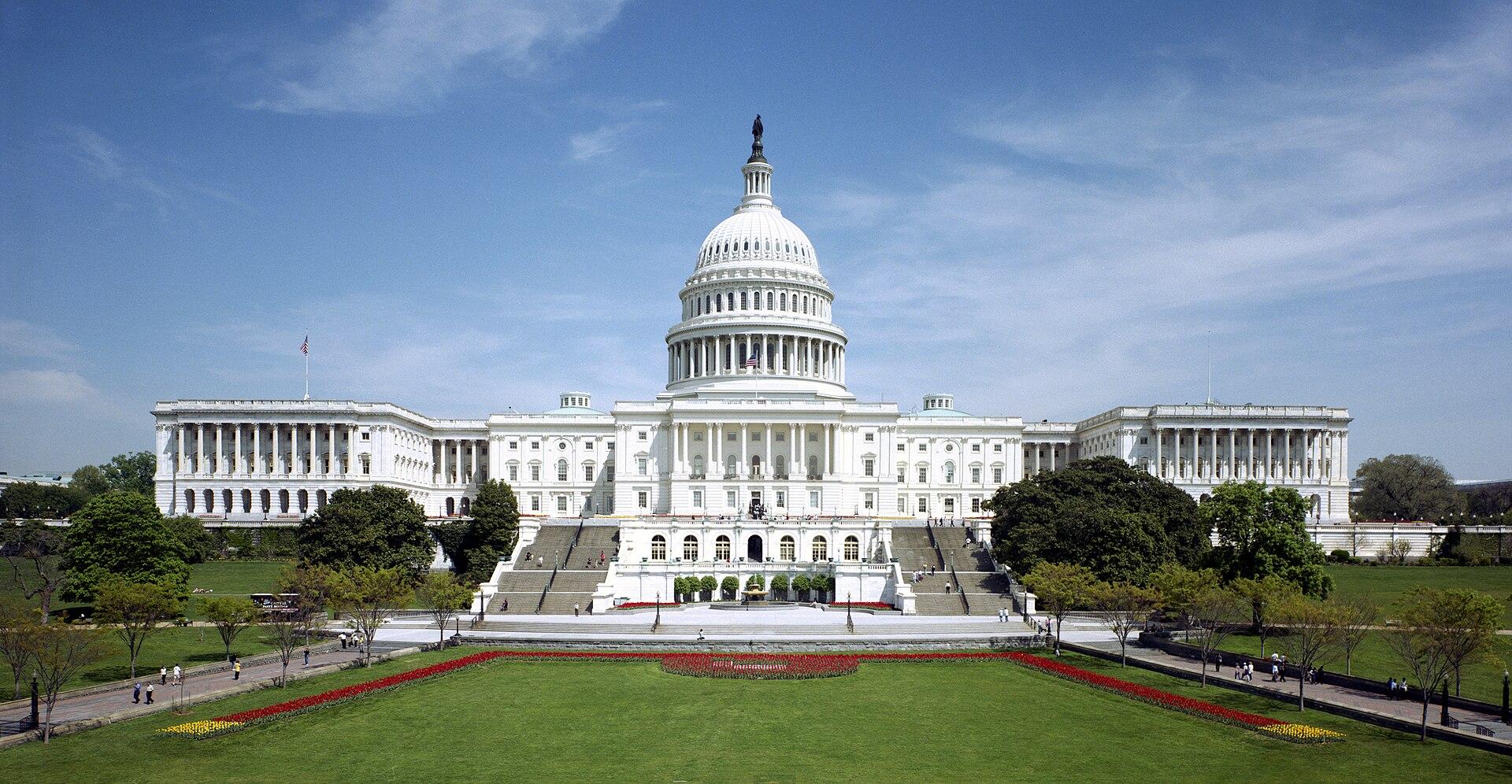
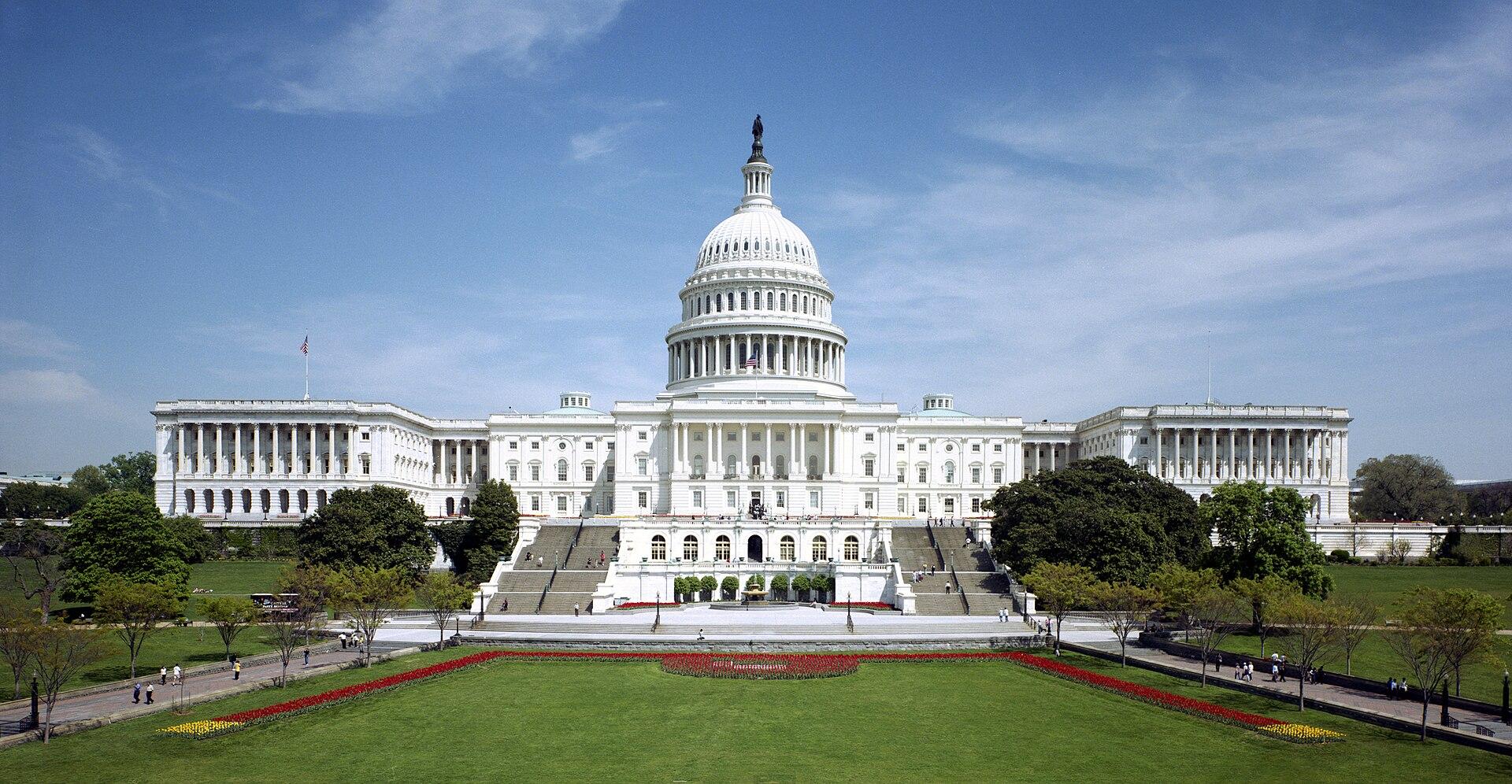
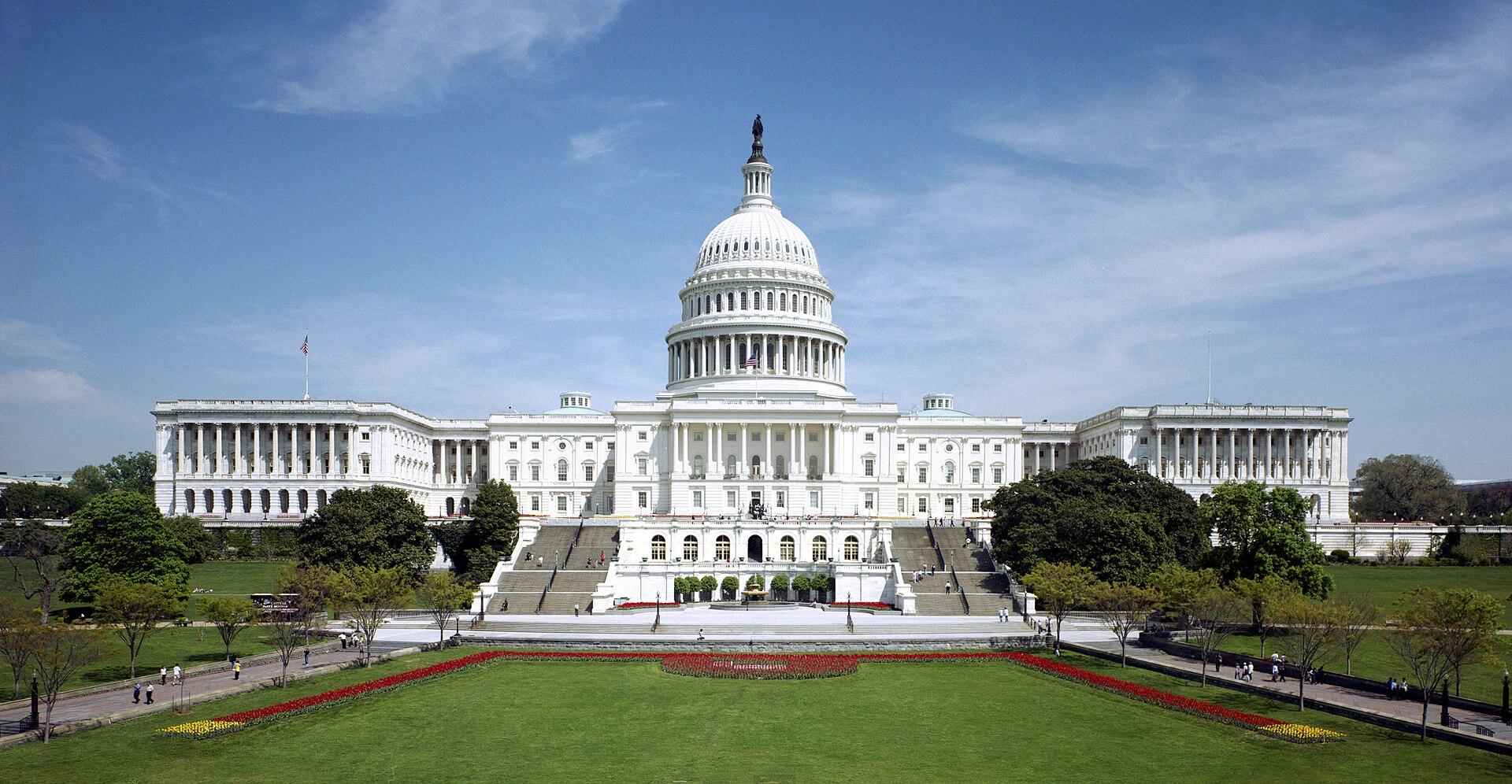
Senate Clears First Procedural Hurdle on Permitting Bill, 73-25; Passage Still Ahead
Senators voted 73-25 to limit debate on taking up a bipartisan permitting package. That is not passage. A revised draft changes who pays data-center grid costs but does not guarantee lower household bills.
By Rachel Dunmore, Washington Correspondent
Published · 8 min read
The Overview
The facts, straight
The Senate voted 73-25 on Monday, Nov. 9, to invoke cloture on the motion to proceed to H.R. 2347, clearing the three-fifths threshold (Roll Call Vote 257). That vote limits debate on whether to take up a legislative vehicle. It did not pass the permitting package, adopt the proposed substitute or lower anyone's electric bill.
Republicans voted 51-1 in favor; Sen. Mike Rounds of South Dakota voted no. Democrats and independents split 22-24: Democratic Sens. Martin Heinrich and Sheldon Whitehouse, Minority Leader Chuck Schumer and independent Angus King were among those voting yes, while independent Bernie Sanders and New Mexico Democrat Ben Ray Luján voted no. Sens. Tim Sheehy and Chris Murphy did not vote, according to the roll call.
According to Tuesday's Senate Daily Press schedule, the Senate was to resume post-cloture consideration of the motion to proceed at noon EST, with roll call votes expected and recess and adjournment time counting against post-cloture time. Under the cloture rule for legislation, consideration can be limited to 30 additional hours (Senate Republican Policy Committee glossary). As of 11:57 a.m. CST Tuesday, the official floor schedule and Senate floor activity log had not recorded a vote on the motion to proceed itself or a new cloture motion.
Update, Nov. 10, evening: The Senate agreed to the motion to proceed to H.R. 2347 on Tuesday, Nov. 10, by a vote of 62-21 (Roll Call Vote 258), a simple-majority question, making the bill the Senate's pending business. Republicans voted 46-1, with Rounds again opposed; Democrats and independents voted 16-20, with Luján and Sanders among the no votes; 17 senators did not vote. That is not passage. The underlying House-passed bill concerns the tax treatment of certain damages; the Senate Daily Press describes it as the vehicle for the permitting bill. The Senate press galleries' floor logs recorded no amendment, including the proposed substitute, offered before the Senate adjourned Tuesday night, and listed no votes scheduled when it resumes consideration Wednesday. The remaining steps described below therefore begin with amendments.
The question Monday, as set in the Nov. 5 Senate Daily Press schedule, was cloture on the motion to proceed to H.R. 2347. That House-passed measure is titled the Survivor Justice Tax Prevention Act. It is being used as the vehicle for the Bipartisan American Affordability and Jobs Act of 2026, the permitting proposal introduced separately as S. 5653.
The Sept. 30 unanimous-consent order and the Nov. 5 Senate calendar, page 2, set up Monday's procedure. The calendar lists H.R. 2347 as Order No. 453.
Four senators released a proposed substitute Saturday: Republicans Shelley Moore Capito and Mike Lee, and Democrats Martin Heinrich and Sheldon Whitehouse. Capito is S. 5653's formal sponsor; the other three are its original cosponsors.
The 494-page draft, identified as KAT26764, is labeled "intended to be proposed" as a substitute to H.R. 2347 (document, page 1). It retains a separate tax-provisions division alongside permitting changes. It is proposed text, not law.
The text examined here is a copy hosted by the National Ocean Industries Association; its legislative-counsel identifier matches the committee-linked draft. The committee’s own PDF download was unavailable during verification.
Beyond data-center costs, Section 1110 would generally require covered National Environmental Policy Act (NEPA) challenges to be filed within 150 days of an authorization’s Federal Register publication where an environmental impact statement was prepared, or its public release otherwise; any shorter federal deadline would still control. Where a comment opportunity occurs after enactment, challengers would also have to have submitted a substantive comment identifying the particular issue (pages 71–73).
One consequential revision: the new data-center retail-cost provisions do not retain the introduced bill's 20-megawatt threshold. That matters when assessing who would have to pay for new electric infrastructure.
What the Left Says
The progressive and Democratic case
Heinrich and Whitehouse, who voted to advance the bill, argue that faster construction can serve clean energy and consumers, rather than simply help fossil-fuel developers.
Heinrich said in the Nov. 7 committee release: "It also makes sure data centers pay for the energy they use and the grid upgrades they cause, instead of passing those costs on to New Mexico families." He said the changes incorporated feedback from Tribes and New Mexicans.
Whitehouse wrote Friday: "Americans want more affordable energy. Our bipartisan permitting reform bill gets it done." That is an argument for the legislation, not a measured reduction in household bills.
Post: Sen. Sheldon Whitehouse (@SenWhitehouse) on X, Nov. 6, 2026.
In a statement responding to the substitute Saturday, Friends of the Earth U.S. President Erich Pica said: "Even amended, BAAJA is filled with industry giveaways that throw communities and our environment under the fossil fuel and data center bus."
His organization argues the changes still weaken clean-water, endangered-species, environmental-review and historic-preservation protections. It wants lawmakers to wait for the new Congress.
Democrats split on Monday's vote. Luján, Heinrich's fellow New Mexico Democrat, voted no. "I voted against advancing the permitting reform bill today after hearing serious concerns from New Mexicans across the state, especially our Pueblo and environmental leaders," he wrote, adding that those concerns must be addressed "before moving forward."
Post: Sen. Ben Ray Luján (@SenatorLujan) on X, Nov. 9, 2026.
Where Reality Likely Sits
Radio Purple's analysis
First, understand the vote. Legislative cloture ordinarily requires three-fifths of senators duly chosen and sworn—60 in a fully seated Senate (Senate explanation). Monday's 73 votes exceeded that threshold. The cloture vote limits debate on the motion to begin considering H.R. 2347. The motion to proceed itself, amendments including the proposed substitute, and final passage are separate questions. The cloture vote did not adopt the substitute or pass the bill.
Republicans still control the lame-duck Senate. The Democratic majority elected Nov. 3 does not take over until January (our divided-government coverage). Monday's vote took place under the outgoing Republican majority.
Second, distinguish the two data-center cost tracks in Section 2107. The substitute contains federal transmission-pricing instructions and a separate retail-cost protection floor. They are not simply a rule that every data center above a particular size pays every grid expense:
- Federal transmission pricing: The Federal Energy Regulatory Commission (FERC) would revise its policy and require rates covering existing, or embedded, transmission costs plus a reasonable assessment of incremental transmission costs for eligible computational-load customers. Incremental payments would be credited against transmission revenue requirements to avoid double recovery from other customers. The draft also provides for lower transmission costs for customers choosing non-firm service—service whose terms allow power deliveries to be limited or interrupted (Section 2107(a), pages 281–288; service-category definition, pages 290–291).
- Retail infrastructure costs: The proposed floor bars shifting the retail incremental costs of serving a computational-load site to customers other than computational-load owners or operators. Those costs include generation, storage, transmission and distribution. Owners or operators would remain responsible for unrecovered costs if they leave early; utilities would have to secure reasonable financial assurances or contributions before constructing necessary facilities or upgrades (Section 2107(b), proposed Federal Power Act Section 229(b), pages 289–293).
The size cutoff changed. The introduced S. 5653 text, page 232, defines covered loads using the phrase "equals or exceeds 20 megawatts" and includes phased projects expected to reach that level. That includes exactly 20—not only loads above it.
The substitute's definitions, pages 289–290, instead use computational-load sites, owners and operators without that megawatt floor. They cover facilities primarily devoted to activities such as software services, AI and cryptocurrency mining, but exclude computing equipment ancillary to a facility primarily engaged in a different commercial or industrial activity.
There are important implementation limits. The retail floor and state-service provisions apply prospectively to sites interconnecting on or after enactment. Existing state-approved service arrangements remain effective, although states could revise them where state law permits (pages 297–298). That prospective rule should not be confused with the separate FERC transmission-rate revisions. The draft preserves existing state and federal jurisdiction; implementation would involve utility charges, state retail decisions and FERC's federal transmission rulemaking—not an automatic household rebate.
Other provisions also need precise descriptions. The nuclear language includes at-risk construction of uranium-enrichment facilities before a license is issued, while preserving NRC licensing, denial and inspection authority and specified environmental-review and hearing requirements (Section 1502, pages 205–207). That is not a blanket waiver of nuclear regulation.
On Tribal consultation, a savings clause in the proposed historic-preservation program-review process says it neither authorizes the interior secretary to consult for a Tribe nor relieves a federal agency's consultation obligation (Section 2301, page 449). That specific protection does not establish that Tribes broadly endorse the package or resolve the objections to its other provisions.
For households, cost allocation is not a price guarantee. Preventing specified data-center costs from being shifted to other customers could protect ratepayers. Faster permitting could also help projects get built. Neither mechanism guarantees a particular bill reduction or date. The Senate cleared its first procedural test Monday. Still ahead: the vote on the motion to proceed, amendments, final Senate passage, agreement with the House—which passed a different version of H.R. 2347—and the president's signature. After that would come the question of how regulators implement it.
What the Right Says
The conservative and Republican case
Lee and Capito frame the package as a way to reduce delays, uncertainty and infrastructure costs across energy technologies.
Lee said in the Saturday release: "Our permitting system takes too long, costs too much, and leaves too much uncertainty for the people trying to build what our country needs." He described months of work across parties and with President Trump.
Capito wrote Saturday: "Passing the Bipartisan American Affordability and Jobs Act is key to lowering costs for American families and getting back to building in our country again."
Post: Sen. Shelley Moore Capito (@SenCapito) on X, Nov. 7, 2026.
After the vote, Lee wrote that the bill "has cleared its first hurdle in the Senate and is one step closer to becoming law."
Post: Sen. Mike Lee (@SenMikeLee) on X, Nov. 9, 2026.
Rounds, the lone Republican no vote, wrote: "I believe any discussions surrounding permitting reform should allow for the opportunity to resolve any issues at the state level." He said the legislation would send contested South Dakota transmission-siting cases to federal regulators if they are not resolved within 12 months, which he argued would favor developers. That is his characterization of the bill.
Post: Sen. Mike Rounds (@SenatorRounds) on X, Nov. 9, 2026.
Monday's 73 votes showed broad support for opening debate. A procedural yes vote does not commit any senator to supporting the final bill.
Sources & Citations
- Senate Daily Press, “Nov.5 floor wrap and Nov.9 business/vote schedule”, November 5, 2026.
- Congressional Record, “Sept.30 unanimous-consent order for H.R.2347, Calendar453”, September 30, 2026.
- U.S. Senate / GovInfo, “Nov.5 Senate Calendar, PDFp2 UC agreement and p67 item453”, November 5, 2026.
- Senate Energy and Natural Resources Committee, Republicans, “Nov.7 proposed substitute release and Lee/Capito/Heinrich/Whitehouse statements”, November 7, 2026.
- Senate Energy and Natural Resources Committee, Democrats, “Nov.7 proposed substitute release and Democratic statements”, November 7, 2026.
- Senate Energy and Natural Resources Committee, “Officially linked KAT26764 amendment PDF; direct download403 during verification”, November 7, 2026.
- Legislative counsel draft hosted by National Ocean Industries Association, “KAT26764 proposed substitute,494pages: public mirror actually retrieved/read; official-linked identifier matches”, November 7, 2026.
- U.S. Government Publishing Office / GovInfo, “Introduced S.5653,417pages, Sec2107 old20MWdefinition p232”, September 30, 2026.
- Congress.gov, “S.5653 introduced status and sponsor”, September 30, 2026.
- Congress.gov, “S.5653 three original cosponsors”, September 30, 2026.
- Congress.gov, “H.R.2347 title, House passage and Senate motion-to-proceed action”, September 30, 2026.
- U.S. Senate, “Filibusters and cloture: legislative three-fifths threshold”, November 8, 2026.
- Friends of the Earth U.S., “Statement opposing Nov.7 substitute, Erich Pica”, November 7, 2026.
- Sen. Shelley Moore Capito on X, “Own post supporting Monday advancement”, November 7, 2026.
- Sen. Sheldon Whitehouse on X, “Own post arguing affordable-energy benefits, before Saturday substitute”, November 6, 2026.
- U.S. Senate, “Roll Call Vote 257: cloture on the motion to proceed to H.R. 2347, agreed to 73-25”, November 9, 2026.
- Senate Daily Press, “Nov. 9 floor log: cloture invoked 73-25; Nov. 10 schedule”, November 9, 2026.
- Senate Daily Press, “Nov. 10 schedule: post-cloture consideration of motion to proceed”, November 10, 2026.
- U.S. Senate, “Recent floor activity: H.R. 2347 cloture invoked, Record Vote 257”, November 9, 2026.
- Senate Republican Policy Committee, “Glossary: cloture and 30-hour post-cloture limit for legislation”, November 10, 2026.
- Sen. Ben Ray Luján on X, “Own post explaining vote against advancing the bill”, November 9, 2026.
- Sen. Mike Lee on X, “Own post after cloture vote”, November 9, 2026.
- Sen. Mike Rounds on X, “Own post explaining no vote”, November 9, 2026.
Positions above are attributed to the public statements and published reporting cited here. Quotations are taken from these sources; Radio Purple does not publish unattributed or invented quotes. See an error? Request a correction.